
City counsel is classifying municipal AI for regulatory readiness. Which approach reflects risk-tiered thinking?
Select an answer to reveal the explanation.
Short Explanation
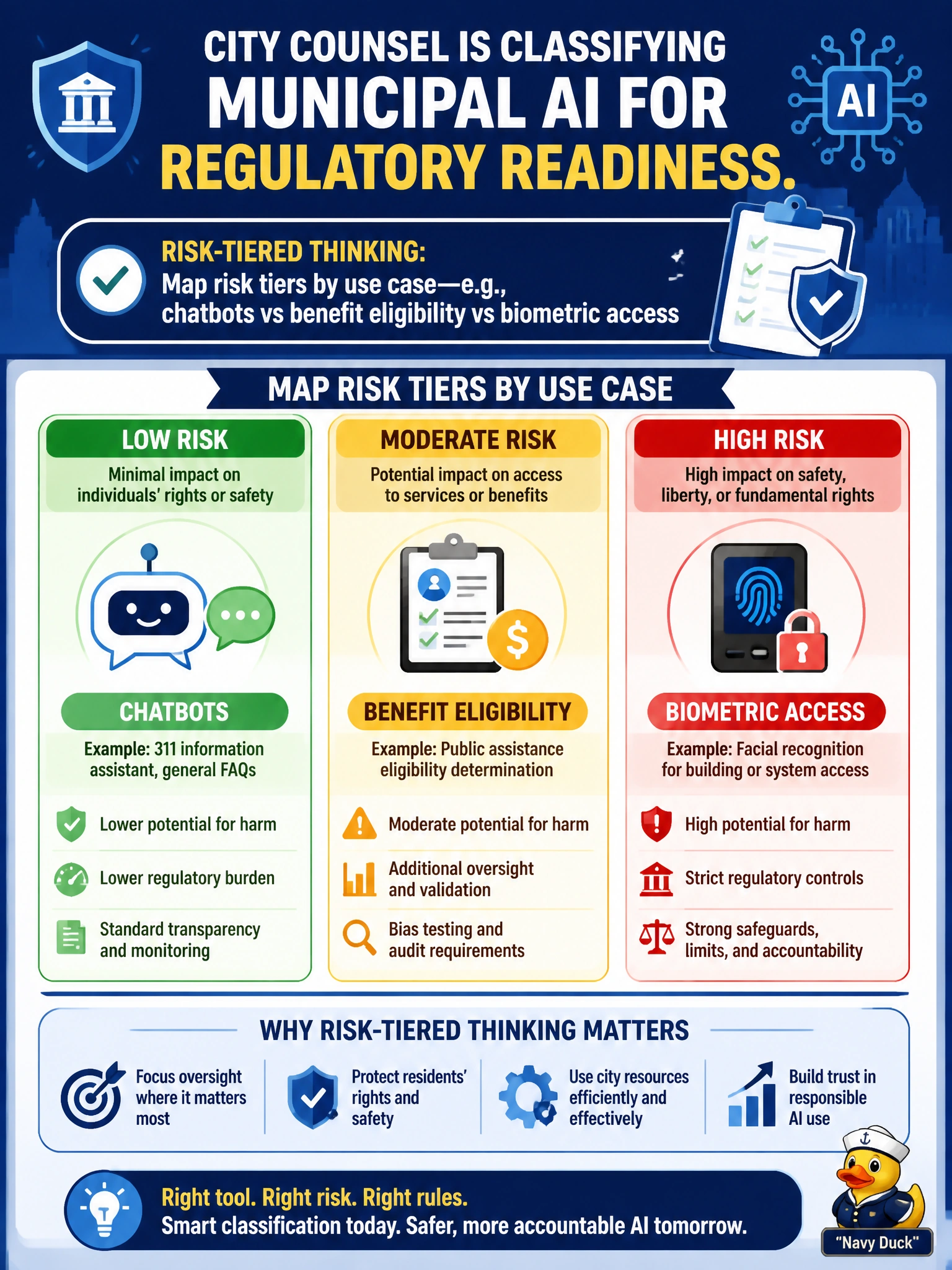
A parks FAQ chatbot and a biometric gate are not the same animal. Map risk tiers by use case so benefit eligibility and biometrics get heavier scrutiny than low-stakes chat.
Full Explanation
Risk-tiered regulatory readiness classifies municipal AI by use case and harm potential—for example, informational chatbots versus benefit eligibility determinations versus biometric access control. Different tiers drive different documentation depth, human oversight intensity, vendor contract clauses, and monitoring expectations. City counsel and compliance teams use that map to apply proportionate controls and to prepare for regime-specific duties without pretending every AI system carries identical civic risk.
Treating chatbots, benefit eligibility, and biometric access as identical risk fails proportionality and misallocates scarce compliance effort across unlike harm profiles. Ignoring use-case differences and applying one casual rule to everything fails by concept: casual uniformity under-controls high-impact systems that affect rights, money, or bodily security. Classifying only marketing copy generators as the highest civic risk inverts priorities—marketing generators are typically lower stakes than eligibility decisions or biometric access.
Exam caveat: tier labels vary by city framework, but exam logic rewards use-case differentiation tied to rights, safety, and equity impact—not branding novelty or vendor marketing claims. Operational check: publish a use-case tier matrix with concrete municipal examples, map inventory systems to those tiers, and verify high-tier systems carry heavier DPIA, oversight, and monitoring packages than low-tier informational chat tools.