
Emergency management is embedding AI into its RACI. Which lifecycle practice strengthens governance?
Select an answer to reveal the explanation.
Short Explanation
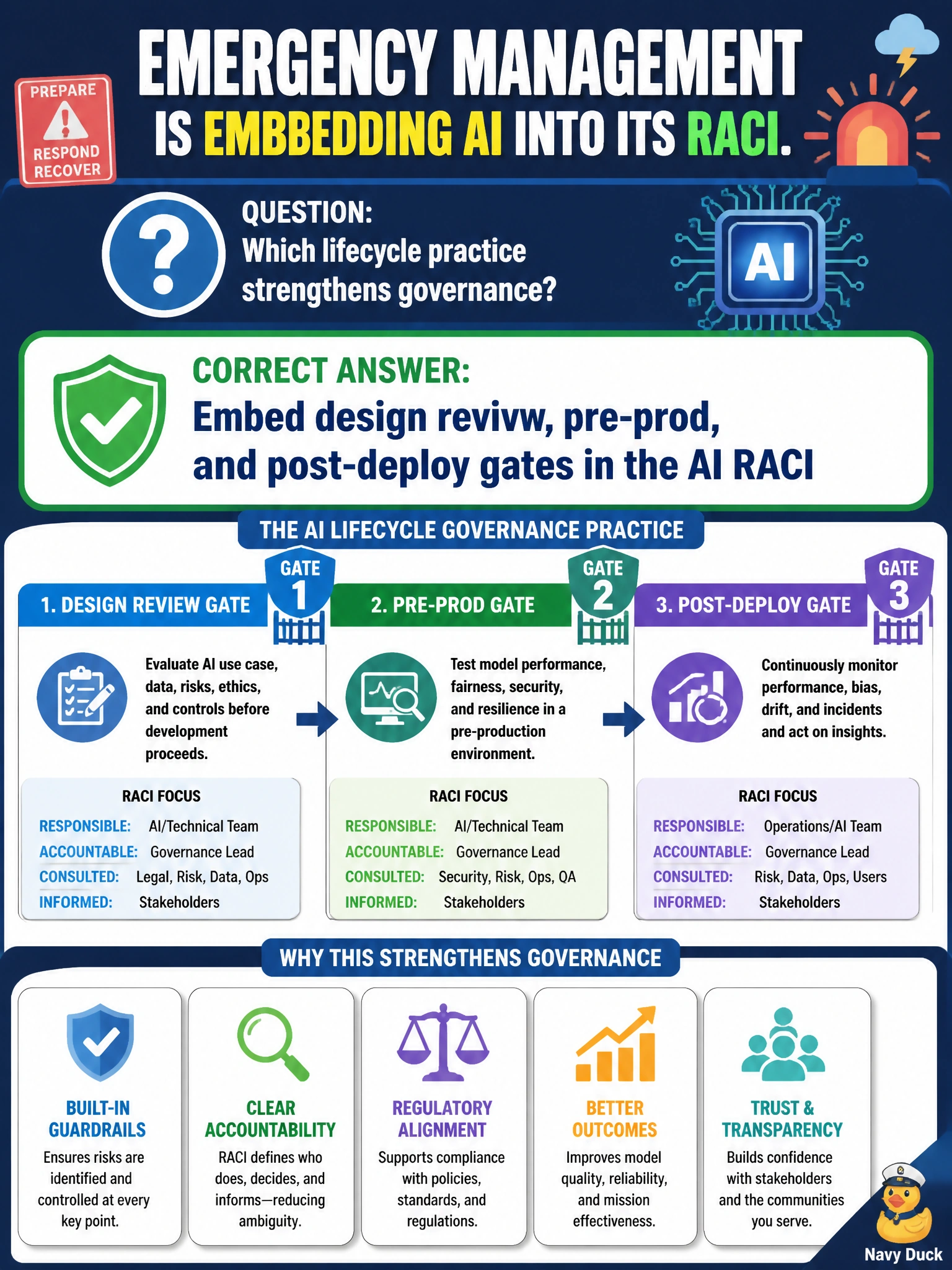
Emergency AI shouldn’t leap from napkin sketch to live ops. Put design, pre-prod, and post-deploy gates in the RACI so named people own each checkpoint.
Full Explanation
Embedding design review, pre-prod, and post-deploy gates in the emergency-management AI RACI makes lifecycle governance enforceable. Design review catches purpose, data, and equity issues early; pre-prod gates verify testing, security, and readiness before live incident use; post-deploy gates confirm monitoring, feedback, and rollback ownership after release. Naming Accountable/Responsible parties for each gate prevents AI from jumping from idea to production during the exact moments when emergency systems must be trustworthy.
Skipping all reviews and going straight from idea to production fails because emergency contexts amplify the cost of untested AI behavior. Assigning RACI only after a major incident with no prior gates fails by concept: after-action ownership is not a substitute for preventive gates. Making “anyone” accountable so no named role owns a gate fails RACI fundamentals—if everyone is accountable, no one is.
Exam caveat: gates can be scaled (lighter for low-risk situational tools, heavier for decision-support in incidents), but emergency AI still needs explicit lifecycle checkpoints with named owners. Operational check: inspect the RACI for design, pre-prod, and post-deploy rows with named roles, and verify recent AI changes show completed gate evidence before production use in emergency workflows.