
A public-health department uses AI that can influence outbreak response messaging. What oversight requirement is most appropriate?
Select an answer to reveal the explanation.
Short Explanation
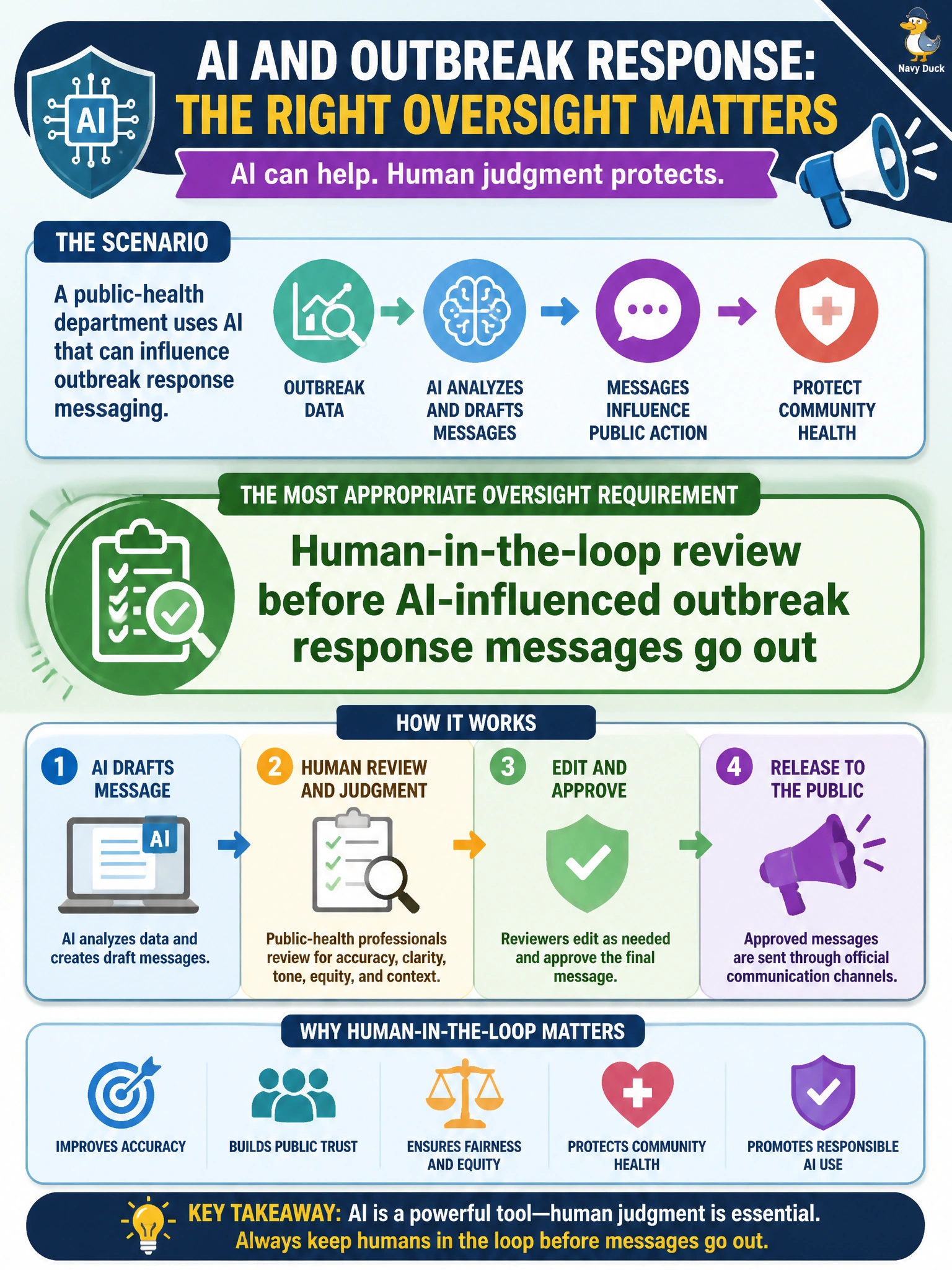
Outbreak messages aren’t the place for “ship whatever the model typed.” Keep a human in the loop before those go out—public health stakes are too high.
Full Explanation
When public-health AI can influence outbreak response messaging, human-in-the-loop review before messages go out is the proportionate oversight control. Outbreak communications affect behavior, trust, and potentially life-safety outcomes; a human reviewer validates factual accuracy, equity of guidance, and alignment with authorized public-health direction before publication. That gate belongs in the operating model and RACI for high-risk messaging pathways, with logging of who reviewed and what changed.
Fully autonomous messaging with no human review at any risk tier fails because it ignores harm potential of outbreak communications. Human review only for typo checks on low-risk park newsletters fails by concept: applying scrutiny only to low-risk content while skipping high-risk outbreak messages inverts risk-tiered oversight. Prohibiting any staff from editing AI drafts under any circumstance fails control design—human-in-the-loop implies authority to correct or stop unsafe content.
Exam caveat: human-in-the-loop intensity should rise with risk; not every departmental newsletter needs the same gate as outbreak messaging, but systems that influence outbreak response do. Operational check: define the outbreak-message pathway, require authenticated human approval before release, retain review evidence, and test that the autonomous publish path is disabled for that class of content.