
A transit agency is building an AI system inventory. Which fields best support asset management?
Select an answer to reveal the explanation.
Short Explanation
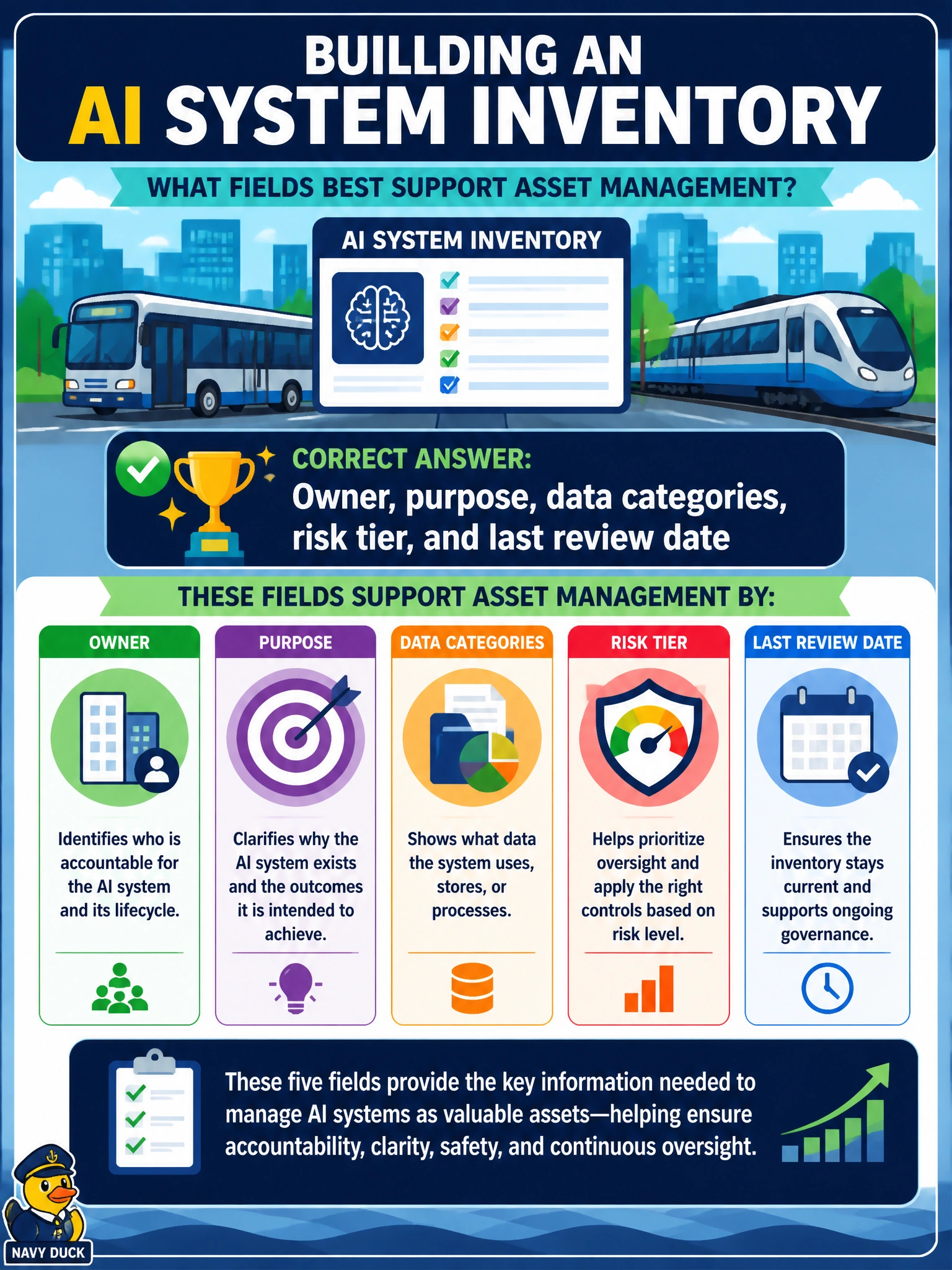
An inventory isn’t a nickname list. Owner, purpose, data categories, risk tier, and last review date tell you what’s running on the rails and who owns it.
Full Explanation
A transit AI system inventory supports asset management when each entry records owner, purpose, data categories, risk tier, and last review date. Those fields answer governance questions quickly: who is accountable, what resident or operational outcome the system serves, what sensitive data it touches, how heavily it should be controlled, and whether oversight is current. With that structure, the agency can prioritize reviews for higher-risk rider-facing or safety-adjacent models and schedule revalidation before reviews expire.
Capturing only a catchy nickname with no owner or risk information fails because nicknames do not enable accountability or tiered control. Only the vendor’s stock photo of a train fails by concept: imagery is not an inventory record. A list of servers with no AI purpose or data categories fails the AI-governance use case—infrastructure inventories alone do not identify model purpose, data sensitivity, or decision impact on riders.
Exam caveat: inventory fields can be extended (vendor, hosting, human-in-the-loop flags), but owner/purpose/data/risk/review currency are the core management fields the exam emphasizes. Operational check: sample inventory rows for completeness, escalate missing owners or stale review dates, and reconcile the inventory against procurement and ITCM records so shadow AI does not remain invisible.