
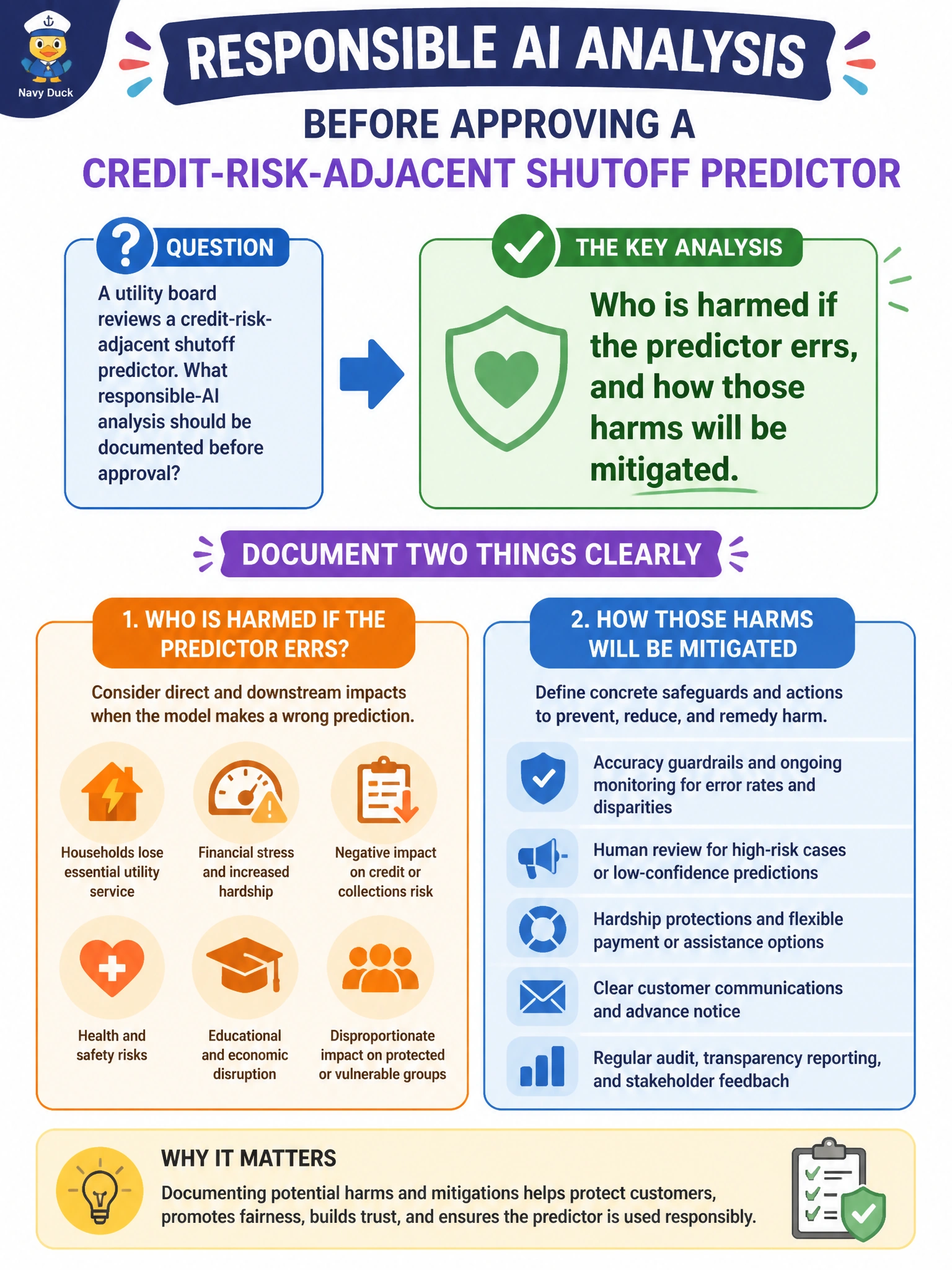
A utility board reviews a credit-risk-adjacent shutoff predictor. What responsible-AI analysis should be documented before approval?
Select an answer to reveal the explanation.
Short Explanation
If the model is wrong, somebody’s lights might go out. Documenting who gets hurt—and how you’ll catch and fix that—is stakeholder harm analysis, and utilities need it before go-live.
Full Explanation
The correct answer is documenting who is harmed if the predictor errs and how those harms will be mitigated. A utility board reviewing a credit-risk-adjacent shutoff predictor is evaluating a system that can interrupt essential services. Responsible-AI analysis before approval must identify stakeholders—especially medically vulnerable, low-income, and linguistically isolated residents—describe failure modes (false positives leading to wrongful shutoff risk, false negatives missing true nonpayment patterns), and specify mitigations such as human review thresholds, hardship exceptions, monitoring, and appeal paths. That stakeholder harm analysis is what makes approval defensible.
Only the marketing tagline for the vendor portal fails by concept because slogans are not risk analysis. A list of GPUs purchased last fiscal year fails because hardware inventory does not explain human impact. A promise that no resident will ever call customer service again fails as an unrealistic outcome claim that distracts from documenting and mitigating real harm pathways.
Exam caveat: high-impact civic predictors almost always require explicit harm-and-mitigation documentation, not just accuracy metrics. Operational check: require a written harm register and mitigation plan in the board packet, define shutoff-recommendation human review rules, track disparate impact metrics after pilot, and refuse approval until mitigations are operationally funded.