
A city library board wants standing ethics principles for any public-facing AI service. Which set best matches fundamental AI ethics principles for municipal policy?
Select an answer to reveal the explanation.
Short Explanation
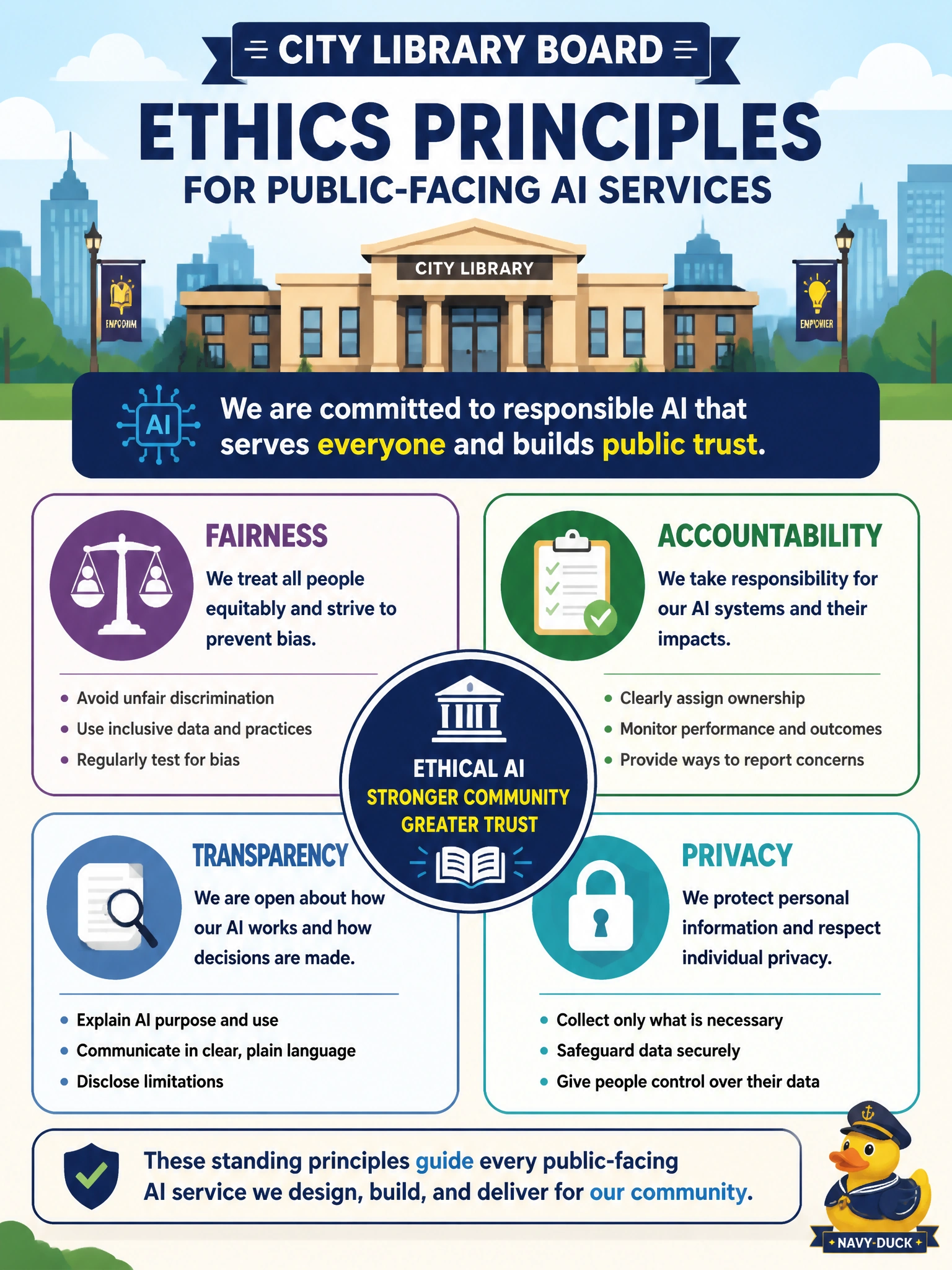
Think of the library’s rules of the road for AI—same idea as posted conduct rules at the door. Fairness, accountability, transparency, and privacy are the standing principles that keep public services trustworthy.
Full Explanation
The correct answer is fairness, accountability, transparency, and privacy as standing principles for any public-facing municipal AI service. A city library board establishing ethics rules needs durable, widely recognized principles that apply across chatbots, recommendation tools, and other resident-facing systems. Fairness addresses disparate treatment of patrons and neighborhoods. Accountability assigns ownership when the system errs. Transparency clarifies when and how AI influences service. Privacy protects patron data and inquiry confidentiality. Together they form a reusable civic ethics baseline rather than a one-off vendor feature list.
Maximum engagement metrics, viral growth targets, and ad-click optimization fail by concept because they optimize commercial attention economics, not public-service duty. Library AI should improve equitable access and accurate information, not harvest clicks. Exclusive vendor lock-in, undisclosed training data, and automated final decisions only fail because they invert trust: opacity, dependency, and removing human judgment from consequential outcomes. Overnight production pushes, anonymous ownership, and no resident notice fail as process anti-patterns—they deny governance, auditability, and the notice residents reasonably expect from a public institution.
Exam caveat: ethics-principle lists on CRAGE items often mirror OECD/NIST-style themes; do not confuse them with marketing KPIs or procurement tactics. Operational check: require a published AI ethics charter naming these principles, map each public AI use case to them before go-live, and retain a named accountable owner for every library-facing AI service.