
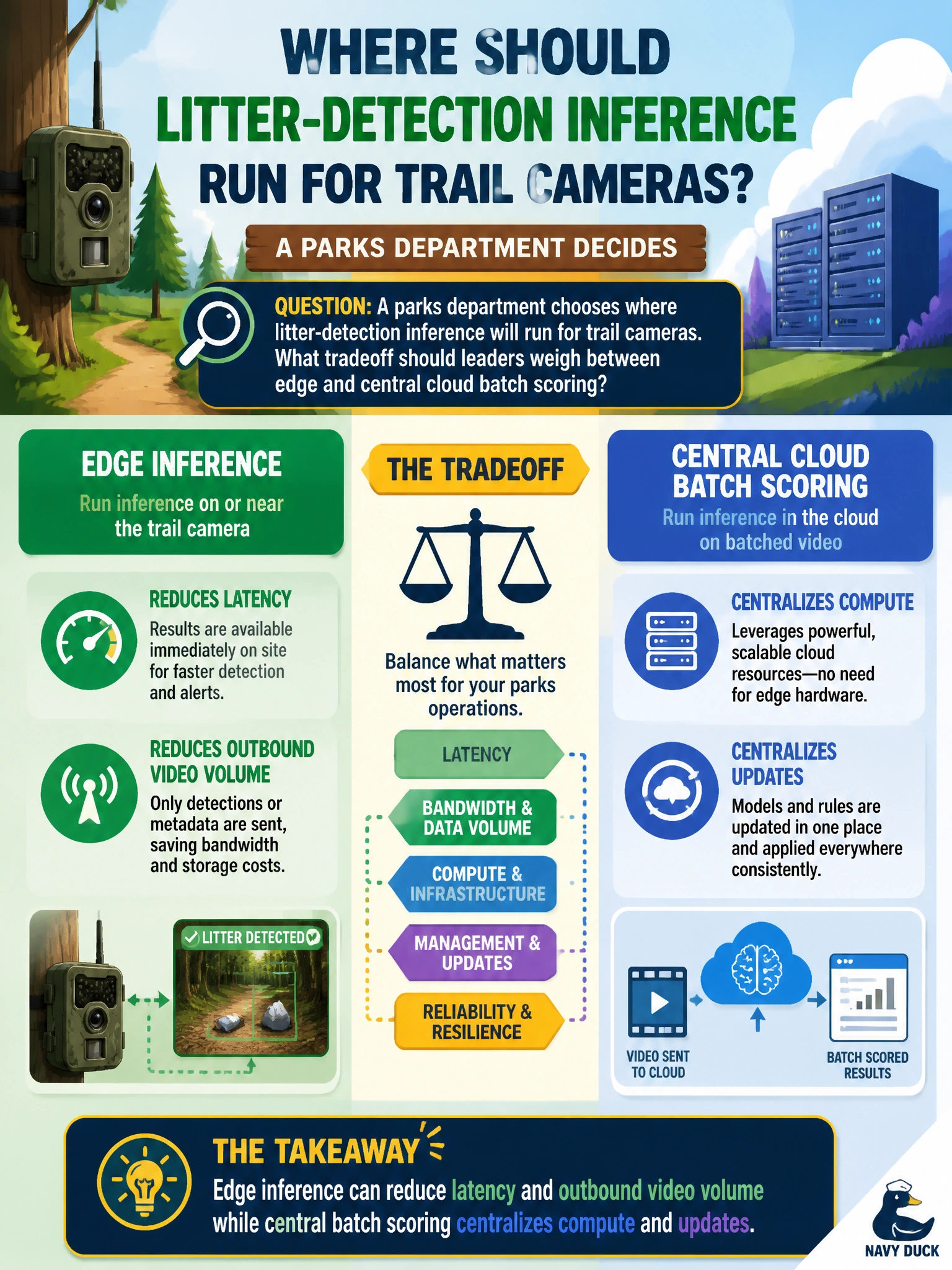
A parks department chooses where litter-detection inference will run for trail cameras. What tradeoff should leaders weigh between edge and central cloud batch scoring?
Select an answer to reveal the explanation.
Short Explanation
Edge cameras that score litter on-site are like a park ranger deciding on the trail; cloud batch scoring is like mailing the photos downtown for a nightly review. Faster and lighter on the network at the edge, more centralized control in the cloud—pick knowingly.
Full Explanation
A parks department choosing where litter-detection inference will run for trail cameras should weigh that edge inference can reduce latency and outbound video volume while central batch scoring centralizes compute and updates. The tradeoff is operational and privacy-relevant, not a false equivalence or a free pass on governance.
Why the other options fail by concept: Claiming edge and cloud batch scoring are identical in latency, bandwidth, and privacy posture denies real architectural differences. Asserting only cloud batch can detect litter and edge devices cannot run any models is technologically false. Believing edge inference always eliminates the need for any data governance or model updates ignores that edge fleets still need secure update channels, logging, and policy compliance.
Exam caveat: Edge can improve privacy by limiting raw video backhaul, yet still produces detections, metadata, and occasional sampled frames that require retention rules. Central batch simplifies model rollout but increases bandwidth and central exposure of imagery.
Operational check: Compare a pilot: on-camera or gateway inference vs nightly cloud batch for the same trails—measure alert latency, bandwidth, false-positive handling, update effort, and privacy footprint. Document the chosen pattern in the parks AI inventory with an update and incident plan for whichever location runs the model.