
A city MLOps lead briefs executives on practices that make civic models governable. Which set best captures governance-visible MLOps practices?
Select an answer to reveal the explanation.
Short Explanation
MLOps for city hall is the same idea as a well-run parts warehouse: know which model version is on the shelf, assemble pipelines the same way every time, and keep a return path if a bad version ships. That is governance, not geek trivia.
Full Explanation
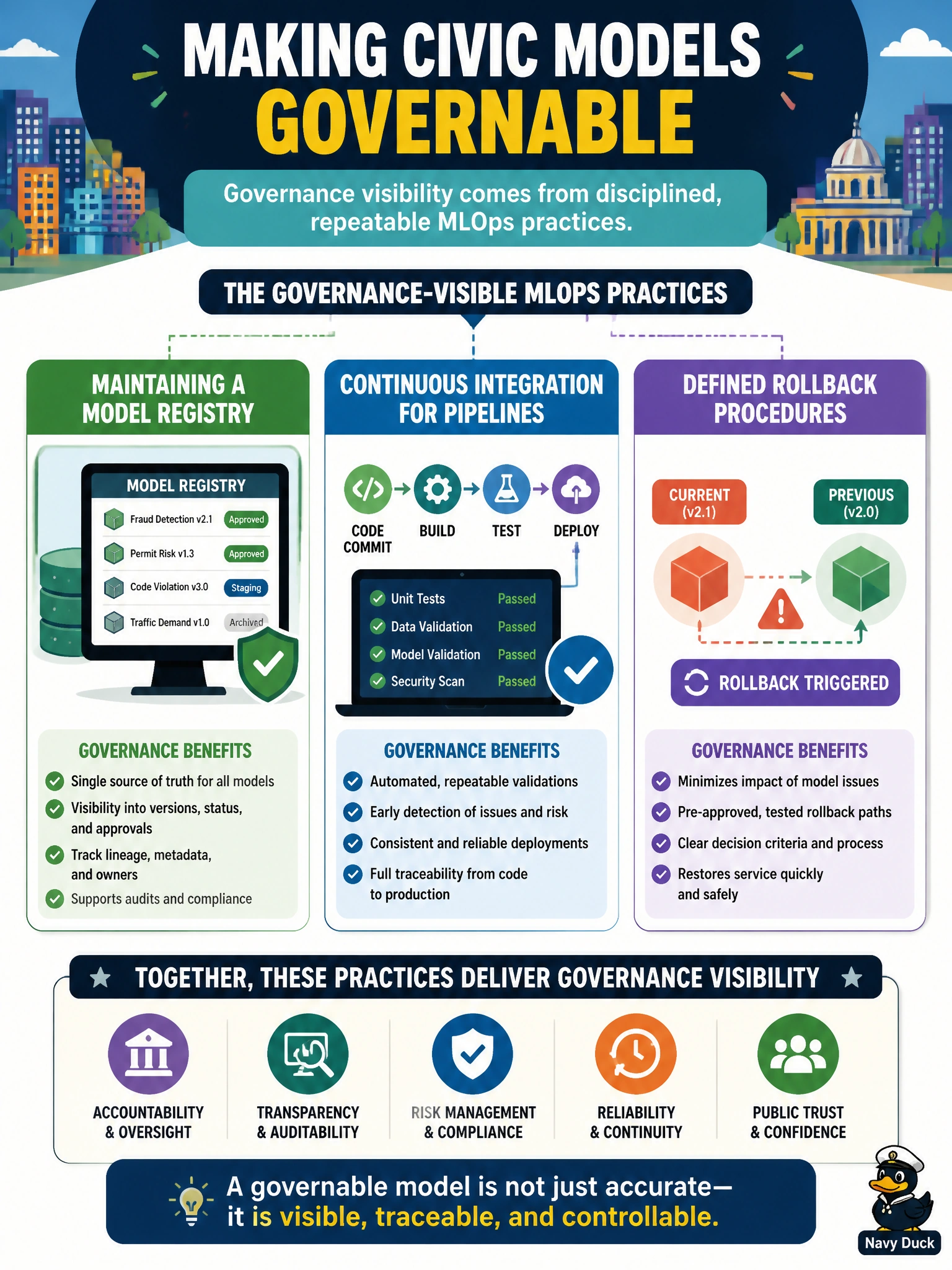
A city MLOps lead briefing executives on practices that make civic models governable should highlight maintaining a model registry, continuous integration for pipelines, and defined rollback procedures. Those practices make versions attributable, changes repeatable, and bad releases recoverable—exactly what oversight bodies need to see.
Why the other options fail by concept: Hand-copying model files between laptops with no registry or rollback path destroys provenance and recovery. Disabling all pipeline automation so every change requires undocumented email approval replaces engineered control with opaque tribal process. Publishing raw training notebooks publicly and removing production monitoring sacrifices both confidentiality and operational visibility.
Exam caveat: MLOps is not optional “developer preference” for municipal AI that affects residents; it is how version control, audit trails, and incident response become possible. Registry and CI still need access control—governance-visible does not mean indiscriminately public.
Operational check: Require every production civic model to have a registry entry (version, owner, training data reference, approval), CI/CD evidence for the pipeline that built it, and a tested rollback procedure exercised at least in staging. Audit a sample release for those three artifacts before expanding the MLOps standard citywide.