
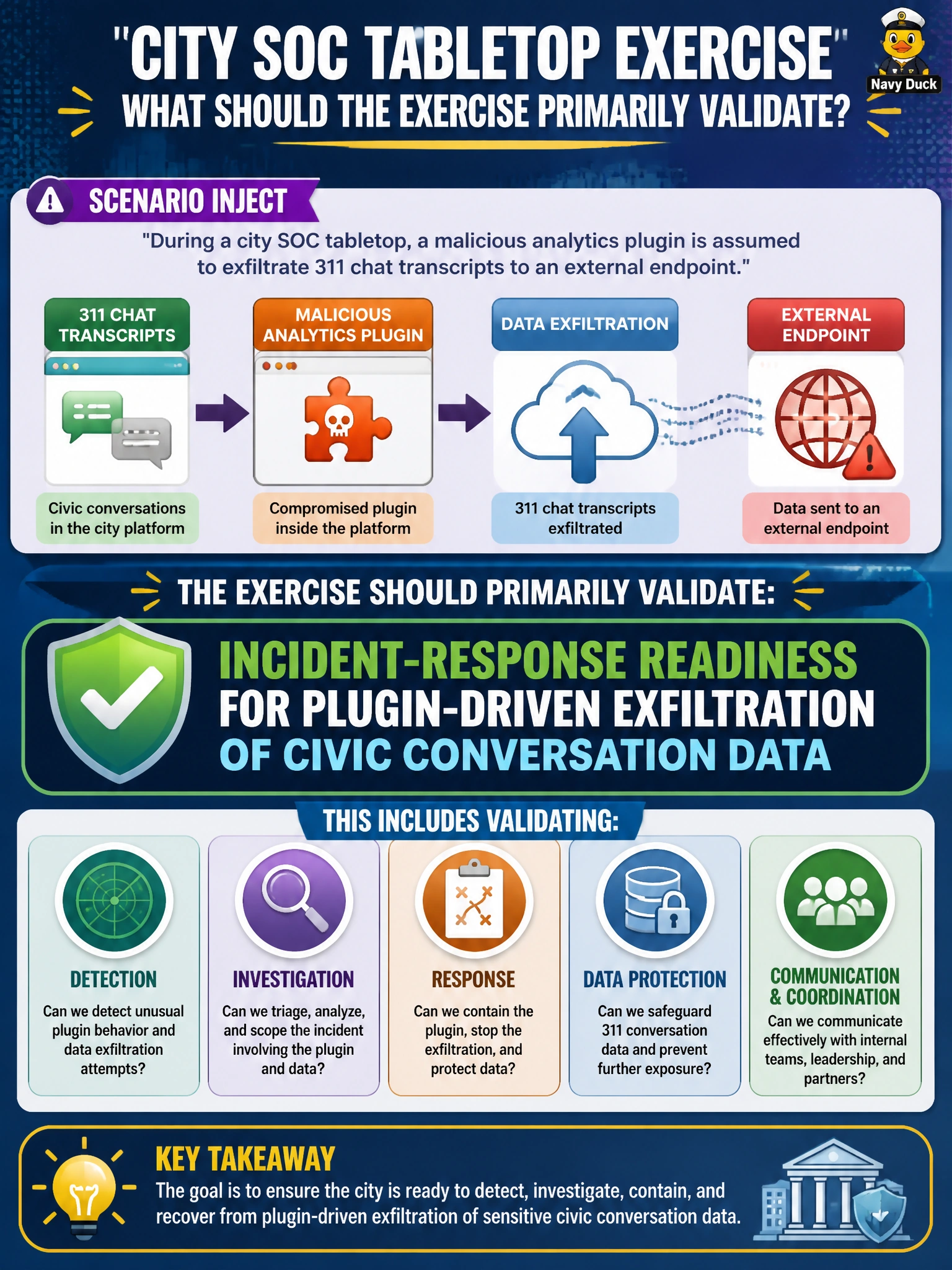
During a city SOC tabletop, a malicious analytics plugin is assumed to exfiltrate 311 chat transcripts to an external endpoint. What should the exercise primarily validate?
Select an answer to reveal the explanation.
Short Explanation
If a plugin can siphon 311 chats, treat it like a leaky pipe—tabletop how IR finds and shuts the tap.
Full Explanation
In a municipal SOC tabletop that assumes a malicious analytics plugin exfiltrates 311 chat transcripts, the exercise must primarily validate incident-response readiness for plugin-driven theft of civic conversation data. 311 chats often contain addresses, service details, and personally identifiable information submitted by residents; treating an analytics plugin as a trusted path is a realistic municipal compromise pattern. The tabletop should force practitioners to walk detection (egress anomalies, unusual plugin API calls, transcript volume spikes), containment (revoke plugin credentials, isolate the integration, block the external endpoint), evidence preservation, and notification obligations under city privacy policy. That is the substantive objective of the scenario: proving the SOC can respond when civic AI tooling becomes an exfiltration channel.
Log-retention compliance for 311 chat archival misses the point because records rules govern how long transcripts are stored, not how the SOC detects and stops an active plugin exfiltration in progress. Egress allowlist accuracy for approved civic analytics vendors is a network-control task, not the incident-response rehearsal this tabletop is designed to validate. Help-desk workflow efficiency for routine 311 service-request escalations is a service-operations concern; it does not surface plugin telemetry or validate containment of transcript leaks. These distractors address records archival, vendor allowlisting, and help-desk triage rather than the core incident-response objective, so they miss the tabletop's purpose.
Exam caveat: tabletops are authorized rehearsals of assumed compromise—they measure readiness and gaps, not whether the plugin is proven malicious in production. Do not confuse tabletop validation with live exploitation of city systems. Also distinguish plugin-driven exfiltration of conversation data from generic DDoS or website defacement; the threat here is confidentiality of civic chat content leaving via a trusted analytics path.
Operational check: after the exercise, confirm the IR playbook names the 311 AI/plugin integration owner, lists required log sources (plugin gateway, egress proxy, identity logs), defines criteria to suspend the plugin, and documents resident-notification triggers if transcripts left the boundary. Verify that a dry-run ticket can actually revoke the plugin's API key and that privacy counsel is on the escalation tree. If those steps are missing or unowned, the tabletop has correctly exposed an IR readiness gap for civic conversation-data exfiltration.