
Purple-team findings show clerk-agent plugins are installed without cryptographic signing. What integrity control should they recommend?
Select an answer to reveal the explanation.
Short Explanation
Unsigned plugins are unsigned mail—anyone could have swapped the package. Sign and verify before install.
Full Explanation
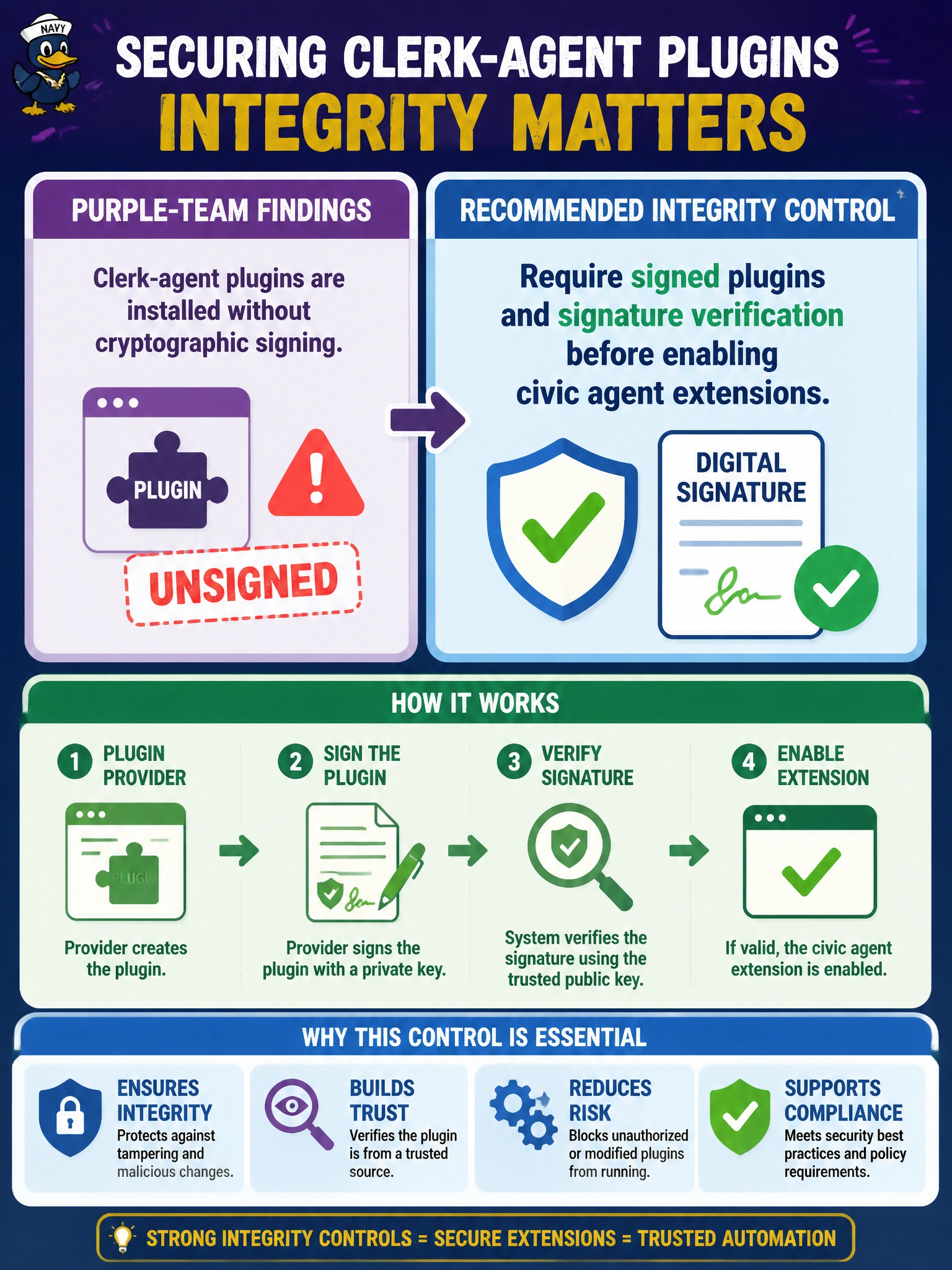
Purple-team findings that clerk-agent plugins install without cryptographic signing should drive a recommendation to require signed plugins and signature verification before enabling civic agent extensions. Signing provides integrity and authenticity against tampering and plugin shadowing; unsigned install paths allow substitution of malicious helpers under familiar names. Assessments recommend signed-only allow lists, verification at install and update time, and revocation handling for compromised publisher keys. Visual theming does not provide integrity guarantees.
Verifying plugin transport integrity using TLS certificate checks during repository synchronization, trusting a key match without checking rotation, and approving plugins based on version tag alignment across deployment manifests and change records are incomplete or mismatched controls — they do not verify plugin code integrity through cryptographic signing, so they are not the complete recommendation reviewers should make: require signed plugins with real signature verification before enablement.
Exam caveat: signature verification must validate the publisher against the city’s trust store—accepting any valid signature from an unknown publisher still permits malicious signed malware. Operational check: enforce a signed-only install policy on clerk agents, attempt to load an unsigned plugin in a lab and confirm rejection, rotate and document trusted publisher certificates, and inventory production plugins for missing or invalid signatures.