
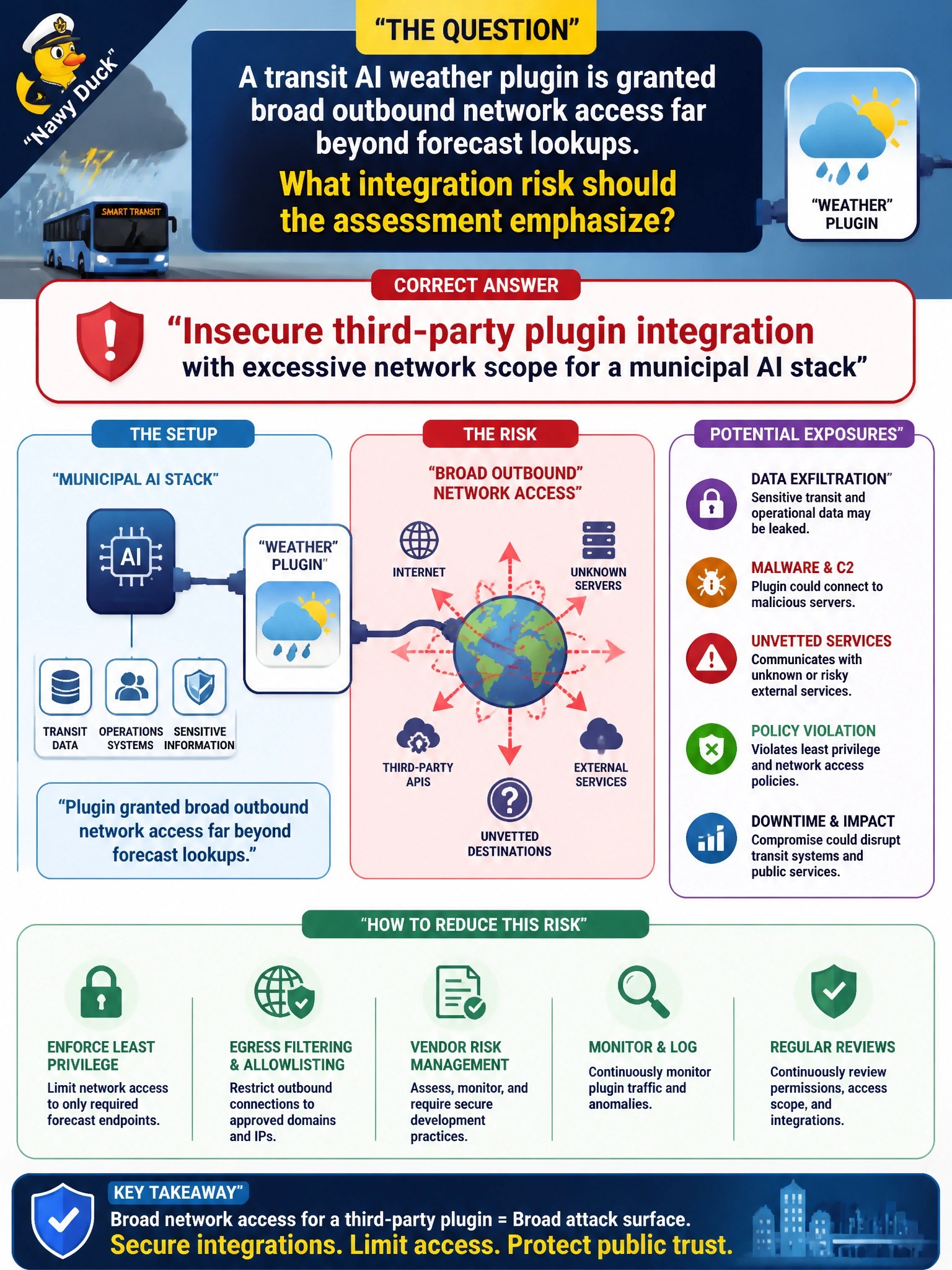
A transit AI weather plugin is granted broad outbound network access far beyond forecast lookups. What integration risk should the assessment emphasize?
Select an answer to reveal the explanation.
Short Explanation
A weather plugin that can talk to the whole internet is like giving the janitor master keys for a thermometer check. Dial the scope back.
Full Explanation
Municipal AI plugins must operate under least privilege. Granting a transit weather plugin broad outbound network access far beyond forecast lookups creates insecure third-party integration risk: the helper can reach arbitrary internal or external endpoints, enabling SSRF-class abuse, lateral movement, or exfiltration of municipal telemetry under the cover of a benign forecast feature. Assessments should emphasize scoped credentials, egress allow lists limited to approved weather APIs, and network policies that treat plugins as untrusted code paths inside the civic AI stack. Documenting excessive scope as an integration finding drives remediation before the plugin ships to rider-facing or operations systems.
Stale forecast cache reuse causing schedule misalignment in municipal automated transit dispatch workflows describes a downstream data-freshness issue, not the root finding that the plugin was granted excessive network scope in the first place. Malformed forecast payload parsing triggering display faults in municipal transit rider information displays describes a parsing or display fault, not the over-broad network grant itself. A rate-limited forecast polling interval degrading real-time arrival predictions during peak municipal transit commute operations describes an operational performance limitation, but the assessment is asked to emphasize the excessive-scope integration risk directly, not these partial or downstream process gaps.
Exam caveat: even read-only forecast plugins can become dangerous if they accept attacker-influenced URLs or if shared runtimes inherit the plugin’s network identity—scope the identity and the destinations independently. Operational check: review the plugin’s declared OAuth or service-account permissions, enforce an egress proxy allow list to named weather endpoints only, run a controlled SSRF probe in a non-production transit tenant, and confirm blocked destinations while legitimate forecast calls still succeed.