
A county agent can invoke payment APIs; purple team probes those calls for least-privilege gaps. What is being tested?
Select an answer to reveal the explanation.
Short Explanation
Payment APIs on an agent are the crown jewels—least privilege means the bot only gets the coins it needs. Don't test audit-log coverage for routine chats; test the payment scope instead.
Full Explanation
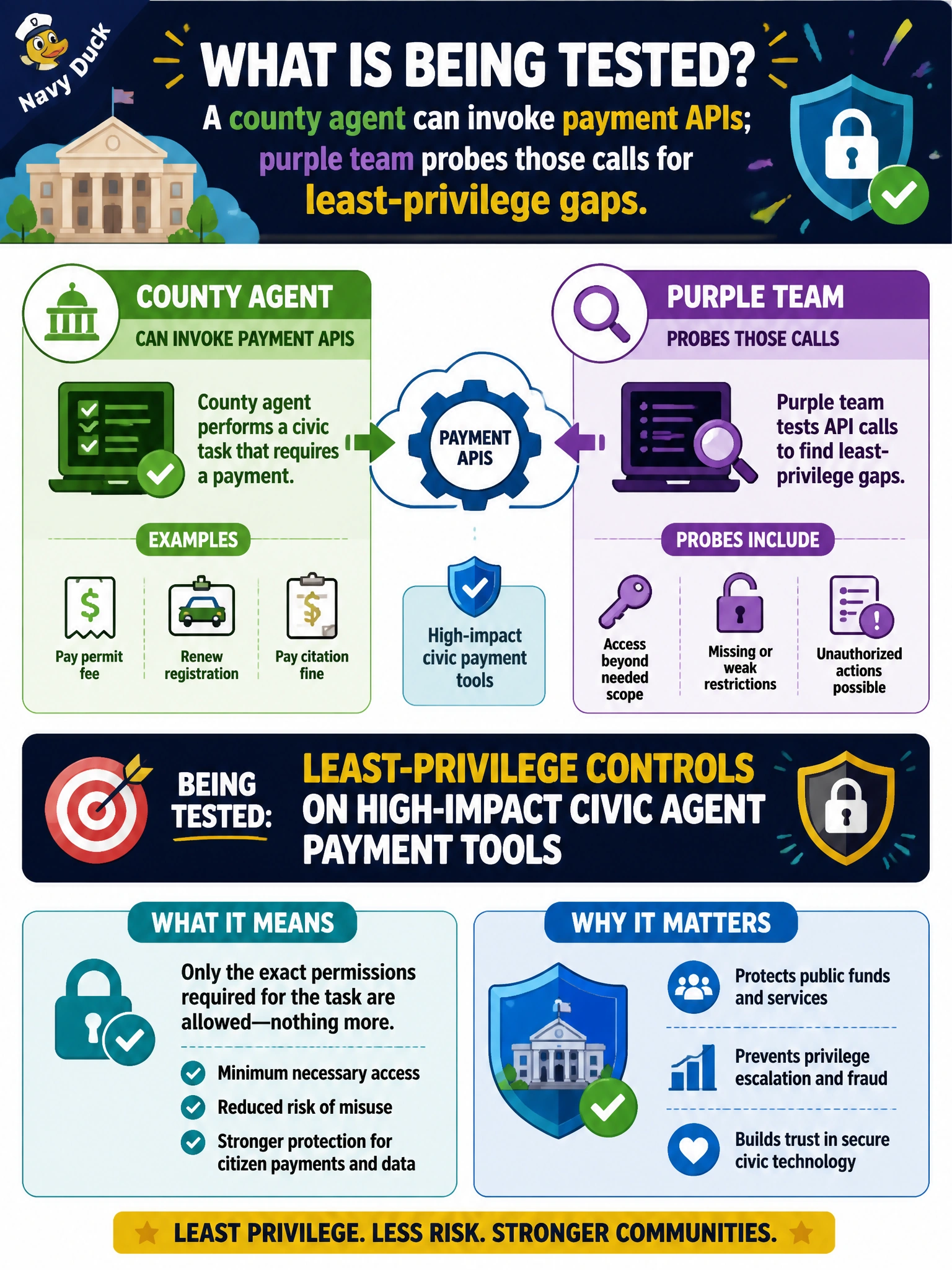
When a county agent can invoke payment APIs and purple team probes those calls for least-privilege gaps, the test targets least-privilege controls on high-impact civic agent payment tools. Payment-capable agents need tightly scoped credentials, amount ceilings, payee allow-lists, currency and fund constraints, and strong binding between authenticated user intent and each charge or refund. Purple-team probing validates whether natural language or parameter tampering can exceed those scopes, initiate unintended payees, replay prior payment intents, or bypass secondary authorization. Assuming authentication checks for low-risk civic information search queries satisfy payment authorization, that audit logging coverage for routine civic agent conversation history substitutes for payment scoping, or that availability targets for county agent helpdesk response throughput limit payment actions does not enforce payment least privilege. On the exam, crown-jewel payment tools attached to agents map to least-privilege testing, not facilities décor. Caveat: read-only balance inquiry scopes differ from write scopes; collapsing them into one over-broad payment role recreates the gap the assessment is meant to find and complicates audit attribution. Operational check: attempt over-limit amounts, foreign payees, and role-confused refunds in a sandbox; confirm denials and alerts, and verify that production credentials never appear in the agent tool configuration under test.