
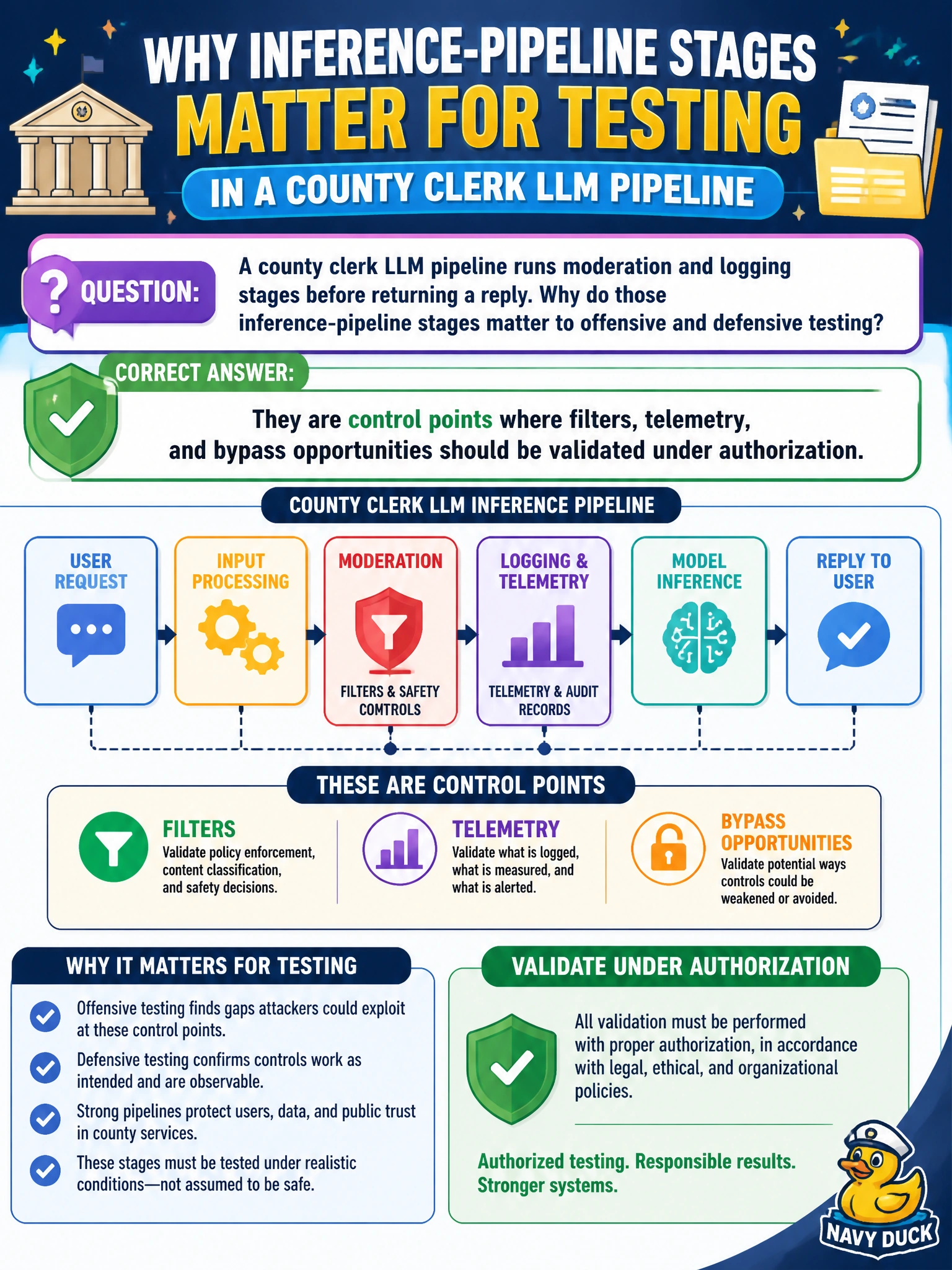
A county clerk LLM pipeline runs moderation and logging stages before returning a reply. Why do those inference-pipeline stages matter to offensive and defensive testing?
Select an answer to reveal the explanation.
Short Explanation
Moderation and logging are the metal detectors and CCTV on the way out of the clerk’s AI booth. Purple-team checks whether those stages actually catch issues—or whether traffic slips around them. They're not about retention schedules, compressing chat history, or checking your ID—they're about catching bad outputs and logging activity.
Full Explanation
Inference pipelines for a county clerk LLM often include moderation, enrichment, and logging before replies reach users. Those stages are defensive control points and potential bypass surfaces. Authorized testers should validate filter effectiveness, coverage gaps, and privacy implications of logs rather than treating the raw model call as the only component. Civic assessments verify that unsafe outputs are caught and that telemetry supports investigation without over-retaining sensitive content.
Claiming pipeline stages enforce records retention schedules for clerk filings to keep long-term storage costs predictable during testing is false—their purpose is content filtering and telemetry, not managing filing retention policies. Asserting that pipeline stages compress prior conversation history to fit context windows while preserving reply fluency for human reviewers is false—these stages inspect and log outputs, not compress history for window management. Claiming pipeline stages verify citizen identity and case eligibility before granting access to confidential clerk case records is false—they moderate content and log activity, not authenticate users or check case eligibility.
Exam caveat: moderation and logging are testable control points—not records retention enforcers, not conversation history compressors, not identity verifiers. Operational check: under authorization, attempt known bypass patterns against the clerk pipeline; review what logs store; confirm alerts on filter failures; remediate gaps before expanding public use.