
Critical resident services depend on a single AI product owner. What continuity practice sustains the program?
Select an answer to reveal the explanation.
Short Explanation
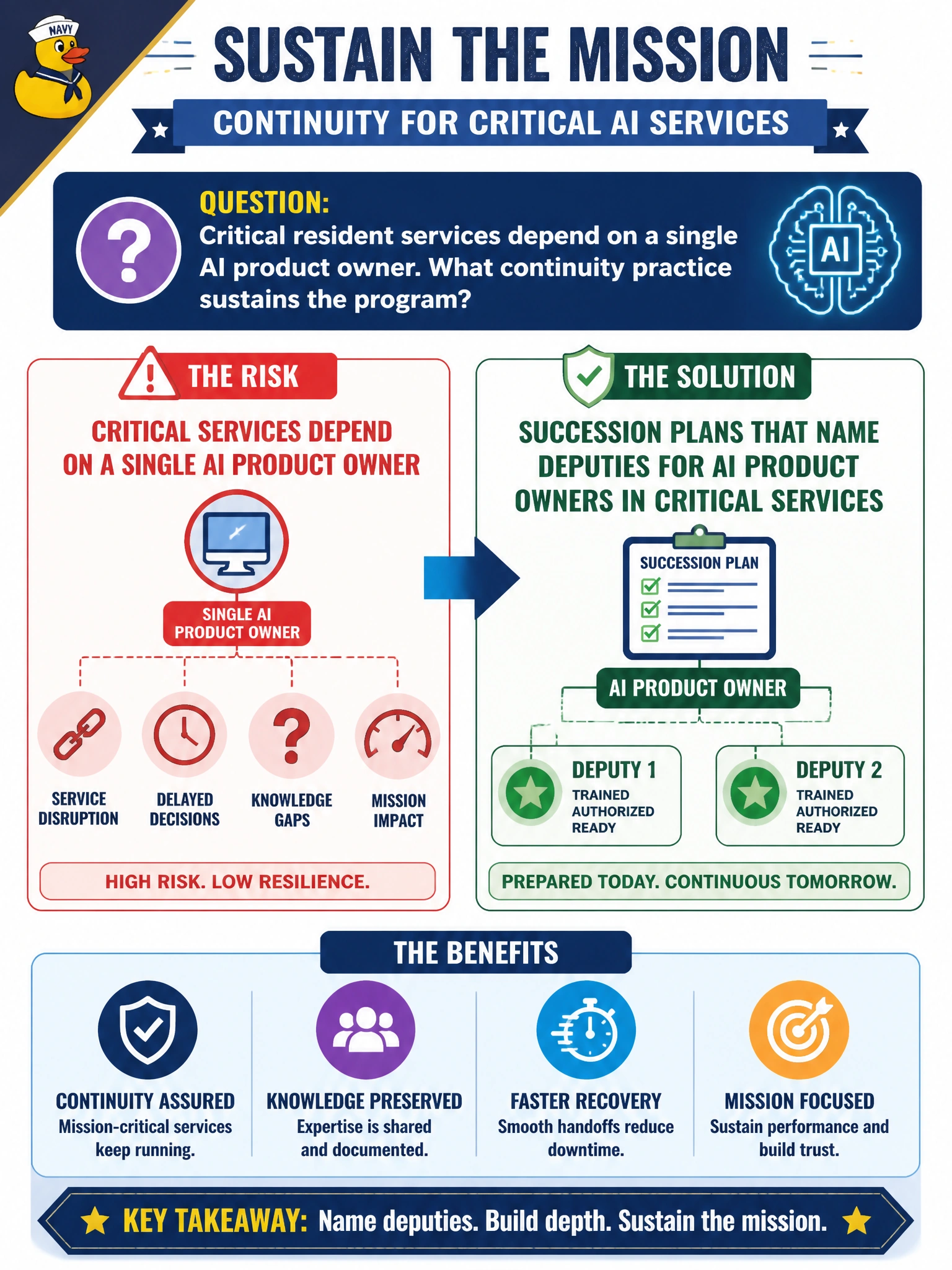
One hero isn’t a plan. Name deputies in succession plans for AI product owners on critical services so the program survives vacations, moves, and retirements.
Full Explanation
When critical resident services depend on a single AI product owner, the continuity practice that sustains the program is succession plans that name deputies for AI product owners in critical services. Single-threaded ownership creates fragility: vacation, attrition, or reassignment can stall releases, incident response, and vendor governance for services residents already depend on. Named deputies with documented responsibilities keep municipal AI operable across personnel change. Leaving ownership undocumented so "whoever is free" can step in fails because unclear authority delays decisions during incidents and weakens accountability to council and residents. Removing product ownership roles to reduce headcount fails by deleting the function that coordinates quality, value, and risk across technical and service teams. Relying solely on the vendor CSM as the city's only succession plan fails because a vendor contact is not a city decision-maker and cannot own public accountability or policy interpretation. Exam caveat: vendor-as-backup distractors confuse commercial support with municipal succession planning. Operational check: for each critical AI-enabled service, name a primary and deputy product owner, document duties and access, run a deputy-led drill, and review succession plans in the AI program office's quarterly sustainment checklist.