
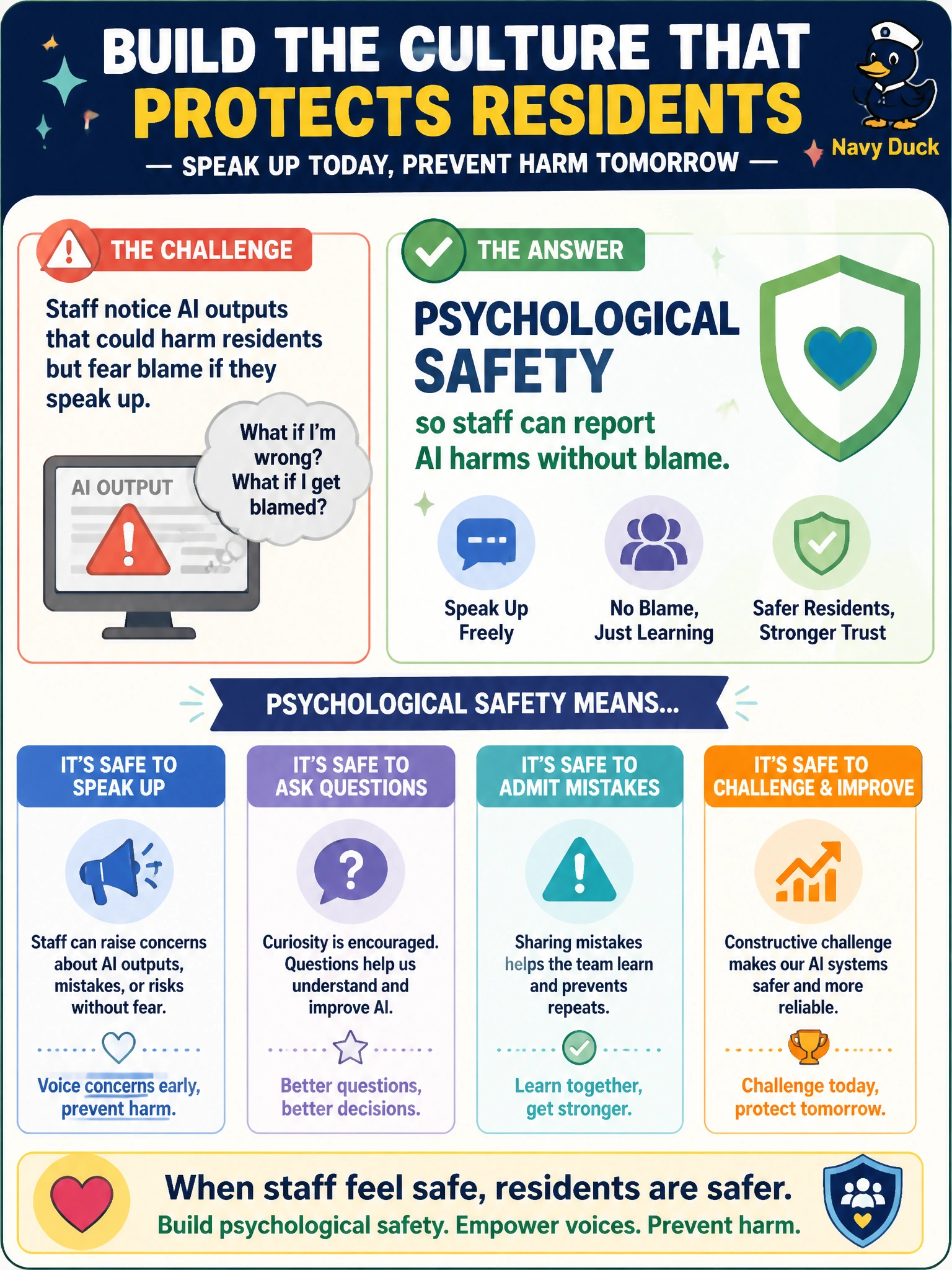
Staff notice AI outputs that could harm residents but fear blame if they speak up. What cultural condition should leaders build?
Select an answer to reveal the explanation.
Short Explanation
If reporting a bad answer gets you hung out to dry, people go quiet. Build psychological safety so staff can flag AI harms without the blame game.
Full Explanation
When staff notice AI outputs that could harm residents but fear blame if they speak up, leaders should build psychological safety so staff can report AI harms without blame. Harm reporting is a control: it surfaces toxic answers, biased outcomes, and process gaps before they scale across 311, benefits, or permitting channels. Psychological safety means clear reporting paths, non-retaliation norms, and focus on system improvement rather than scapegoats. A blame-first culture that treats every report as personal failure fails by teaching silence and guaranteeing undetected harm to residents. Silent channels only—with no protected path to raise AI concerns—fails because informal whisper networks do not create auditable remediation or leadership visibility. Public shaming of reporters to deter "unnecessary" alerts fails ethically and operationally by suppressing the very signals civic oversight needs. Exam caveat: safety-culture items test whether candidates prioritize resident protection over image management after AI mistakes. Operational check: publish a protected AI-harm reporting path, train supervisors on blameless intake, track report-to-fix cycle time, and brief leadership on themes without exposing reporters to retaliation.