
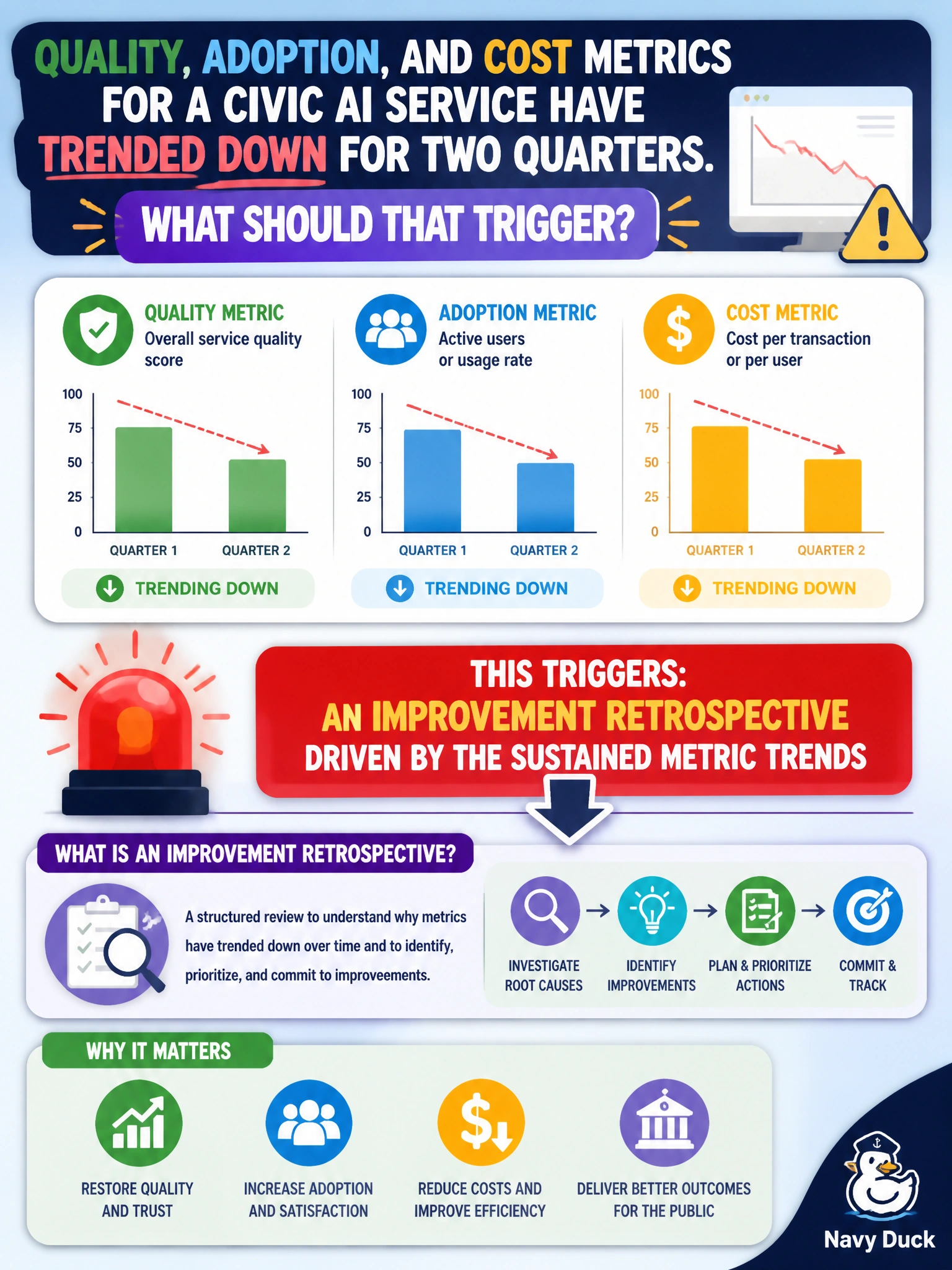
Quality, adoption, and cost metrics for a civic AI service have trended down for two quarters. What should that trigger?
Select an answer to reveal the explanation.
Short Explanation
Downward arrows aren’t wallpaper. When quality, adoption, or cost trends sour for a stretch, call an improvement retrospective and dig in.
Full Explanation
When quality, adoption, and cost metrics for a civic AI service have trended down for two quarters, that pattern should trigger an improvement retrospective driven by the sustained metric trends. Multi-quarter decline is a signal, not noise: something in fitness, trust, process design, or economics is degrading for the municipal service. A structured retrospective examines causes across people, process, content, and platform; prioritizes interventions; and assigns owners before the service becomes a zombie cost center. Ignoring trends because dashboards are for decoration fails the purpose of measurement in program management and wastes the city's monitoring investment. Immediately firing the vendor without a structured review fails by skipping diagnosis—root causes may be stale content, weak change control, insufficient clerk training, or demand shift, not only the vendor. Hiding the metrics from leadership until they recover fails transparency obligations and delays resource decisions that only executives can authorize. Exam caveat: punitive or concealment responses are common wrong answers; a disciplined improvement retrospective is the correct sustainment response. Operational check: convene a time-boxed retrospective with the service owner, AI ops, and analytics; analyze the three downward trends; publish actions with success metrics; and report status in the next civic oversight packet.