
New generative AI capabilities appear monthly. How should the city evaluate them sustainably?
Select an answer to reveal the explanation.
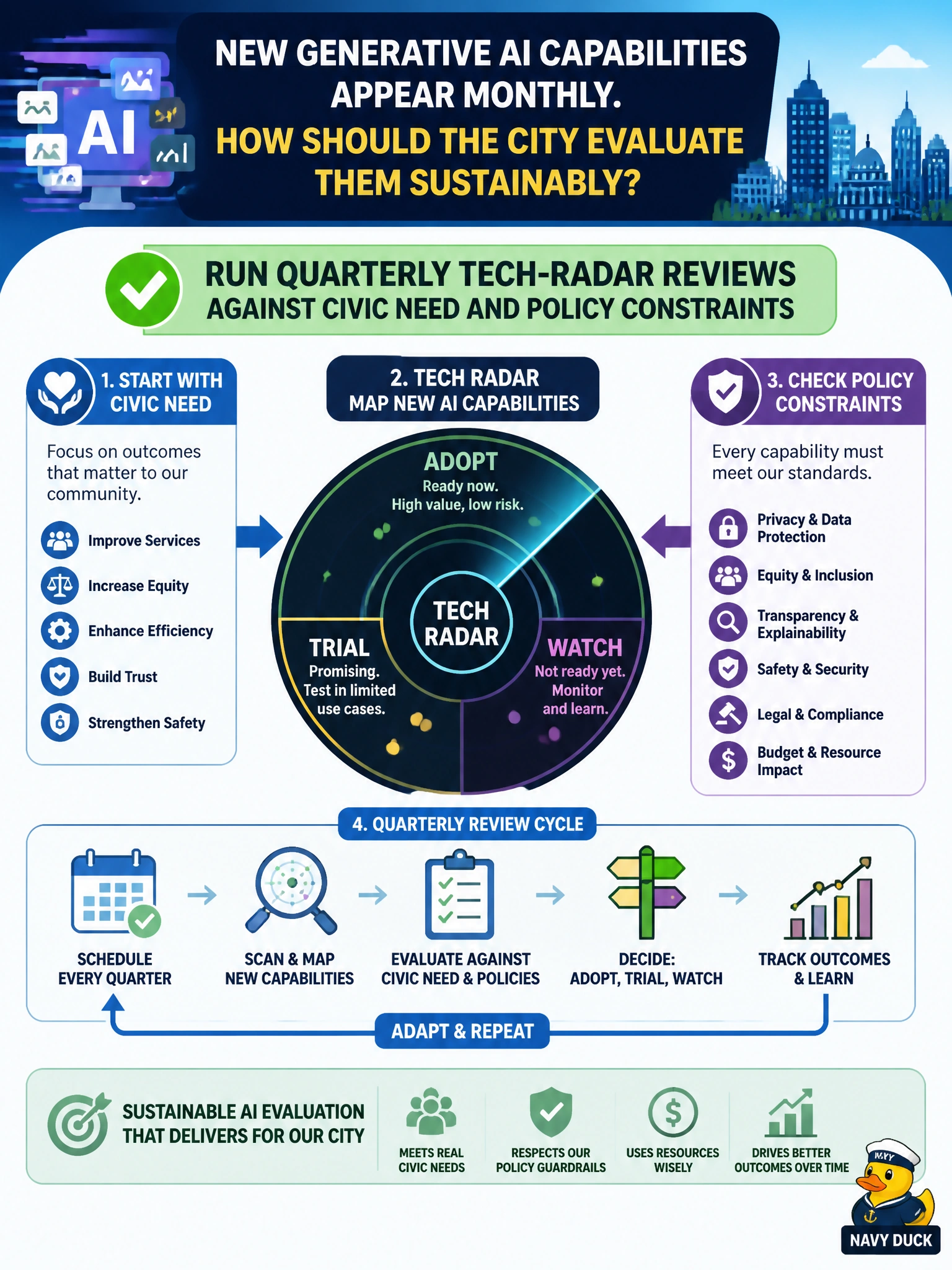
Short Explanation
Shine a tech radar on the new shiny objects—quarterly, against real civic need and policy—not every vendor webinar or a five-year freeze.
Full Explanation
As new generative AI capabilities appear monthly, sustainable municipal evaluation means running quarterly tech-radar reviews against civic need and policy constraints. A radar cadence creates space to assess usefulness, equity, privacy, security, accessibility, procurement fit, and total cost without either freezing innovation or chasing every release note. Decisions then follow documented criteria rather than FOMO. Adopting every new capability immediately to stay cutting-edge fails because unmanaged adoption multiplies risk, training debt, and integration sprawl across city departments. Forbidding any technology review for at least five years fails by guaranteeing obsolescence and shadow IT as staff seek tools anyway. Outsourcing all evaluation solely to vendor sales webinars fails because sales narratives are not independent civic due diligence. Exam caveat: "move fast" and "ban novelty" are paired traps; structured periodic evaluation is the middle path the exam rewards. Operational check: maintain a quarterly tech-radar ritual with privacy/security/program stakeholders, score candidates against published policy and service needs, and record adopt/trial/assess/hold decisions in the roadmap.