
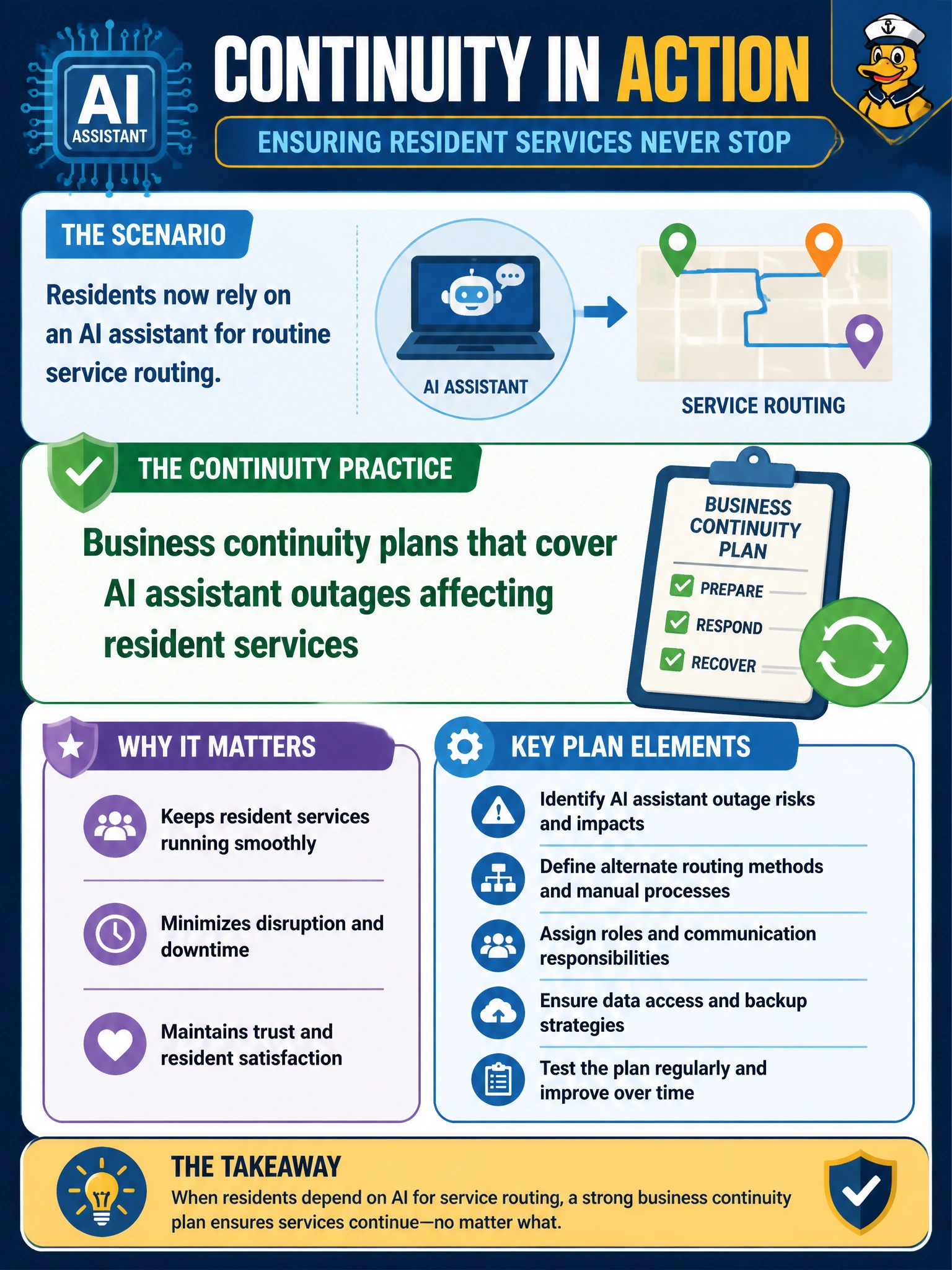
Residents now rely on an AI assistant for routine service routing. What continuity practice should be in place?
Select an answer to reveal the explanation.
Short Explanation
Bots take sick days too. Put AI assistant outages in the business continuity plan so residents still get routed when the magic box blinks off.
Full Explanation
If residents rely on an AI assistant for routine service routing, continuity practice must include business continuity plans that cover AI assistant outages affecting resident services. Once the assistant is on the critical path for 311-style routing or intake, its failure is a service continuity event, not merely an IT inconvenience. Plans should define degraded modes, human channel surge, status communications, and recovery ownership. Assuming the assistant will never fail because uptime marketing promises 100% fails because no production system is failure-free and marketing is not a continuity control. Disabling all human channels once the assistant launches fails by removing the fallback residents need during outages or unsafe answers. Documenting continuity only for traditional non-AI systems fails because it ignores the new dependency the city created. Exam caveat: "AI is highly available" distractors substitute vendor claims for municipal continuity design. Operational check: add AI assistant outage to the BCP/COOP inventory, tabletop a failure during peak call volume, document human overflow staffing, and publish resident-facing alternate contact paths before the next high-demand season.