
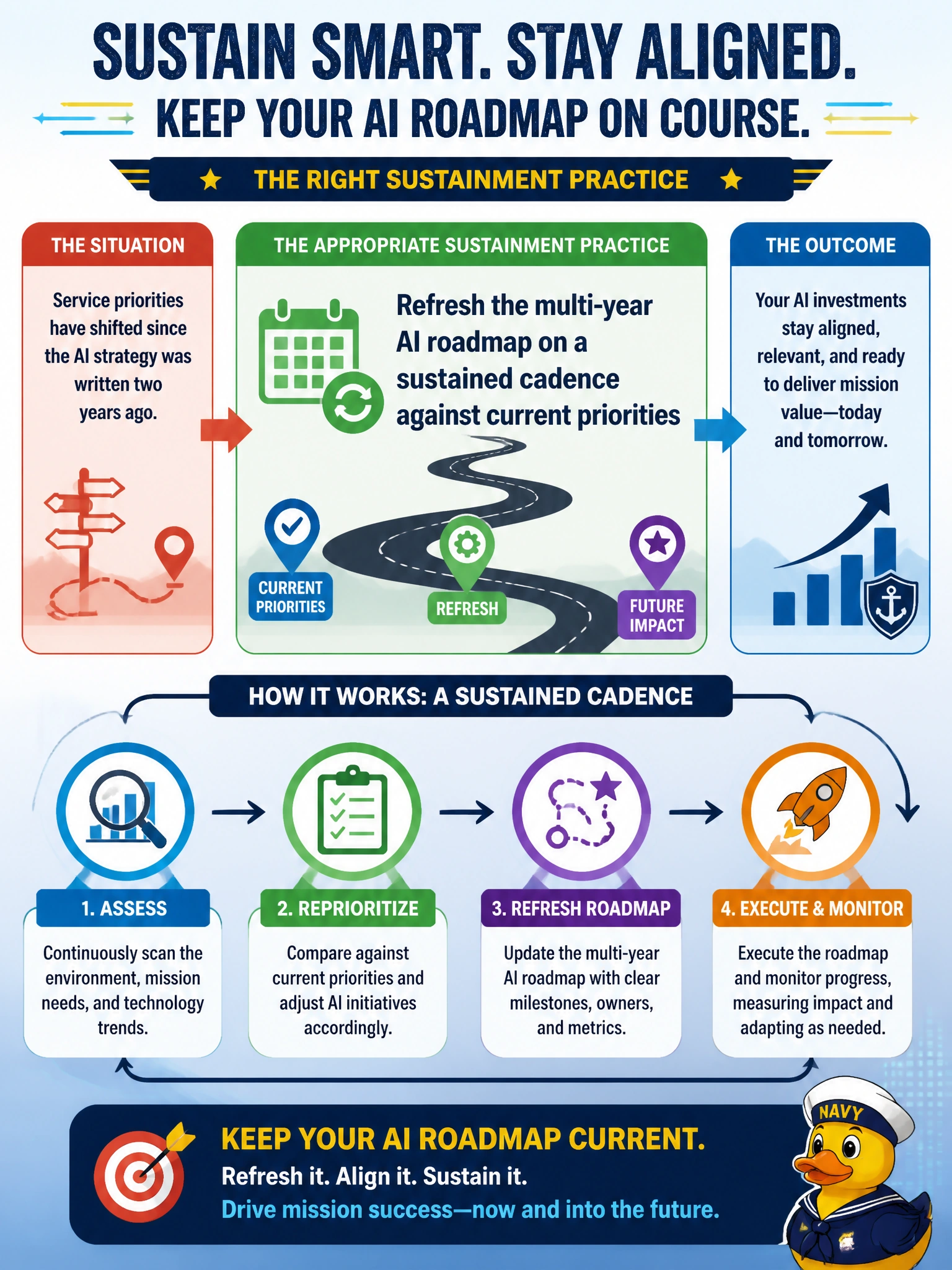
Service priorities have shifted since the AI strategy was written two years ago. What sustainment practice is appropriate?
Select an answer to reveal the explanation.
Short Explanation
Strategy isn’t a museum piece. Refresh the multi-year AI roadmap on a real cadence so it tracks today’s service priorities—not last year’s org chart.
Full Explanation
When service priorities have shifted since the AI strategy was written two years ago, the appropriate sustainment practice is to refresh the multi-year AI roadmap on a sustained cadence against current priorities. Roadmaps are steering instruments for municipal investment; freezing them after publication turns strategy into nostalgia while permitting, public safety, or equity needs move. Cadenced refresh keeps sequencing, capacity, and risk appetite aligned to what the city must deliver now. Freezing the old roadmap permanently to show consistency fails because consistency without relevance wastes budget and credibility. Ignoring service changes and only tracking model vendor roadmaps fails because vendor feature calendars are not civic need. Replacing strategy with whichever department shouts loudest each week fails because reactive loudness is not portfolio governance and undermines equity across quieter bureaus. Exam caveat: "stick to the plan" can sound disciplined yet is wrong when the operating context changed. Operational check: schedule roadmap refresh workshops (for example semiannual), intake current service priorities and constraints, republish changes with rationale, and realign funded initiatives to the updated civic roadmap.