
Several city AI pilots are ending. What ownership action best sustains transformation?
Select an answer to reveal the explanation.
Short Explanation
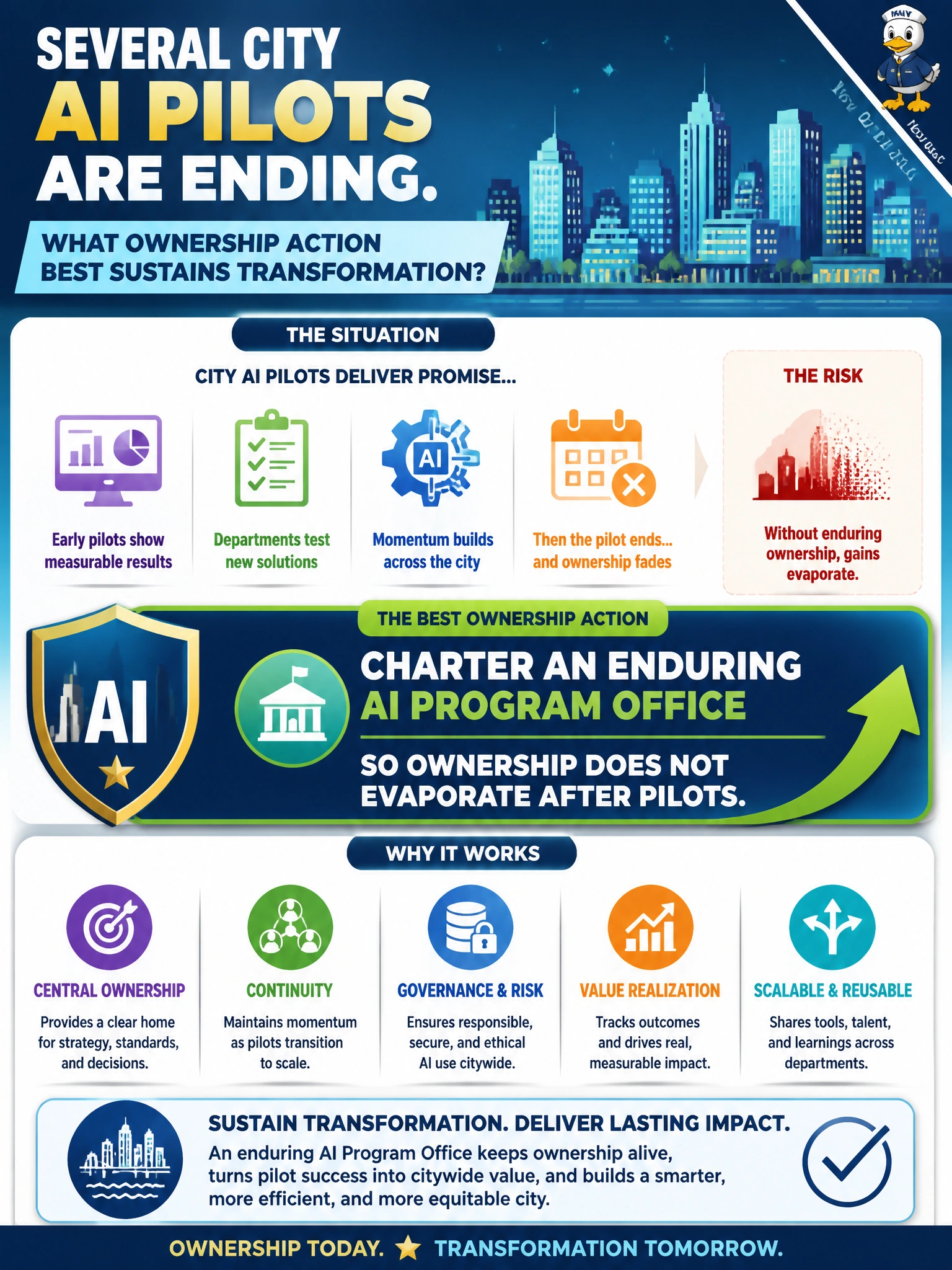
Pilots aren’t pets you release into the woods. Stand up an enduring AI program office so ownership sticks when the pilot balloons deflate.
Full Explanation
When several city AI pilots are ending, the ownership action that best sustains transformation is to charter an enduring AI program office so ownership does not evaporate after pilots. Pilots prove feasibility; sustainment requires a standing municipal home for roadmap stewardship, risk governance, vendor coordination, measurement, and cross-department pattern reuse. Without that charter, learned practices dissolve with temporary teams and departments relearn the same failures. Dissolving the temporary pilot team and hoping departments self-manage forever fails because diffuse ownership produces inconsistent controls and orphaned platforms still connected to city data. Transferring all AI decisions exclusively to the original vendor account team fails because vendors optimize commercial interests and cannot substitute for public-sector accountability. Pausing governance until the next innovation grant cycle arrives fails because risk and resident dependency do not pause between grants. Exam caveat: "return to departments" or "vendor-led" options sound lean but abandon program continuity. Operational check: adopt a charter naming the AI program office's mandate, decision rights, funding line, and interfaces to privacy, security, and service owners before pilot staff demobilize.