
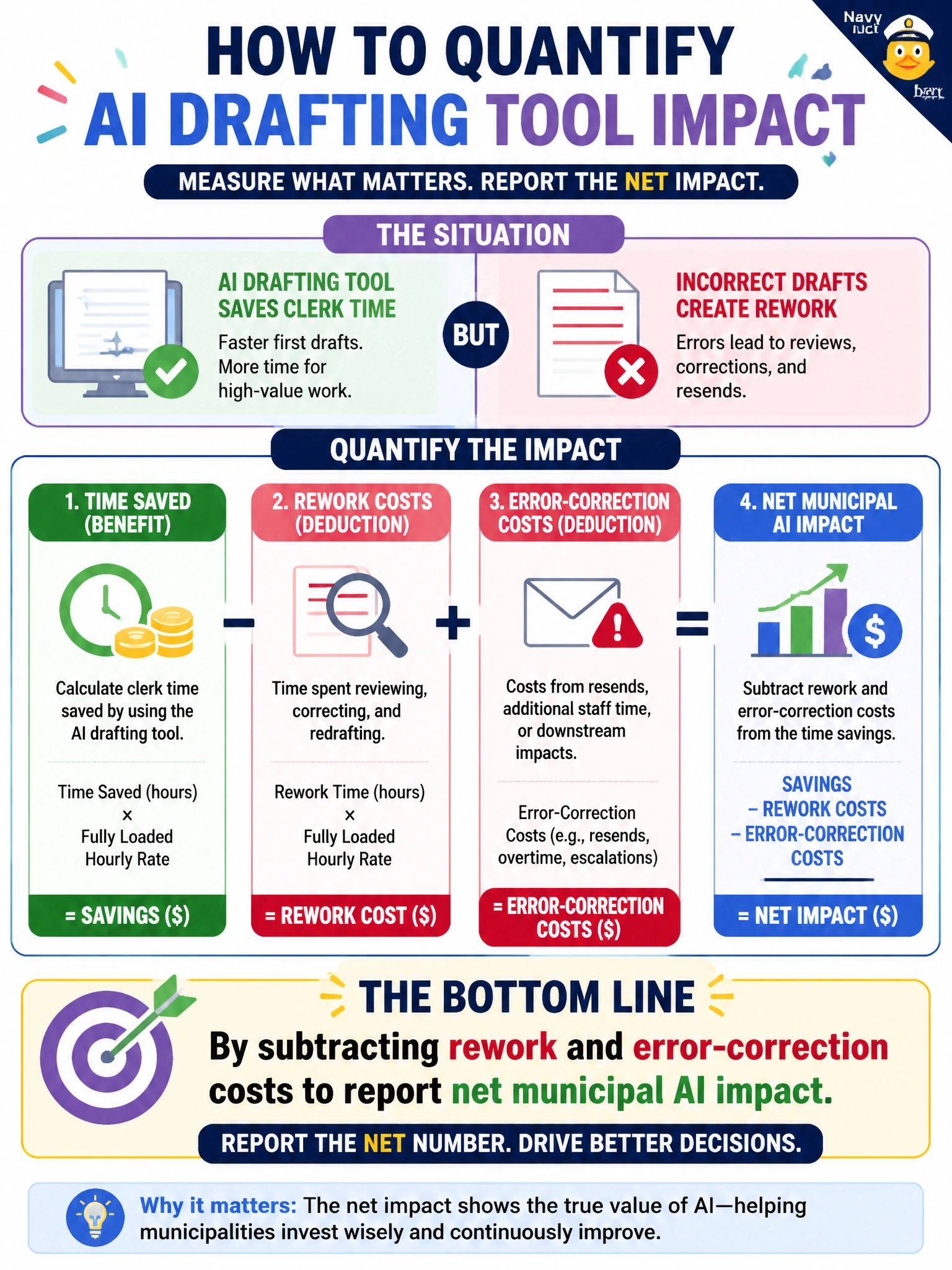
An AI drafting tool saves clerk time but also creates rework when incorrect drafts are sent. How should impact be quantified?
Select an answer to reveal the explanation.
Short Explanation
If the assistant saves an hour then burns forty minutes fixing its oops, the real win is twenty minutes—not the glossy gross number. Net out the rework.
Full Explanation
Net value accounting subtracts rework and error-correction effort from gross productivity gains when an AI drafting tool saves clerk time but also creates rework from incorrect drafts sent onward. Reporting net municipal AI impact prevents overstating benefits and supports better keep, fix, or improve decisions for the program and for finance partners. Counting only gross time saved and ignoring rework paints a glossy number that finance and auditors will eventually puncture when correction effort surfaces in overtime or complaint queues. Treating rework as a success metric that proves the tool is busy confuses activity with value—rework is a cost and quality signal, not proof of usefulness. Hiding error costs in a separate unofficial spreadsheet fragments the truth and enables double-counting of gains while burying losses away from the official ROI story. Exam caveat: prefer net impact after quality costs over gross-only savings theater in civic AI reporting. Operational check: log rework tickets tied to AI drafts, estimate correction minutes, subtract from gross savings in the official model, sample outbound quality regularly, and trigger prompt or process fixes when rework ratios erode net value below agreed thresholds.