
Pilot KPIs include deflection rate, sampled answer accuracy, and clerk satisfaction instead of only login counts. What measurement practice is this?
Select an answer to reveal the explanation.
Short Explanation
Logins are applause meters; deflection, accuracy samples, and clerk happiness tell you if the bot helps. Skip the vanity stats and measure the work that moved.
Full Explanation
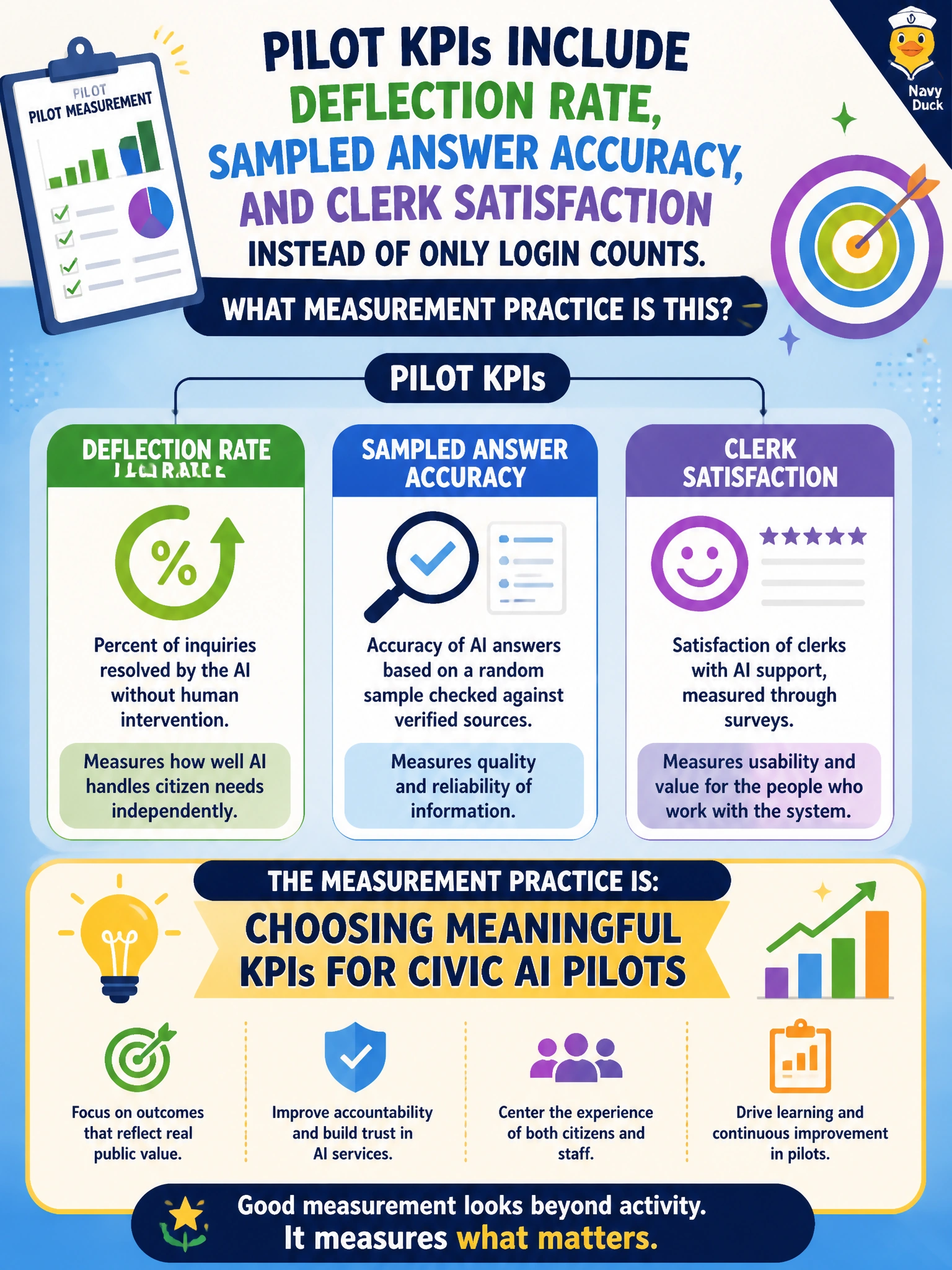
Choosing meaningful KPIs for civic AI pilots is the correct measurement practice when pilot KPIs include deflection rate, sampled answer accuracy, and clerk satisfaction instead of only login counts. That works because municipal value is whether work moved correctly—fewer unnecessary tickets, accurate answers, and staff who trust the tool—not whether people clicked once. Deflection, accuracy samples, and clerk satisfaction form a balanced set covering resident outcomes, quality, and operational adoption.
Using vanity login counts as the sole success metric fails by concept: logins can rise while answers are wrong and clerks absorb more rework. Tracking only how many press releases mention the pilot fails by concept—communications volume is not a service outcome. Measuring GPU temperature as a resident-service outcome fails by concept: infrastructure telemetry does not measure whether residents got correct permit guidance or whether clerks were helped.
Exam caveat: meaningful KPIs need definitions, sampling methods, and targets set before the pilot; post-hoc cherry-picking undermines credibility. Keep civic AI pilot / service KPI framing. Operational check: define deflection, accuracy sampling protocol, and clerk satisfaction instrument; set targets in the charter; report them at the pilot review; and refuse to promote on login or publicity metrics alone.