
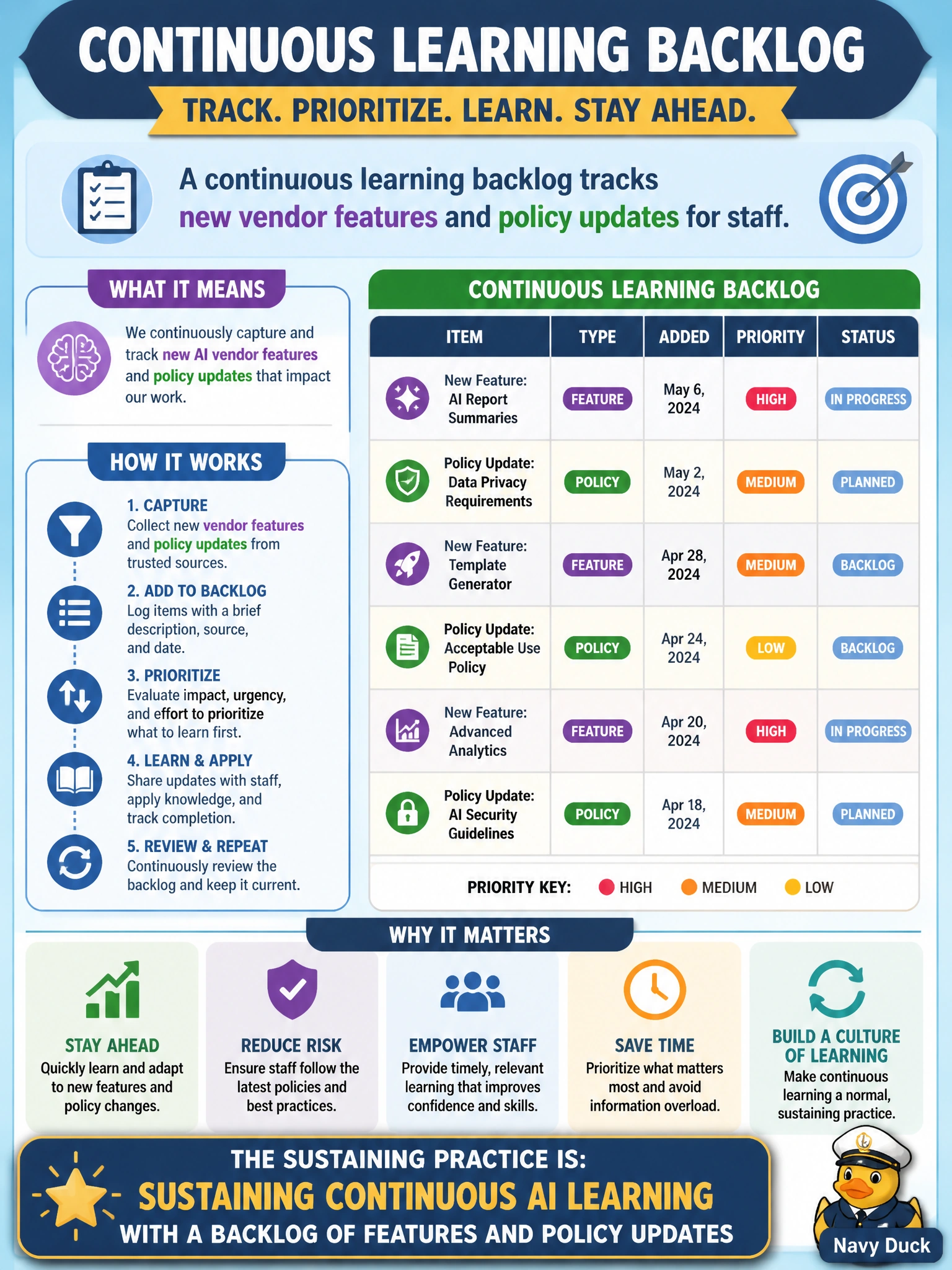
A continuous learning backlog tracks new vendor features and policy updates for staff. What sustaining practice is this?
Select an answer to reveal the explanation.
Short Explanation
AI and policy don’t sit still—so neither should the learning queue. Keep a backlog of new features and rule changes so staff stay current without crisis mode.
Full Explanation
AI capability and policy are moving targets; learning must be continuous. Maintaining a continuous learning backlog that tracks new vendor features and policy updates sustains ongoing AI learning for staff rather than treating onboarding as a one-time event. That practice works because model behavior, product UX, retention settings, and municipal AI policy change on different clocks; without a backlog, curricula rot and staff either freeze on outdated patterns or invent unsafe improvisations when new features appear.
Freezing all learning after the initial onboarding week forever fails by concept: static training cannot cover evolving tools and rules. Ignoring vendor feature changes and policy updates in staff curricula fails currency—the two primary drift sources. Letting learning happen only when a major incident forces a scramble fails because incident-driven training is reactive, uneven, and costly compared with planned backlog grooming.
Exam caveat: continuous learning is an operating discipline, not optional enrichment. Keep civic/staff framing. Operational check: own a learning backlog with sources (vendor release notes, policy changes, incident lessons), prioritize monthly micro-updates, and verify that high-impact changes reach affected roles before or as features are enabled in municipal environments.