
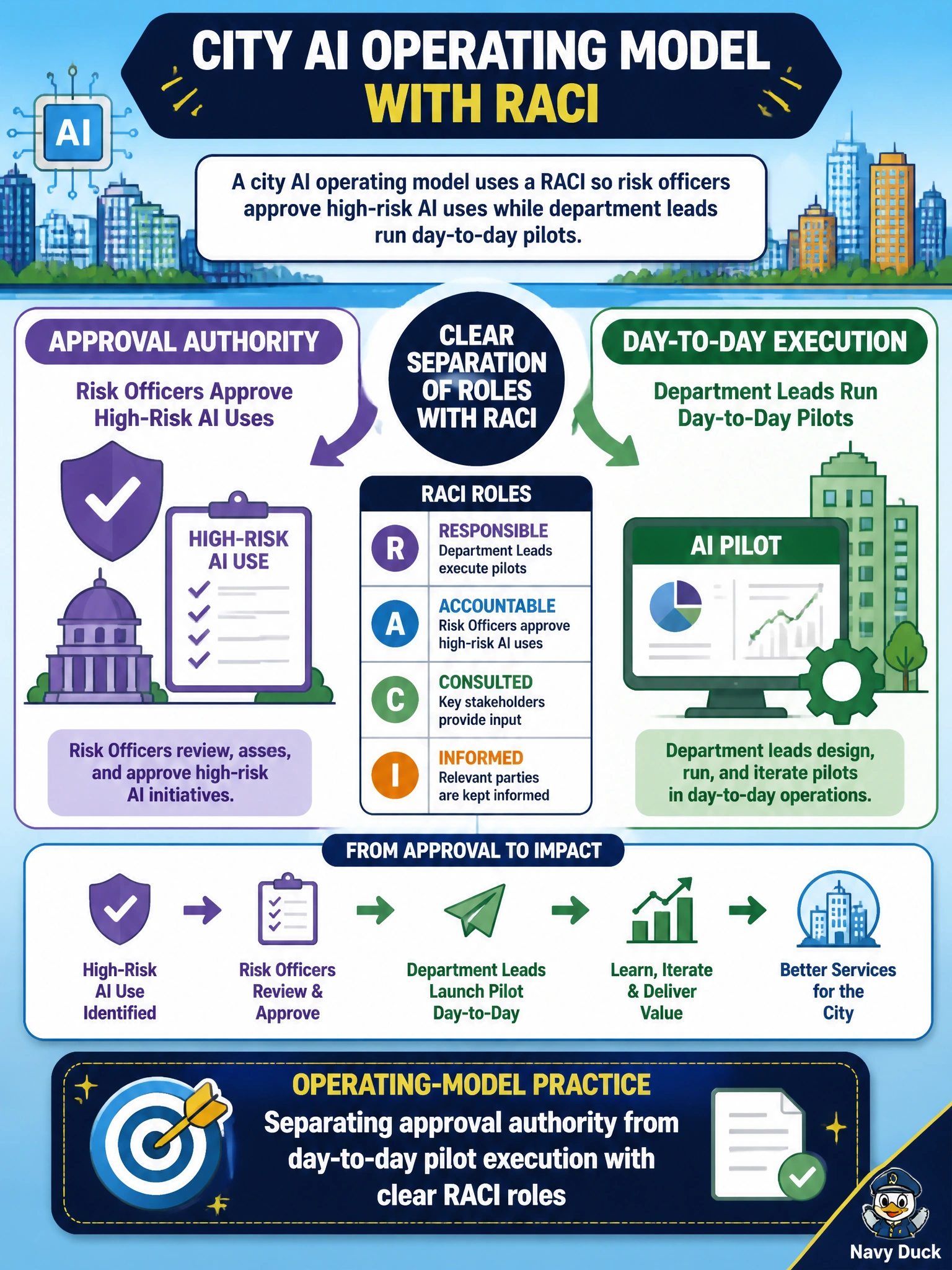
A city AI operating model uses a RACI so risk officers approve high-risk AI uses while department leads run day-to-day pilots. What operating-model practice is this?
Select an answer to reveal the explanation.
Short Explanation
Think of it like a building permit: inspectors approve; crews swing the hammers. RACI keeps who green-lights high-risk AI separate from who runs the daily pilot grind.
Full Explanation
In a municipal AI operating model, RACI is the mechanism that makes high-risk decisions governable rather than improvised. Separating approval authority from day-to-day pilot execution means risk officers (or an equivalent named Approver) formally green-light high-risk civic AI uses while department leads remain Accountable or Responsible for running pilots, collecting evidence, and iterating under those constraints. That split is what the correct option states: clear RACI roles keep who may authorize sensitive resident-facing AI distinct from who executes the daily work. Conceptually this works because high-risk uses—eligibility scoring, enforcement prioritization, benefits routing—create equity, privacy, and due-process exposure that line teams should not self-certify. Explicit Approver/Responsible/Consulted/Informed assignments also create an audit trail for councils, auditors, and residents.
Letting every pilot self-approve high-risk uses fails because it collapses governance into local convenience and removes an independent risk gate; conflicts of schedule and mission pressure will routinely override caution. Assigning only execution roles while never documenting who may approve high-risk AI fails by concept: RACI without an Approver for elevated risk is an incomplete control design and leaves denials, escalations, and go/no-go decisions orphaned. Collapsing approval and execution into one silent informal handshake fails because undocumented verbal consent is not a durable civic control—it cannot be evidenced, challenged, or transferred when staff rotate.
Exam caveat: CAIPM operating-model items often tempt candidates toward 'empower teams' answers; empowerment is not the same as unsupervised high-risk self-approval. Municipal framing matters—city risk officers and department pilot leads are classic split-of-duty actors. Operational check: publish a RACI for high-risk AI, require written Approver sign-off before production or resident impact, and sample pilot records to verify Approver identity matches the chart rather than an informal chat.