
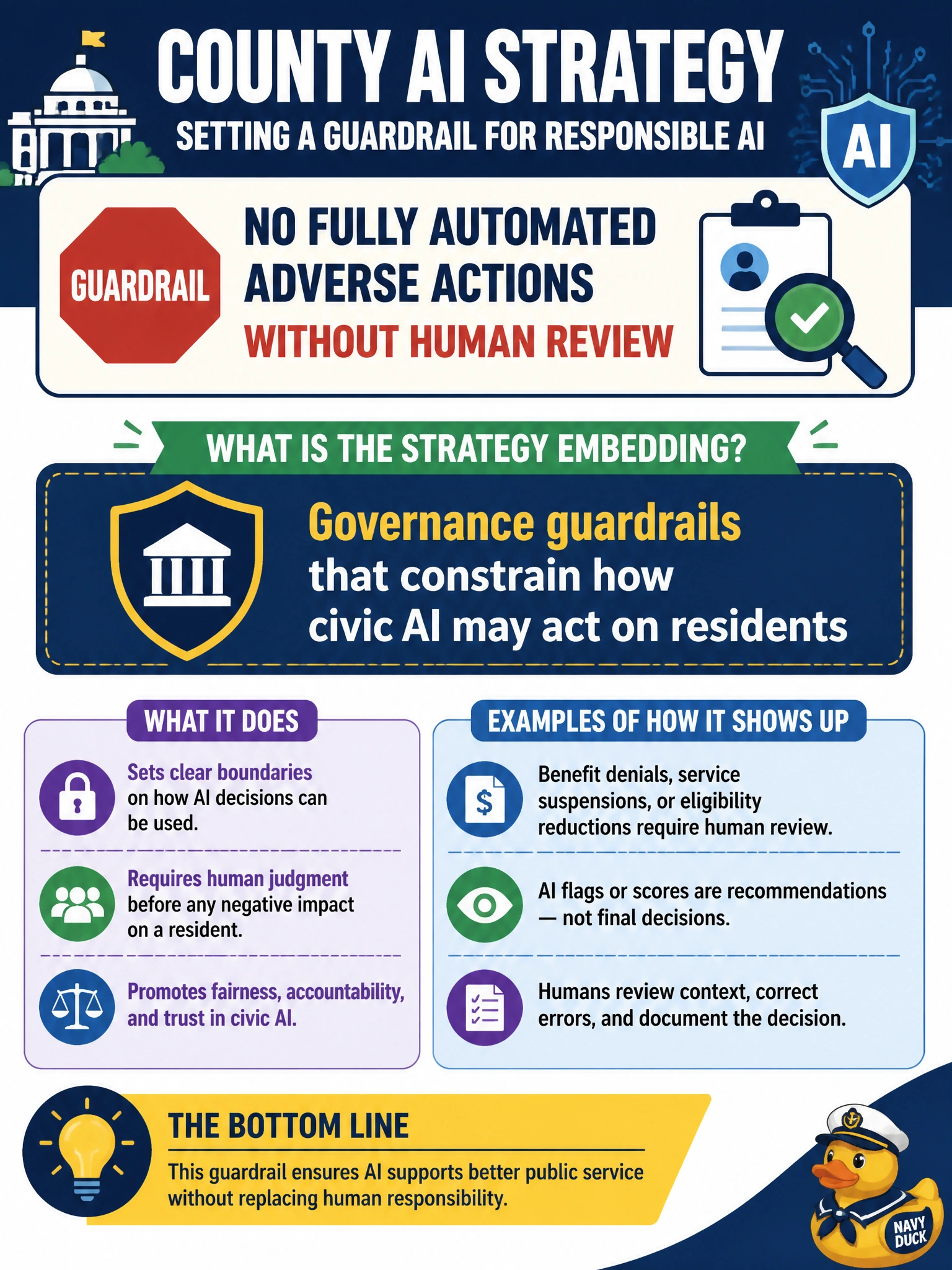
A county AI strategy sets a guardrail: no fully automated adverse actions without human review. What is the strategy embedding?
Select an answer to reveal the explanation.
Short Explanation
Strategy isn’t only moonshots—it’s also the fence around the cliff. No auto-adverse hits without a human in the loop is a guardrail that belongs in the plan.
Full Explanation
Governance guardrails inside municipal AI strategy constrain how systems may act on residents. A rule that no fully automated adverse actions occur without human review embeds due-process, accountability, and risk limits into strategy—not merely into a late-stage ethics memo. That guardrail shapes which use cases are eligible for the roadmap, what design patterns are mandatory (human-in-the-loop, appeal, logging), and how vendors are evaluated. Strategy thus becomes both aspirational and restrictive in the right places.
A rule that automation must always replace every reviewer immediately fails because it is the opposite of a protective guardrail and maximizes harm potential. An exception that adverse decisions never need oversight fails civic duty and legal expectations in many service domains. A ban on documenting any AI policy choices fails transparency and makes consistent enforcement impossible across departments.
Exam caveat: “human review” must be meaningful—rubber-stamp queues without time, training, or authority do not satisfy the guardrail’s intent. Operational check: inventory proposed municipal AI uses that can produce adverse resident outcomes; verify each has a named human review step, escalation path, and audit record before architecture approval or procurement.