
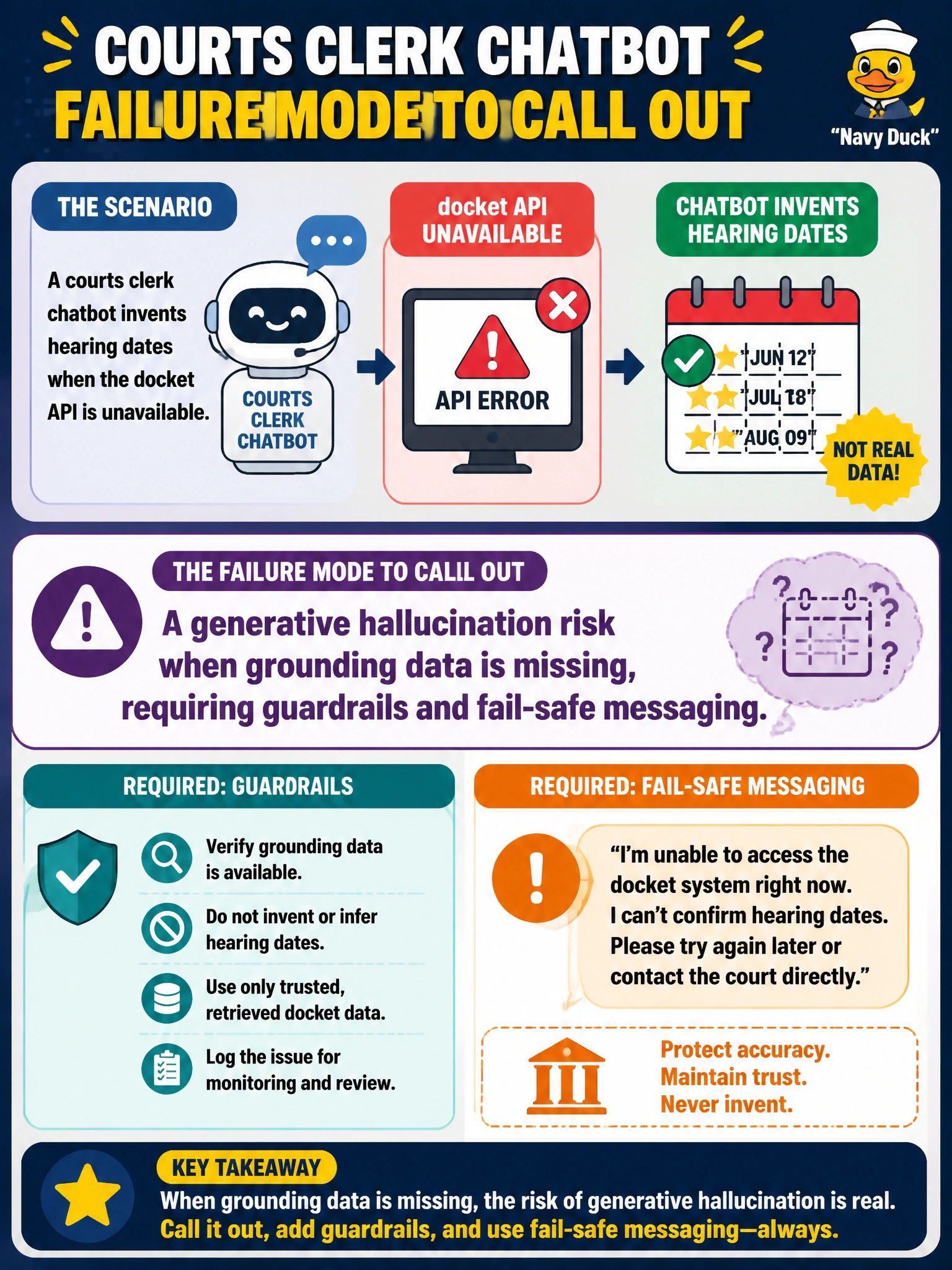
A courts clerk chatbot invents hearing dates when the docket API is unavailable. Which failure mode should the AI program manager call out?
Select an answer to reveal the explanation.
Short Explanation
When the docket plug is yanked, a chatty bot may still sound confident and make up hearing times—like a tour guide inventing room numbers. That is hallucination, not helpful creativity. Fail closed and tell the resident the system is offline.
Full Explanation
When a court-facing generative assistant loses its docket grounding connection yet still produces confident hearing times, the AI fundamentals lesson is hallucination risk under missing grounding data. Generative models can fluent-fill gaps; without retrieval or system-of-record checks, invented times harm residents and due process. Program managers must require guardrails, fail-safe messaging, and fail-closed behavior when integrations are down—not celebrate ungrounded "creativity" in justice workflows. Calling the behavior beneficial creativity that improves scheduling throughput misreads harm: false hearing times destroy trust and create missed appearances. Claiming it proves unsupervised clustering can replace the docket system of record confuses clustering with generation and wrongly demotes the authoritative docket. Saying it is evidence that threshold SCADA alarms belong in the clerk workflow is a category error; SCADA thresholds are OT monitoring patterns, not a remedy for ungrounded chat. Exam caveat: fluent ≠ correct; missing grounding elevates hallucination, especially in high-stakes civic domains. Operational check: health-check docket APIs before answering schedule questions, refuse or escalate with clear "system unavailable" language when retrieval fails, log grounding citations, and keep the clerk or case-management system of record authoritative for official notices.