
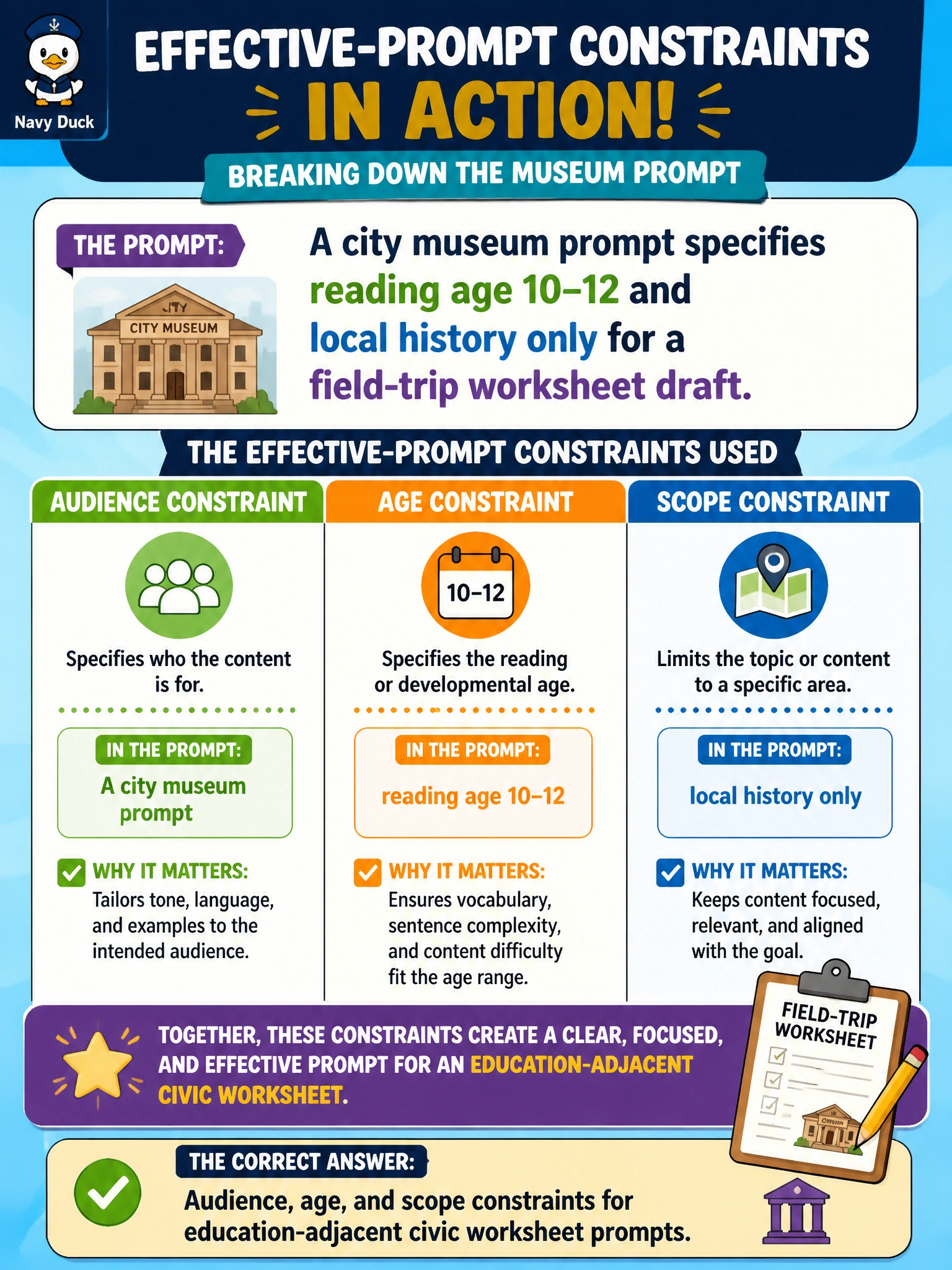
A city museum prompt specifies reading age 10–12 and local history only for a field-trip worksheet draft. What effective-prompt constraints are used?
Select an answer to reveal the explanation.
Short Explanation
Tell the model who the kids are and stick to local history. Age and scope fences keep field-trip worksheets usable. You'll miss fit with style, age, and scope constraints for education-adjacent civic worksheet prompts that add style but skip audience, audience, tone, and scope constraints for education-adjacent civic worksheet prompts that add tone but skip age, or audience, age, and length constraints for education-adjacent civic worksheet prompts that add length but skip scope.
Full Explanation
Education-adjacent civic prompts succeed when audience and scope are explicit. Specifying reading age 10–12 and local history only for a city museum field-trip worksheet applies audience, age, and scope constraints so drafts match visitors and the collection. Age bounds control vocabulary and cognitive load; local-history scope keeps content tied to what students will see on site rather than style, age, and scope constraints for education-adjacent civic worksheet prompts, which add style for voice but do not enforce audience fit for the 10–12 visitors. Those fences are the effective-prompt constraints the question targets.
Style, age, and scope constraints for education-adjacent civic worksheet prompts fail because they emphasize style and voice without establishing audience fit for the 10–12 visitors required for the field-trip worksheet, even with age and scope mentioned. Audience, tone, and scope constraints for education-adjacent civic worksheet prompts fail because they emphasize tone and voice without establishing age fit for the 10–12 reading level required for the field-trip worksheet, even with audience and scope mentioned. Audience, age, and length constraints for education-adjacent civic worksheet prompts fail because length formatting does not establish scope fit for local-history-only field-trip materials, even with audience and age mentioned.
Exam caveat: age and scope constraints improve fitness for purpose; they do not certify historical accuracy. Staff still must fact-check names, dates, and exhibit references against museum curation before printing.
Operational check: put audience age band and geographic/collection scope in the system or task prompt; add a post-draft checklist (reading level, local-only claims, exhibit alignment); have education staff approve before classroom distribution.
Prefer to study offline? Printable PDF study book + test engine ($7.50, unofficial). These questions stay free here.