
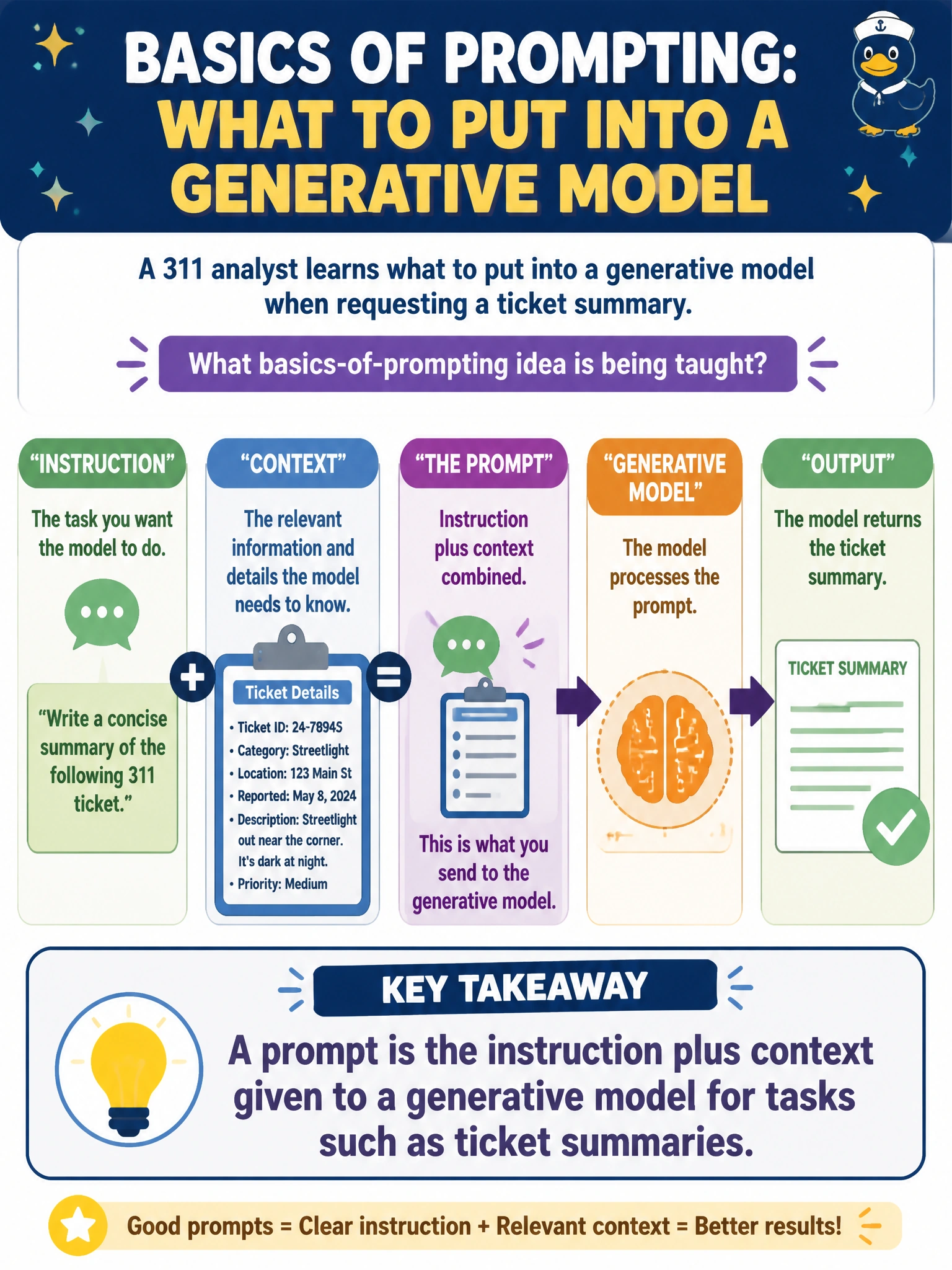
A 311 analyst learns what to put into a generative model when requesting a ticket summary. What basics-of-prompting idea is being taught?
Select an answer to reveal the explanation.
Short Explanation
A prompt is just what you tell the model—instructions plus the ticket context—so it can draft a summary. It's not the feedback plus rating you'll give after, it's not the training data plus weights that built the model, and it's not the temperature plus token limit that tunes randomness and length. Clear asks in, better drafts out.
Full Explanation
When a 311 analyst learns what to put into a generative model for a ticket summary, the literacy point is definitional: a prompt is the instruction plus context supplied to the model for a task. For ticket summaries that typically means stating the goal (concise summary), constraints (neutral tone, key fields), and the ticket text or structured fields themselves. Understanding that the prompt is the controllable input—not magic inside the model—lets staff improve drafts by clarifying asks rather than blaming the tool blindly.
Treating a prompt as the feedback plus rating given to a generative model for tasks such as ticket summaries fails because that describes evaluation after generation, not the instruction-plus-context input given to a generative model to steer the task. Calling a prompt the training data plus weights given to a generative model for tasks such as ticket summaries fails because training data and weights are what build the model beforehand, not the instruction-plus-context input you give the model to steer the task. Treating a prompt as the temperature plus token limit given to a generative model for tasks such as ticket summaries fails because temperature and token limit are separate configuration parameters that control randomness and length, not the instruction-plus-context input used to generate the summary.
Exam caveat: prompts can include system/role messages, few-shot examples, and retrieved context; the unifying idea remains "what you give the model to steer the task." Operational check: for 311 summaries, require a template that includes ticket ID, resident issue excerpt, and instructions such as "summarize in three bullets; do not invent status"; keep a human in the loop before closing or publishing the summary.
Prefer to study offline? Printable PDF study book + test engine ($7.50, unofficial). These questions stay free here.