
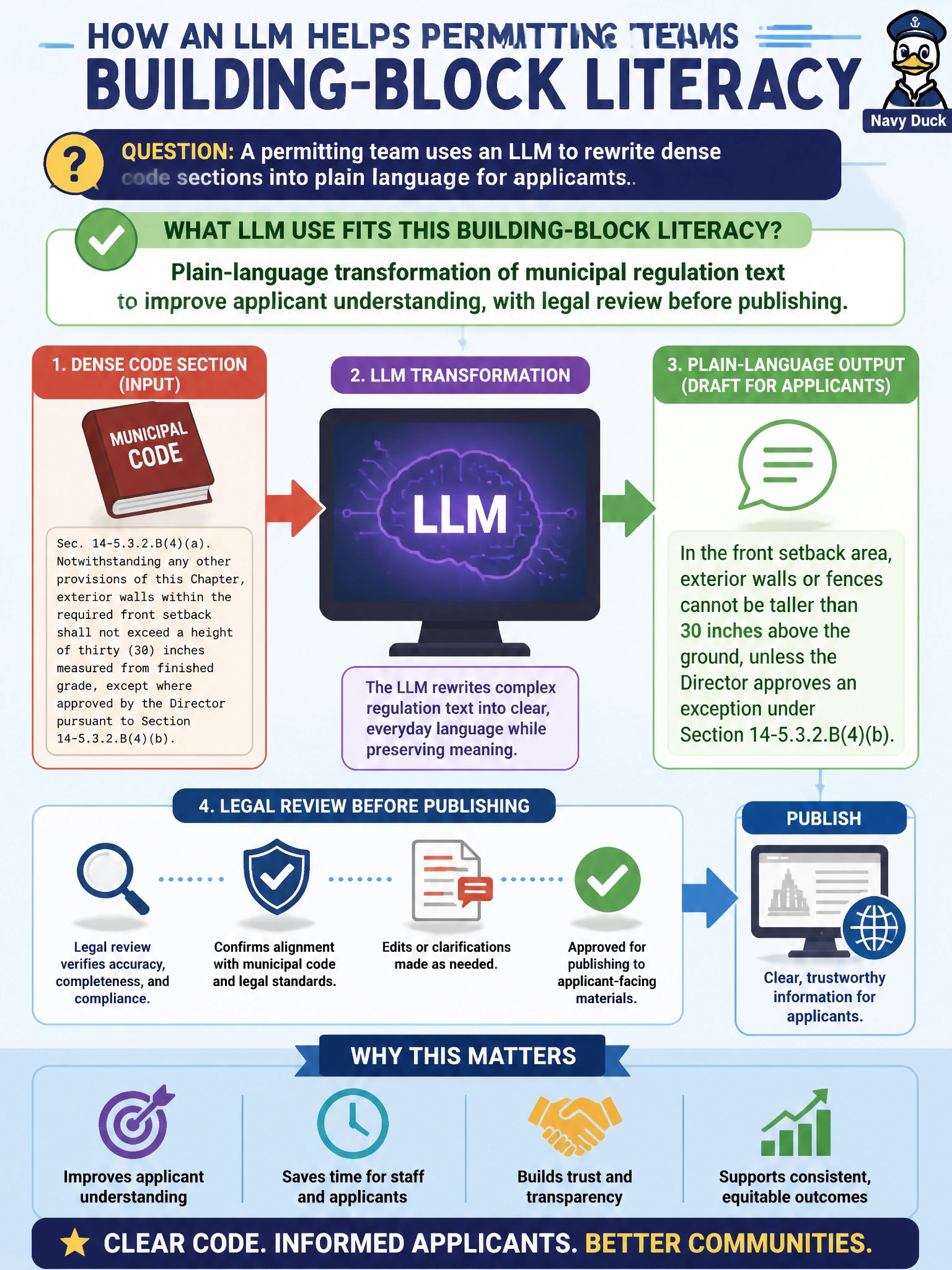
A permitting team uses an LLM to rewrite dense code sections into plain language for applicants. What LLM use fits this building-block literacy?
Select an answer to reveal the explanation.
Short Explanation
Dense code becomes plain talk so applicants stop drowning in jargon—then lawyers still sign off. Just finding the text or shortening it into a summary won't give you a full rewrite, so you'll stay stuck with jargon or miss bits you need. Generating fresh wording from scratch isn't transforming what's there, so you won't stay tied to what the code actually says.
Full Explanation
A fitting LLM building-block use in permitting is plain-language transformation: rewriting dense municipal code sections so applicants can understand requirements, while legal or plan-review staff approve the published plain-language aid. The LLM improves accessibility of explanation; it does not replace the official code or the plan examiner’s determination. That pattern matches literacy goals—assist comprehension, preserve legal hierarchy, keep humans accountable.
Plain-language generation of municipal regulation text to improve applicant understanding, with legal review before publishing, generates new wording rather than transforming the adopted code sections into plain language, so it risks adding obligations that were not adopted and violates the literacy goal of preserving fidelity to the source. Plain-language summarization of municipal regulation text to improve applicant understanding, with legal review before publishing, condenses and shortens the text rather than rewriting the full dense code sections for applicant comprehension, so it can omit exceptions and numeric limits and does not match the transformation building block asked about. Plain-language retrieval of municipal regulation text to improve applicant understanding, with legal review before publishing, finds and returns existing text rather than rewriting the complete requirement in plain terms, so it does not serve the transformation literacy goal.
Exam caveat: plain-language rewrites can omit exceptions, cross-references, or numeric limits that change compliance obligations. Operational check: publish plain-language text as non-controlling guidance linked to code citations, require legal/plan-review sign-off, version both texts together, and remind applicants that the adopted code controls if wording conflicts.
Prefer to study offline? Printable PDF study book + test engine ($7.50, unofficial). These questions stay free here.