
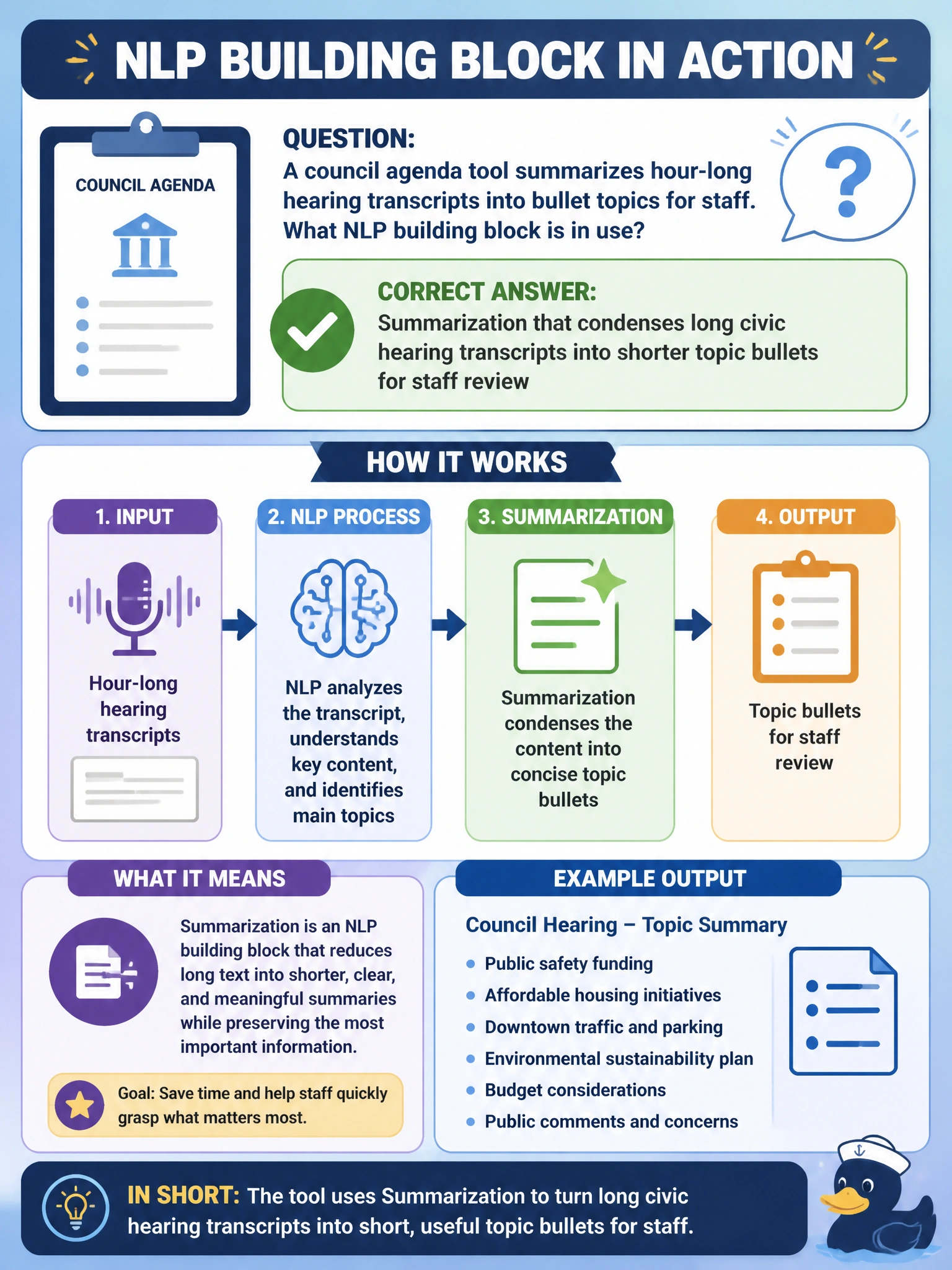
A council agenda tool summarizes hour-long hearing transcripts into bullet topics for staff. What NLP building block is in use?
Select an answer to reveal the explanation.
Short Explanation
Hour-long hearings become bullet topics so staff can skim the map before diving into the weeds. It's summarization you'll count on when you turn civic transcripts into bullets, since transcription gives you text from audio, classification gives you category labels, and entity extraction gives you names, dates, and motions but none of those condense transcripts into bullets for you. People still verify against the source.
Full Explanation
Summarization is the NLP building block that compresses long text into shorter representations while preserving main topics. A council agenda tool that turns hour-long hearing transcripts into bullet topics for staff is applying summarization to civic records so analysts can prepare follow-ups, briefings, and agenda packets without rereading every minute. The official transcript remains the record; the summary is a staff aid. That distinction is central to responsible municipal NLP literacy. Transcription that condenses long civic hearing transcripts into shorter topic bullets for staff review mislabels the task; transcription converts hearing audio into verbatim text for the record rather than condensing transcripts into topic bullets for staff. Classification that condenses long civic hearing transcripts into shorter topic bullets for staff review mislabels the task; classification assigns agenda items to policy categories for staff routing instead of compressing hearing transcripts into summary bullets, so it does not perform the task described. Entity extraction that condenses long civic hearing transcripts into shorter topic bullets for staff review mislabels the task; entity extraction identifies names, dates, and motions mentioned across hearing testimony rather than generating condensed topic bullets from the full transcript. Exam caveat: summaries can omit minority viewpoints, procedural motions, or numeric commitments—staff must not treat bullets as a substitute for the certified record when accuracy matters. Operational check: label summaries as draft aids, cite transcript timestamps for each bullet, spot-check sensitive hearings for omitted public comments, and keep human ownership of agenda language that goes to council.
Prefer to study offline? Printable PDF study book + test engine ($7.50, unofficial). These questions stay free here.