
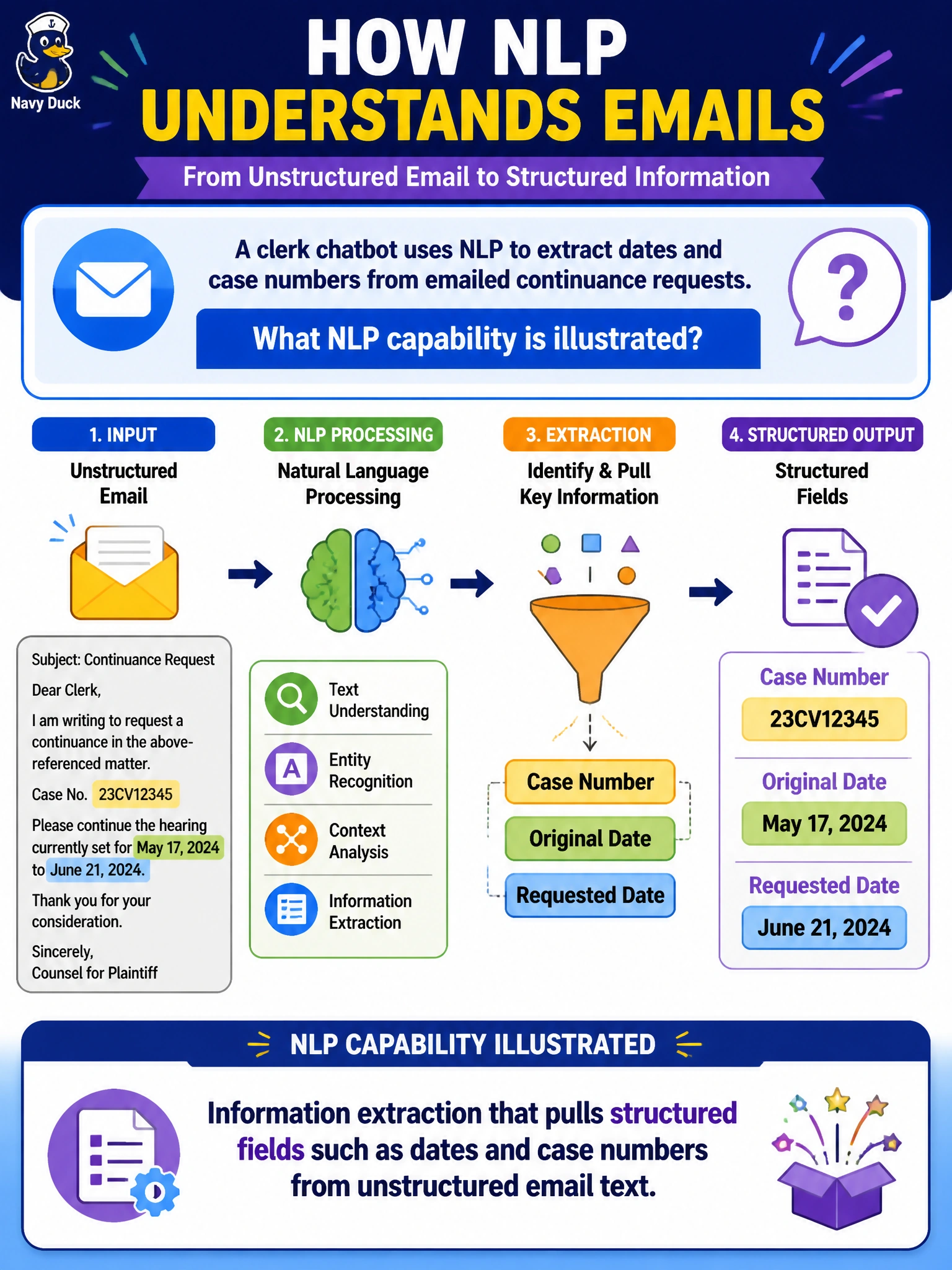
A clerk chatbot uses NLP to extract dates and case numbers from emailed continuance requests. What NLP capability is illustrated?
Select an answer to reveal the explanation.
Short Explanation
The bot is hunting dates and case numbers inside messy email prose—classic information extraction. It's turning free text into fields you'll file, not sentiment analysis you'll use to gauge tone, not text classification you'll use to sort by type, and not text summarization you'll use to skim. Humans still own the continuance decision.
Full Explanation
Natural language processing (NLP) includes information extraction: taking unstructured civic text and pulling out structured fields a clerk can file. When a municipal chatbot reads emailed continuance requests and isolates dates and case numbers, it is demonstrating that capability. The emails remain messy prose; the useful work is converting them into fields that case-management systems, calendars, and human clerks can act on. This is a classic building-block use of NLP in courts and clerk offices—assistive structuring of inbound correspondence, not automated adjudication.
Sentiment analysis that pulls structured fields such as dates and case numbers from unstructured email text mislabels the task; sentiment analysis detects tone or urgency, not information extraction, so it would gauge feeling from the prose but won't isolate the structured date or case number for filing. Text classification that pulls structured fields such as dates and case numbers from unstructured email text mislabels the task; classification assigns a whole-email label such as hearing type, not information extraction, so it sorts the request but doesn't isolate structured field values like dates and case numbers. Text summarization that pulls structured fields such as dates and case numbers from unstructured email text mislabels the task; summarization produces a condensed digest, not information extraction, so it shortens the prose but doesn't extract the specific date and case number fields a clerk needs to file.
Exam caveat: information extraction is not the same as summarization, translation, or generative drafting—those are related NLP families but answer different municipal needs. Operational check: sample extracted continuance fields against the original email, require clerk confirmation before calendar changes, and log extraction confidence or review flags so bad parses do not silently move hearing dates.
Prefer to study offline? Printable PDF study book + test engine ($7.50, unofficial). These questions stay free here.