
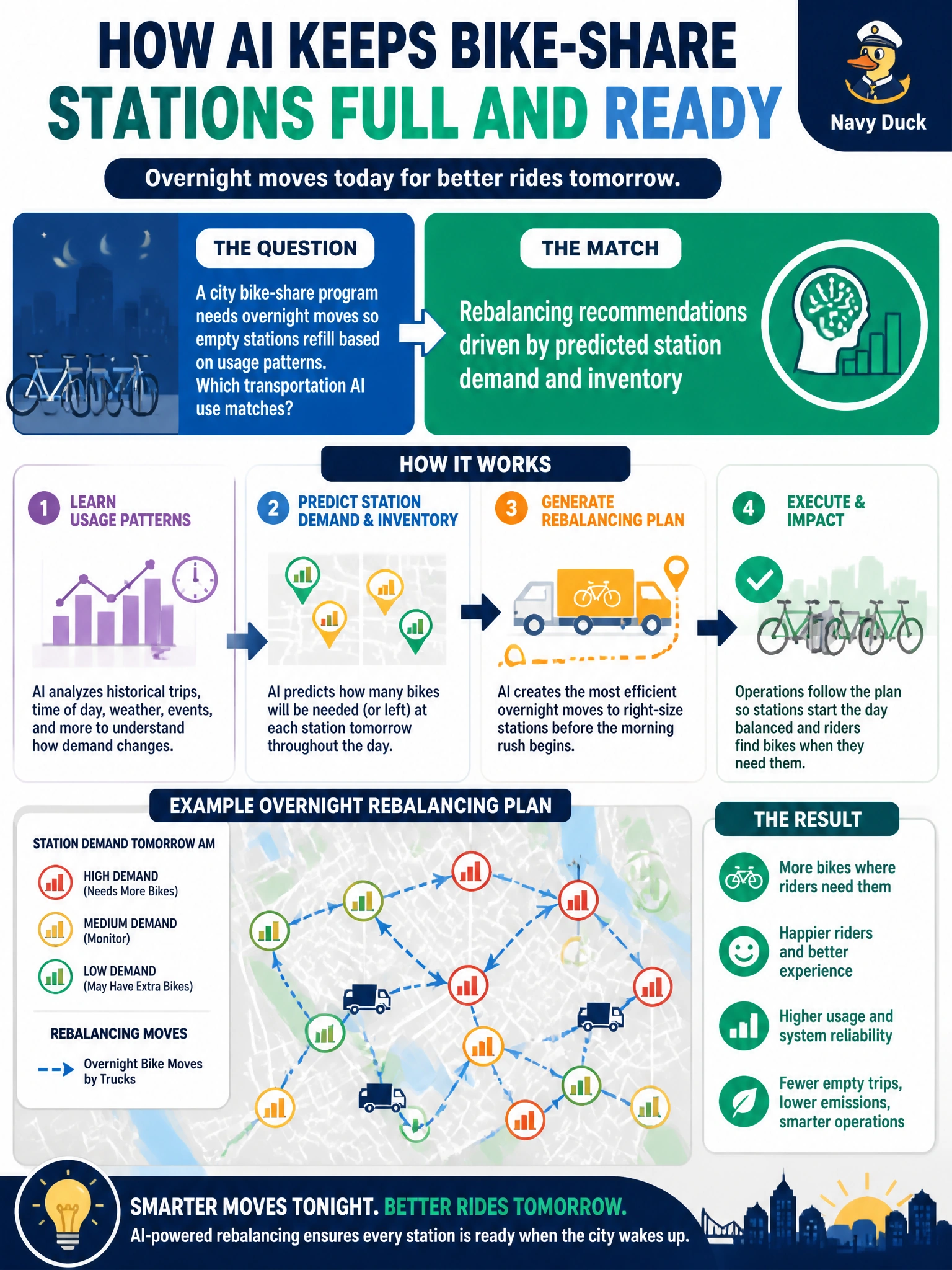
A city bike-share program needs overnight moves so empty stations refill based on usage patterns. Which transportation AI use matches?
Select an answer to reveal the explanation.
Short Explanation
Empty docks at dawn are like a vending machine sold out of one snack—rebalancing AI reads usage and tells crews where to move bikes overnight. That's micromobility logistics for you, not pricing-tier incentives that nudge riders or past-average schedules that can't see what you'll need. You'll still use live-traffic routing, but it won't tell you which docks to refill.
Full Explanation
A city bike-share program needing overnight moves so empty stations refill based on usage patterns matches rebalancing recommendations driven by predicted station demand and inventory. Micromobility AI forecasts which docks will run empty or full and recommends truck or van moves so morning riders find usable bikes and spaces. Field crews still execute moves, handle broken units, and adjust for festivals or outages the overnight plan may miss.
Rebalancing incentives driven by rental pricing tiers and peak surcharges try to steer rider behavior with price, not plan overnight crew moves from predicted demand and inventory. Rebalancing schedules set from past checkout averages by hour and day rely only on historical averages; they don't account for current inventory and predicted demand, so popular stations can still stay empty while slow ones overflow. Rebalancing routes driven by live traffic conditions and road closures optimize truck driving paths for traffic, but do not determine which stations need refill from predicted demand and inventory.
Exam caveat: Transportation micromobility AI focuses on inventory rebalancing from demand prediction. Pricing-tier incentives, past-average schedules, and live-traffic routes are frequent close-variant distractors.
Operational check: Validate recommendations against morning fill rates, keep crew capacity and truck routes feasible, allow manual overrides for special events, and track stations that chronically miss targets for physical redesign rather than only algorithmic tweaks.
Prefer to study offline? Printable PDF study book + test engine ($7.50, unofficial). These questions stay free here.