
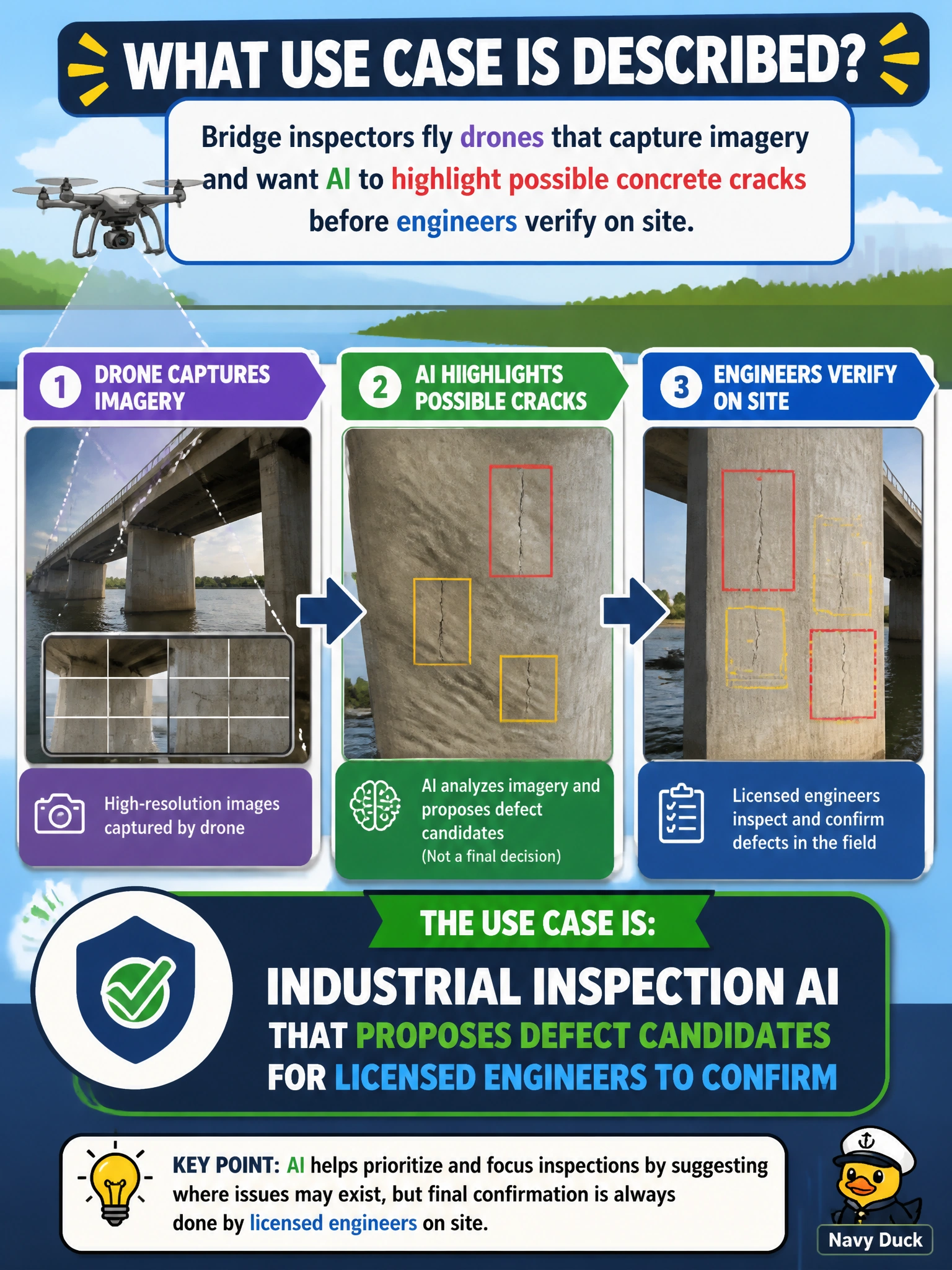
Bridge inspectors fly drones that capture imagery and want AI to highlight possible concrete cracks before engineers verify on site. What use case is described?
Select an answer to reveal the explanation.
Short Explanation
Drone photos are a giant highlight reel—AI circles maybes, and engineers still make the call with boots on the span. That is inspection support, not a robot mayor of the bridge. You don't use drone imagery to prepare 3D span models for reference when you need crack flags, so that photogrammetry option belongs elsewhere.
Full Explanation
Bridge inspectors flying drones that capture imagery and wanting AI to highlight possible concrete cracks before engineers verify on site describes industrial inspection AI that proposes defect candidates for licensed engineers to confirm. Models triage large imagery volumes by marking candidate cracks, spalls, or anomalies so scarce engineering time focuses on verification and structural judgment. Professional responsibility for load ratings, closures, and repair priorities stays with licensed staff; the AI is a screening aid.
Structural design AI that drafts bridge retrofit options for licensed engineers to approve addresses a different design task, not the defect screening described here, and it still leaves confirmation to licensed engineers rather than replacing inspection triage. Inspection reporting AI that drafts inspection summaries for licensed engineers to archive organizes findings after inspection but does not itself analyze new drone imagery for candidate cracks, so it cannot do the triage the scenario needs. Drone photogrammetry AI that prepares 3D span models for licensed engineers to reference creates geometry for reference rather than marking possible concrete cracks for engineers to verify, so it misses the inspection triage need.
Exam caveat: Inspection AI on infrastructure exams is almost always "propose for expert confirmation," never "draft bridge retrofit options for approval." Watch for options that shift the task away from defect triage to design or unrelated automation.
Operational check: Require engineer sign-off before accepting AI-generated structural designs, preserve geotagged image evidence with model overlays for audit, track false-positive rates that waste climb time, and keep design authority on documented human procedures.
Prefer to study offline? Printable PDF study book + test engine ($7.50, unofficial). These questions stay free here.