
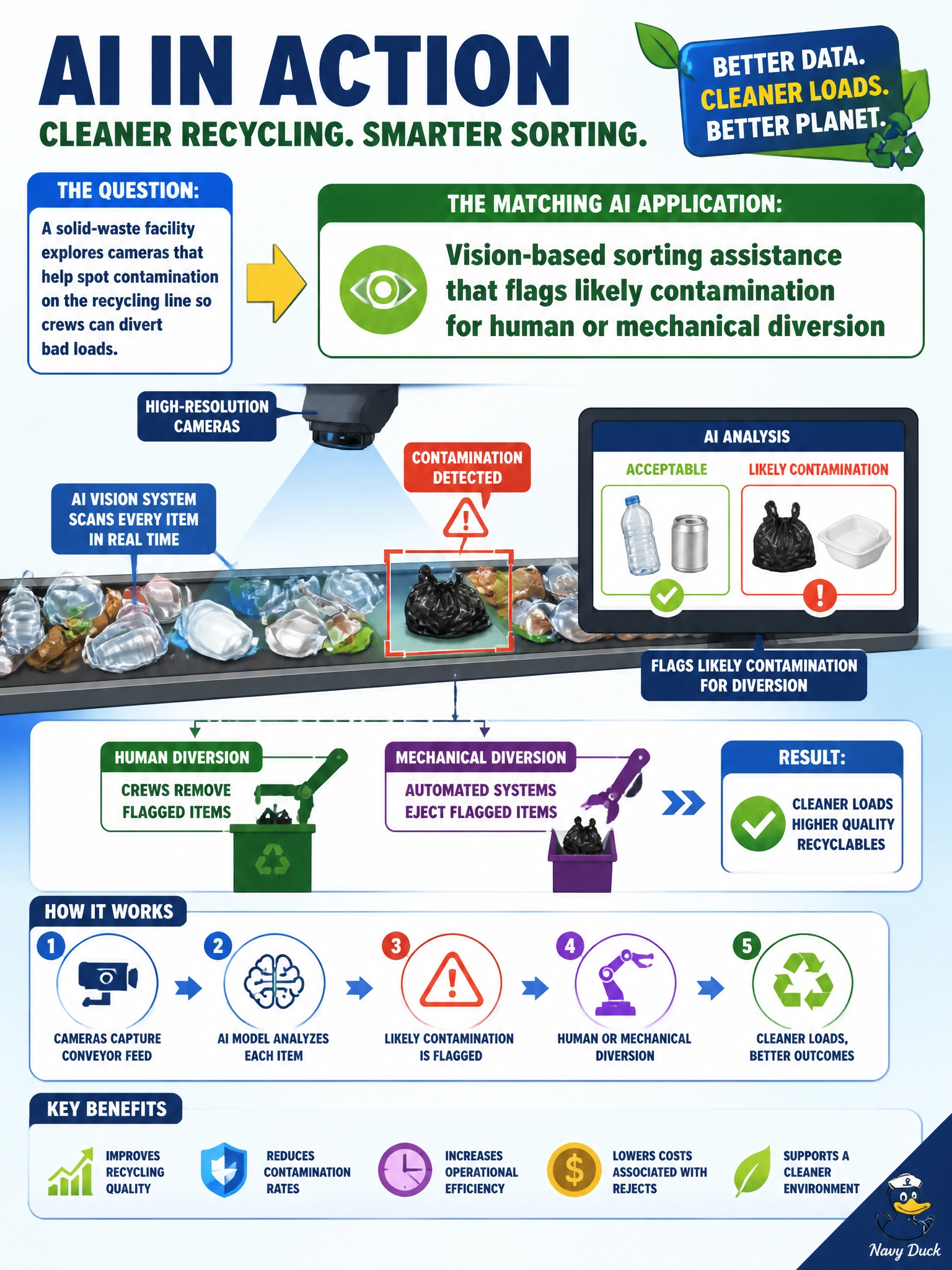
A solid-waste facility explores cameras that help spot contamination on the recycling line so crews can divert bad loads. Which AI application matches?
Select an answer to reveal the explanation.
Short Explanation
Contamination on the line is like bad apples in a packing plant—vision AI points them out so people or sorters pull them before the whole batch spoils. That is manufacturing-style AI in civic recycling. You'll see other camera jobs like checking truck contamination for fill-level analysis before line diversion, tracking crew exposure risks during line diversion, and assessing baled contamination after line diversion, but they're not about flagging line contamination for diversion.
Full Explanation
A solid-waste facility exploring cameras that help spot contamination on the recycling line so crews can divert bad loads matches vision-based sorting assistance that flags likely contamination for human or mechanical diversion. Computer vision can recognize common contaminants and cue diverters or workers, improving outbound material quality and reducing rejected loads. Plant operators and established safety interlocks still control conveyors and diversion equipment; the AI proposes detections rather than independently rewriting plant SOPs.
Vision-based fill-level analysis that tracks truck contamination before recycling line diversion is an inbound fill-level check of trucks before they reach the line and does not flag contamination on the sorting line itself for diversion. Vision-based safety monitoring that tracks crew exposure risks during recycling line diversion is worker-safety monitoring for crew exposure during diversion work, not line-side contamination detection for diversion. Vision-based outbound grading that assesses baled contamination after recycling line diversion is downstream quality assessment of finished bales after diversion, not in-process contamination flagging for diversion.
Exam caveat: Mapping industrial sorting/QC AI onto municipal recycling is a standard Domain application. Distractors often recycle other vision AI themes—truck contamination tracking for fill-level analysis before recycling line diversion, crew-exposure-risk monitoring during recycling line diversion, and baled contamination assessment after recycling line diversion—so match the physical contamination-detection concept.
Operational check: Validate detections against labeled samples for local waste streams, keep human/mechanical diversion authority clear, monitor lighting and belt speed as model performance factors, and treat AI output as assistive QC rather than automatic regulatory certification of outbound bales.
Prefer to study offline? Printable PDF study book + test engine ($7.50, unofficial). These questions stay free here.