
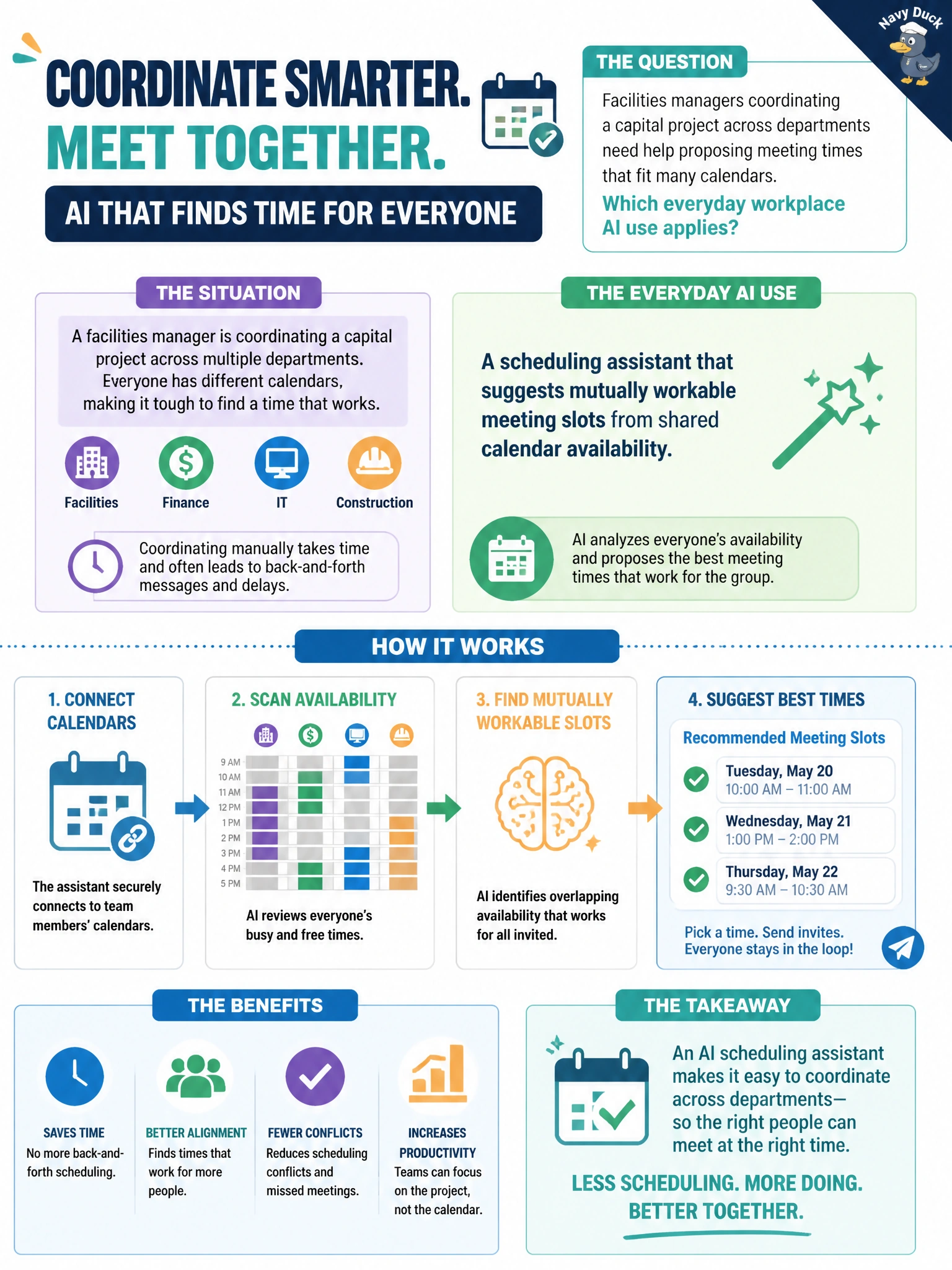
Facilities managers coordinating a capital project across departments need help proposing meeting times that fit many calendars. Which everyday workplace AI use applies?
Select an answer to reveal the explanation.
Short Explanation
Herding department calendars is like finding a pizza night that works for the whole block—scheduling AI proposes times from availability, then people confirm. That coordination help is classic workplace AI. You'll see it's not reserving your solo focus time, writing your action items, or drafting agendas from calendar titles.
Full Explanation
Facilities managers coordinating a capital project across departments need a scheduling assistant that suggests mutually workable meeting slots from shared calendar availability. That everyday workplace AI use reduces the email ping-pong of finding overlap among engineering, finance, legal, and operations calendars while leaving agenda ownership, stakeholder invitations, and final confirmation with people. Suggested slots are proposals derived from free/busy signals, not automatic bookings that override municipal meeting protocols.
A scheduling assistant that suggests individual focus periods from shared calendar availability gaps finds solo quiet time for one person rather than overlap for many calendars, so it protects personal work blocks but does not propose a mutually workable meeting time for engineering, finance, legal, and operations. A scheduling assistant that suggests post-meeting action items from shared calendar availability records confuses when people were free with what they decided, because free/busy records contain no discussion content, decisions, or ownership to turn into follow-ups. A scheduling assistant that suggests meeting agenda drafts from shared calendar availability titles guesses topics from short event names rather than project needs, so titles alone cannot supply objectives, background materials, or decisions required from the capital-project stakeholders.
Exam caveat: Workplace scheduling AI is assistive coordination. Questions often contrast it with industrial vision, security analytics, or unsafe generative automation of fiscal decisions.
Operational check: Confirm the assistant only reads permitted calendars, presents alternatives rather than auto-booking critical rooms, respects blackout periods for council and emergency ops, and requires an organizer to accept the final slot.
Prefer to study offline? Printable PDF study book + test engine ($7.50, unofficial). These questions stay free here.