
Transit riders experience AI-powered disruption alerts pushed to a mobile app after a signal failure. What everyday rider-facing AI use case is this?
Select an answer to reveal the explanation.
Short Explanation
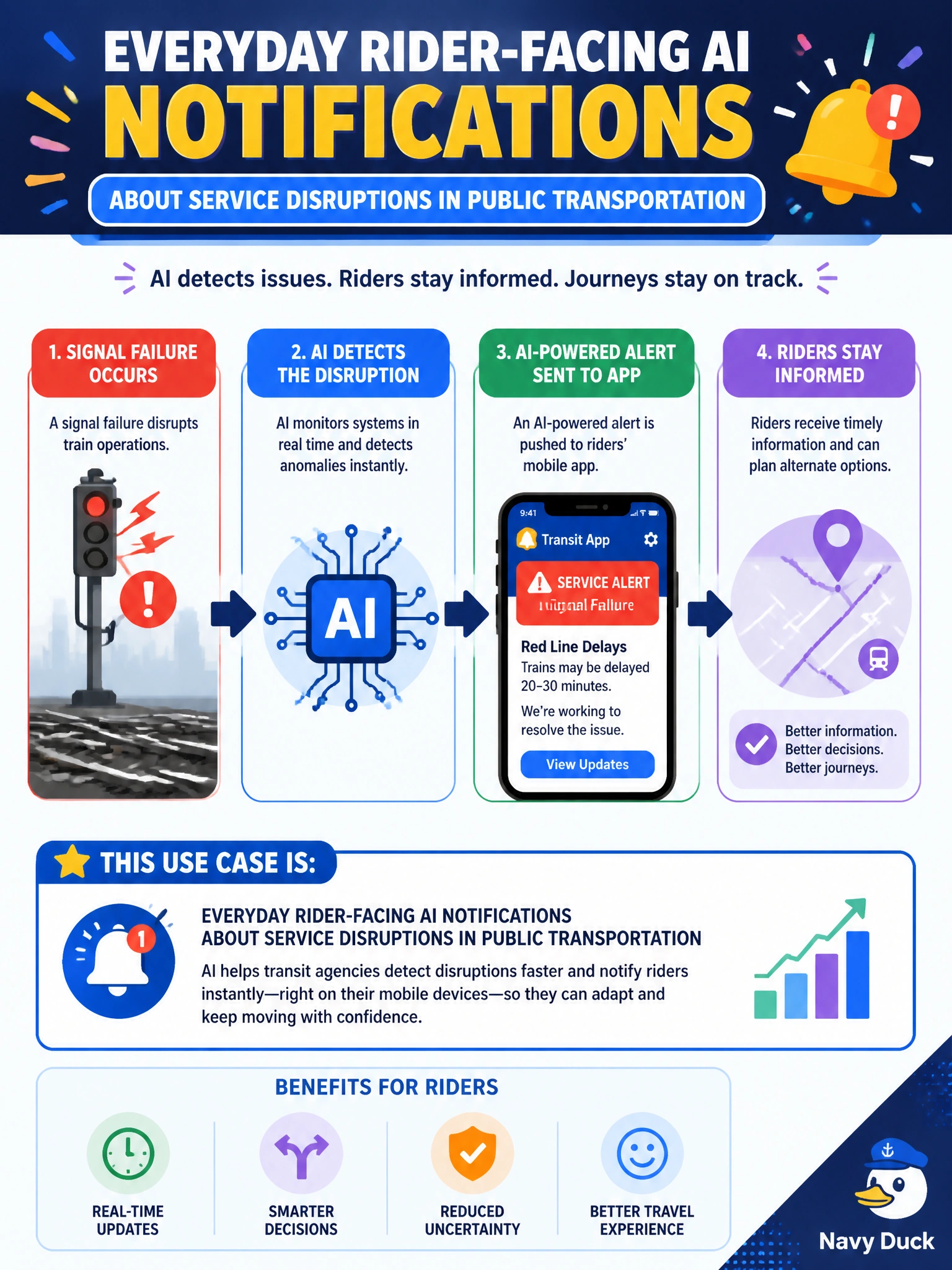
Signal dies, phone buzzes, riders reroute—that’s everyday AI tapping you on the shoulder. Transit apps pushing disruption alerts are rider-facing AI in the wild. Timely ping beats guessing on the platform.
Full Explanation
Transit riders experiencing AI-powered disruption alerts pushed to a mobile app after a signal failure are seeing an everyday rider-facing AI use case: notifications about service disruptions in public transportation that help passengers reroute quickly. Whether the pipeline uses learned impact ranking, rules, or hybrid logic, the civic literacy point is timely passenger information delivered to devices riders already carry—not everyday rider-facing AI notifications about real-time vehicle crowding in public transportation, which is about how full vehicles are rather than a post-failure disruption alert. Everyday rider-facing AI notifications about real-time vehicle crowding in public transportation fail the real-time disruption-alert pattern described, because they report occupancy levels rather than push incident notices after a signal failure has occurred. Everyday rider-facing AI notifications about optimal travel itineraries in public transportation miss the point of the rider-facing alert: the scenario is about service-disruption notices after a signal failure, not suggesting optimal routes or trip plans. Everyday rider-facing AI notifications about automated fare adjustments in public transportation describe a different rider-facing use case about fare pricing or corrections, not disruption notices after a signal failure. Exam caveat: rider-facing disruption AI selects mobile service notifications—not everyday rider-facing AI notifications about automated fare adjustments in public transportation. Operational check: validate latency from signal failure detection to push notification; localize messages to affected lines and stations; use severity tiers to limit alert fatigue; keep human dispatch authority over message content; and test degraded modes when disruption ranking is wrong so operations can correct rider guidance quickly.
Prefer to study offline? Printable PDF study book + test engine ($7.50, unofficial). These questions stay free here.