
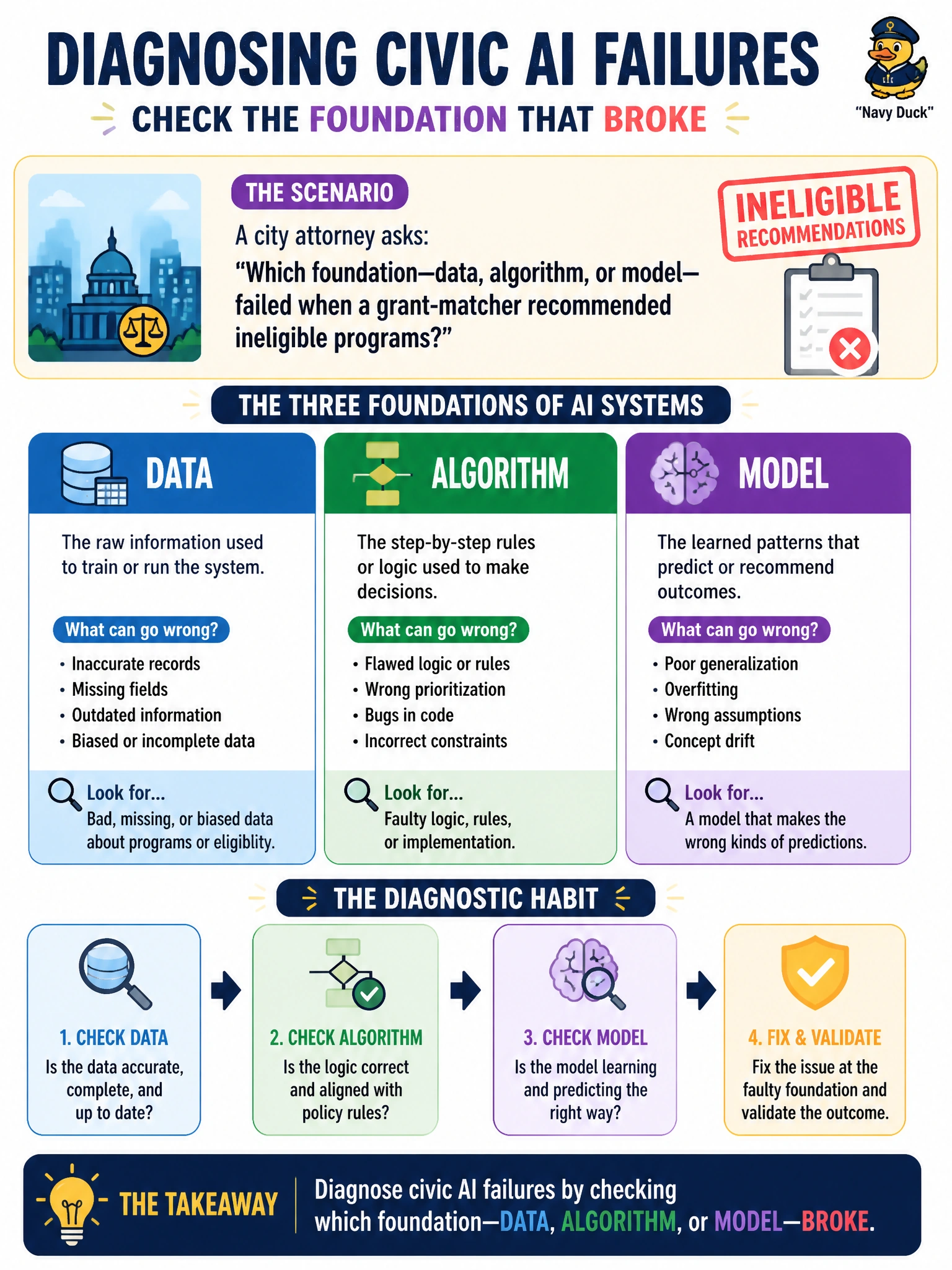
A city attorney asks which foundation—data, algorithm, or model—failed when a grant-matcher recommended ineligible programs. What diagnostic habit does this encourage?
Select an answer to reveal the explanation.
Short Explanation
When the grant-matcher suggests a program nobody qualifies for, play detective: bad data, wrong method, or a stale model? You'll get sidetracked if you're validating what drifted, isolating what overfit, or predicting what'll fail, since drift checks, overfit hunts, and future forecasts won't tell you if it's bad data, wrong method, or a stale model. That habit saves the next funding round.
Full Explanation
When a grant-matcher recommends ineligible programs, the productive diagnostic habit is to diagnose civic AI failures by checking which foundation—data, algorithm, or model—broke. Maybe eligibility tables were stale (data). Maybe the matching method optimized popularity instead of constraint satisfaction (algorithm). Maybe an old model was never retrained after program rules changed (model). Separating foundations turns a vague ‘the AI failed’ complaint into an actionable investigation. City attorneys and program owners need that habit to assign remediation, liability discussions, and vendor obligations correctly.
Diagnosing civic AI failures by validating which foundation—data, algorithm, or model—drifted narrows monitoring for gradual change to failure diagnosis, since confirming drift does not establish whether stale eligibility tables, a flawed matching method, or an outdated model version actually broke and caused the ineligible recommendations. Diagnosing civic AI failures by isolating which foundation—data, algorithm, or model—overfit focuses on a single model-training symptom instead of failure diagnosis, since whether a layer memorized training data does not explain whether stale eligibility data, a popularity-optimizing matching method, or an outdated model caused the ineligible recommendations. Diagnosing civic AI failures by predicting which foundation—data, algorithm, or model—will fail confuses forecasting with diagnosis, since a forecast of future breakdowns does not pinpoint whether data, algorithm, or model actually broke to produce the current ineligible recommendations.
Exam caveat: the skill under test is structured diagnosis of which foundation broke, not validating which foundation—data, algorithm, or model—drifted, isolating which foundation—data, algorithm, or model—overfit, or predicting which foundation—data, algorithm, or model—will fail. Real incidents may involve more than one foundation; still begin by asking which layer failed.
Operational check: maintain a failure triage checklist—validate eligibility data freshness, reproduce scores with the current algorithm configuration, confirm model version versus rule-change dates, log the root-cause foundation in the incident record, and only restore public-facing matching after the broken layer is fixed and retested.
Prefer to study offline? Printable PDF study book + test engine ($7.50, unofficial). These questions stay free here.