
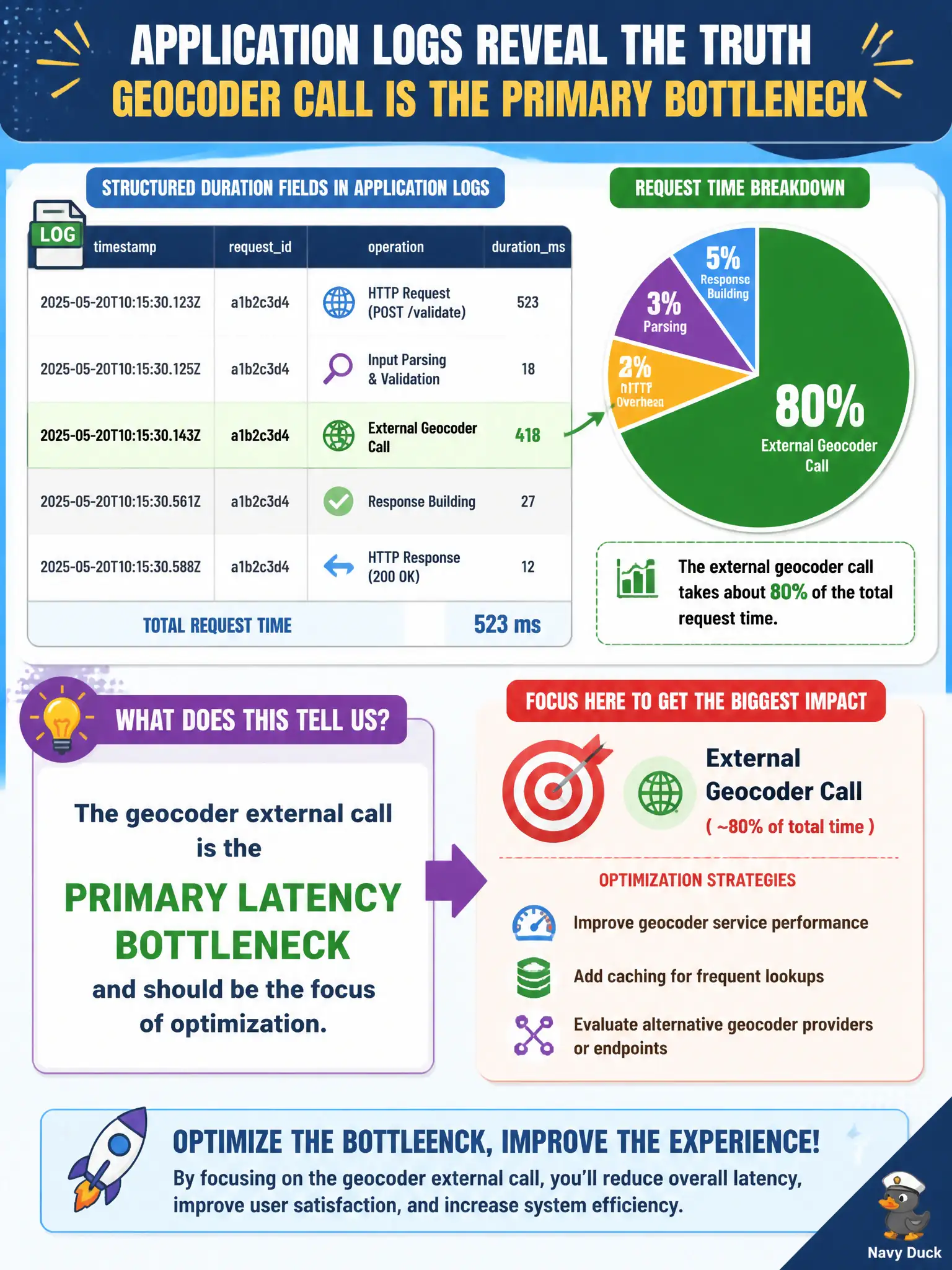
Structured duration fields in application logs show an external geocoder call is about 80 percent of request time for address validation. What conclusion should operators draw?
Select an answer to reveal the explanation.
Short Explanation
When the stopwatch says the geocoder ate four-fifths of the request, stop blaming the Lambda runtime first. Follow the structured duration fields to the external call. That's your bottleneck spotlight.
Full Explanation
Structured duration fields in application logs showing an external geocoder call is about 80 percent of request time for address validation mean operators should conclude the geocoder external call is the primary latency bottleneck and focus optimization there. Log-derived timings that dominate the request budget are actionable even before a full rewrite of the Lambda runtime. Municipal address validation quality depends on that vendor hop.
Replacing the Lambda language runtime immediately as the primary bottleneck ignores the 80% external call evidence.
Claiming CloudWatch metric math is broken because logs cannot indicate bottlenecks is false—structured duration fields are valid evidence.
API Gateway stage variables are configuration, not the dominant cost of every request in this measurement.
Exam caveat: Follow the largest measured contributor—here the external geocoder—before unrelated rewrites.
Operational check: Add caching or async pre-geocoding where policy allows, set vendor latency SLOs/alarms, consider fallback providers, and re-measure the structured duration field after changes on the address validation API. Keep the civic/municipal context in mind: bad address geocoding latency blocks permit submissions citizens feel directly at the browser.