
Permit drawings older than seven years must move to cheaper storage automatically yet remain restorable for audits. What should the developer configure?
Select an answer to reveal the explanation.
Short Explanation
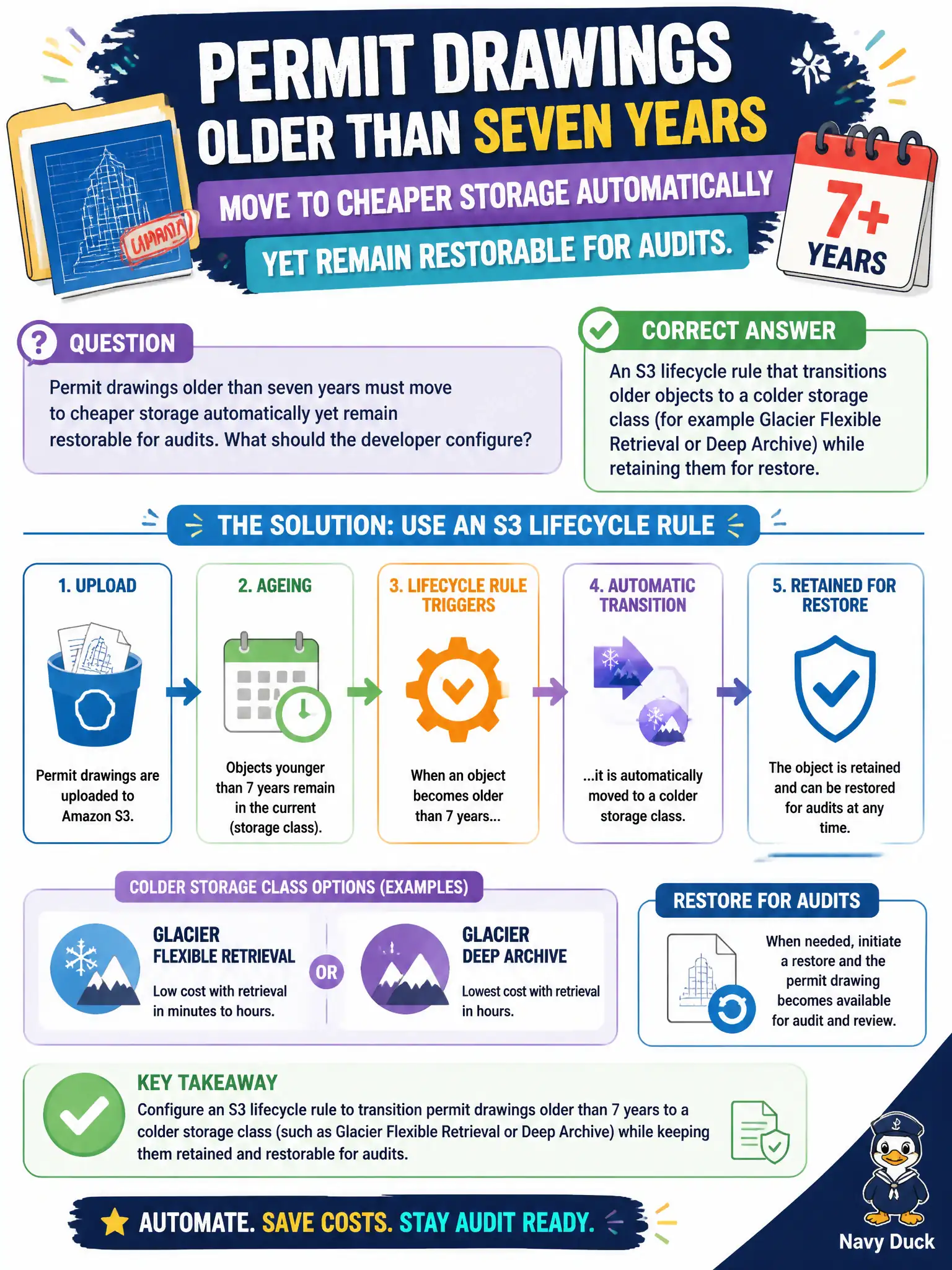
Don’t delete the city’s memory—just move old drawings to a cheaper shelf. An S3 lifecycle rule transitions aged objects to colder classes so audits can still restore them.
Full Explanation
Permit drawings older than seven years should transition automatically to colder S3 storage classes while remaining restorable for audits. An S3 lifecycle rule that moves aging objects to Glacier Flexible Retrieval or Deep Archive (or similar colder classes) meets retention-plus-cost goals without manual babysitting and without deleting evidence auditors may still need.
A Lambda that deletes all objects older than seven years with no archive class destroys audit restorability. Manual downloads to staff laptops after year seven are not controllable retention, not durable archives, and create sprawling copies of regulated records. DynamoDB TTL on an “S3 bucket policy” confuses services: TTL expires DynamoDB items; it does not lifecycle S3 objects, and bucket policies are authorization, not storage-class transitions.
Exam caveat: colder classes trade retrieval time and restore fees for lower storage cost—Deep Archive is fine for rare audits, not for frequent online viewing. Operational check: apply a lifecycle rule on a test prefix, age or backdate objects, confirm transition to the intended storage class in inventory/metrics, and perform a restore to validate audit retrieval still works.