
During an emergency space shortage, an administrator manually deletes an MTree outside the approved policy to free capacity immediately. What should have happened instead?
Select an answer to reveal the explanation.
Short Explanation
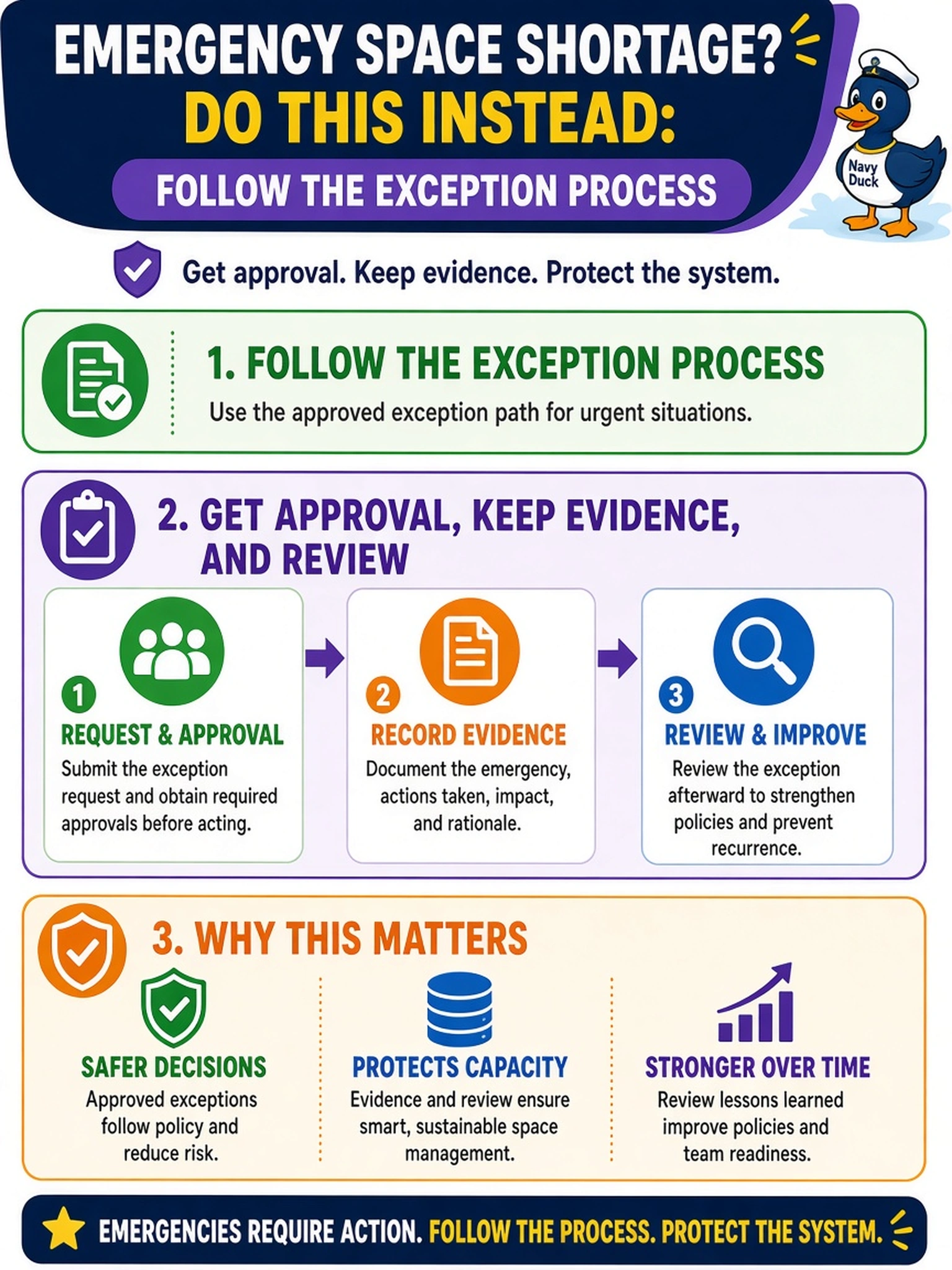
Think of policy like a seatbelt: it is there because emergencies happen, not because they don't. If you yank the MTree out before anyone approves the exception, you have traded a capacity alert for a compliance breach. Use the approved workflow, capture the evidence, and let the review catch the next risk.
Full Explanation
Data Domain policy enforcement is intended to make routine deletion predictable and auditable. When capacity pressure creates an urgent need to remove data, the correct operating discipline is an exception workflow: requestor justification, administrator or owner approval, change evidence, and post-action review. That preserves the control objective while allowing a controlled deviation. An after-the-fact request is wrong because it removes the approval gate and turns a governed exception into an uncontrolled change. Disabling retention or policy temporarily is wrong because it defeats the integrity controls and can erase the audit trail needed to prove why data was removed. Moving an MTree through a replication context is wrong because replication is for protected copies or mobility, not an authorized deletion method, and it may leave stale copies or break context assumptions. Exam caveat: Dell exam items often test governance discipline over quick technical fixes, so choose the answer that keeps approval and review intact. Operational check: Before any emergency deletion, confirm the change ticket, MTree owner sign-off, and post-change capacity report are recorded.