
A customer says retention, tiering and cleanup for each client are configured on separate screens, so no one can state the current policy. For maintainable Data Domain operations, which approach should be applied?
Select an answer to reveal the explanation.
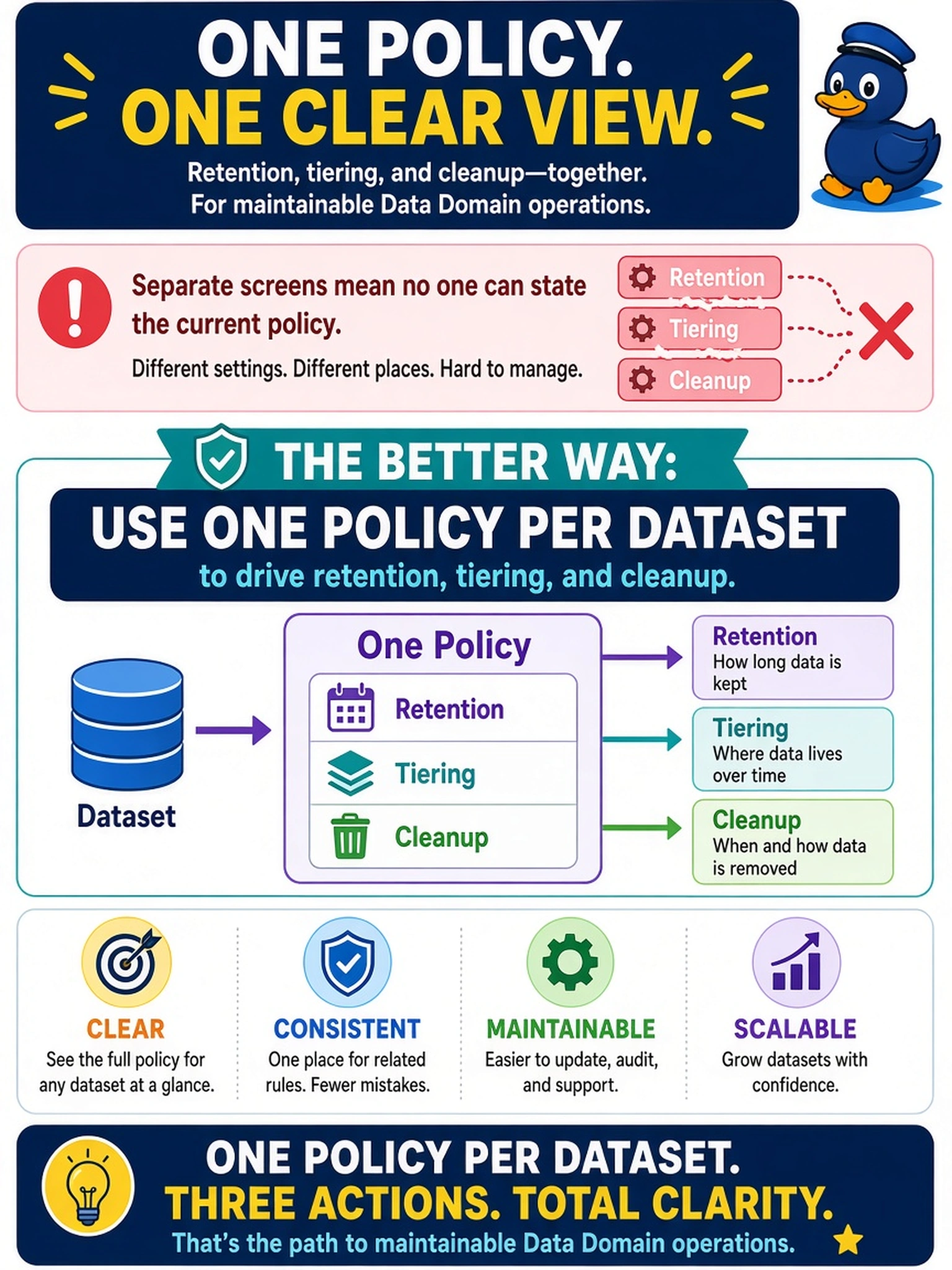
Short Explanation
Think of scattered policy screens like loose sticky notes on a fridge. You need one policy that tells retention, tiering and cleanup what to do, not a bunch of overrides and scripts. The trap is thinking more settings means more control; it doesn't.
Full Explanation
Policy-driven management works by binding a dataset to a single governing policy that expresses retention, tiering and cleanup outcomes. The policy becomes the authoritative record: when a dataset changes, the policy is edited once and enforcement follows consistently across the lifecycle. This supports auditability because operators can state the current protection state from one object rather than reconciling many point settings. Per-client overrides are wrong because they recreate fragmentation and make drift likely, especially when screens are owned by different teams. Global defaults are wrong when applied blindly because they cannot express dataset-specific compliance, recovery or tiering requirements. Post-backup scripts are wrong because they create a second, out-of-band control plane that may run late, fail silently or conflict with policy enforcement. Exam caveat: focus on the maintainability principle rather than inventing a menu path. Operational check: select one dataset and confirm its retention, tiering and cleanup settings all trace to the same policy definition.