
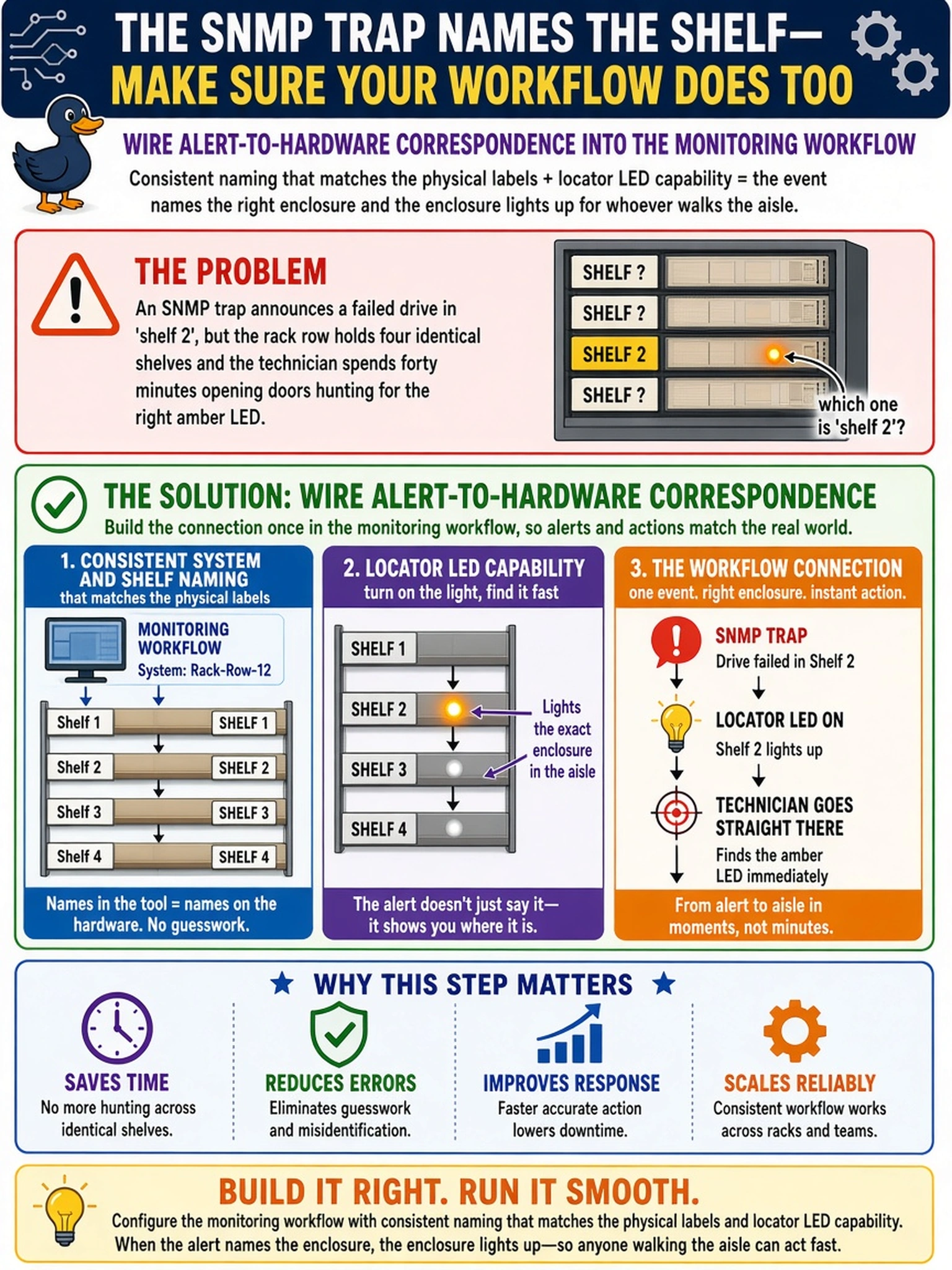
An SNMP trap announces a failed drive in 'shelf 2', but the rack row holds four identical shelves and the technician spends forty minutes opening doors hunting for the right amber LED. Which part of configuring the monitoring workflow was skipped?
Select an answer to reveal the explanation.
Short Explanation
An alert that can't find its hardware is half an alert. Good monitoring setup pairs events with identification - naming your tech already recognizes, plus locator LEDs you can light from software. Nobody should be hunting in a cold aisle when you can simply turn the light on for them.
Full Explanation
Alerting becomes operational when the event and the physical object are linked by design. Consistent naming - hostname and enclosure identifiers carried in the trap payload and repeated on the physical labels - makes the alert address a real shelf, and DD OS enclosures expose locator LEDs that management tooling can illuminate so the correct unit announces itself visually; this is precisely the service-technician workflow the feature exists to support. Claiming configuration cannot affect physical identification ignores the locate capability built into the platforms for exactly this purpose; the gap described here was not hardware capability but setup that uses it. Switching the transport from SNMP to syslog changes how the same event travels, not how specifically it locates hardware - location fields come from the event source, not the protocol wrapper, and the trap already named the shelf. A hand-kept serial-to-rack spreadsheet duplicates what the platform tracks natively, rots the day anyone rotates a shelf, and still leaves the technician visually searching when a supported LED feature exists. Exam caveat: locator-LED support varies by enclosure generation and attachment type - confirm the command path for the specific shelf model before documenting it in runbooks. Operational check: at the next non-critical drive event, time the interval from trap receipt to confirmed locator LED in the aisle.