
The compliance team wants standing eyes on administrator activity in the appliance - logins, commands, configuration state - with zero ability to change anything. What is the correct provisioning design?
Select an answer to reveal the explanation.
Short Explanation
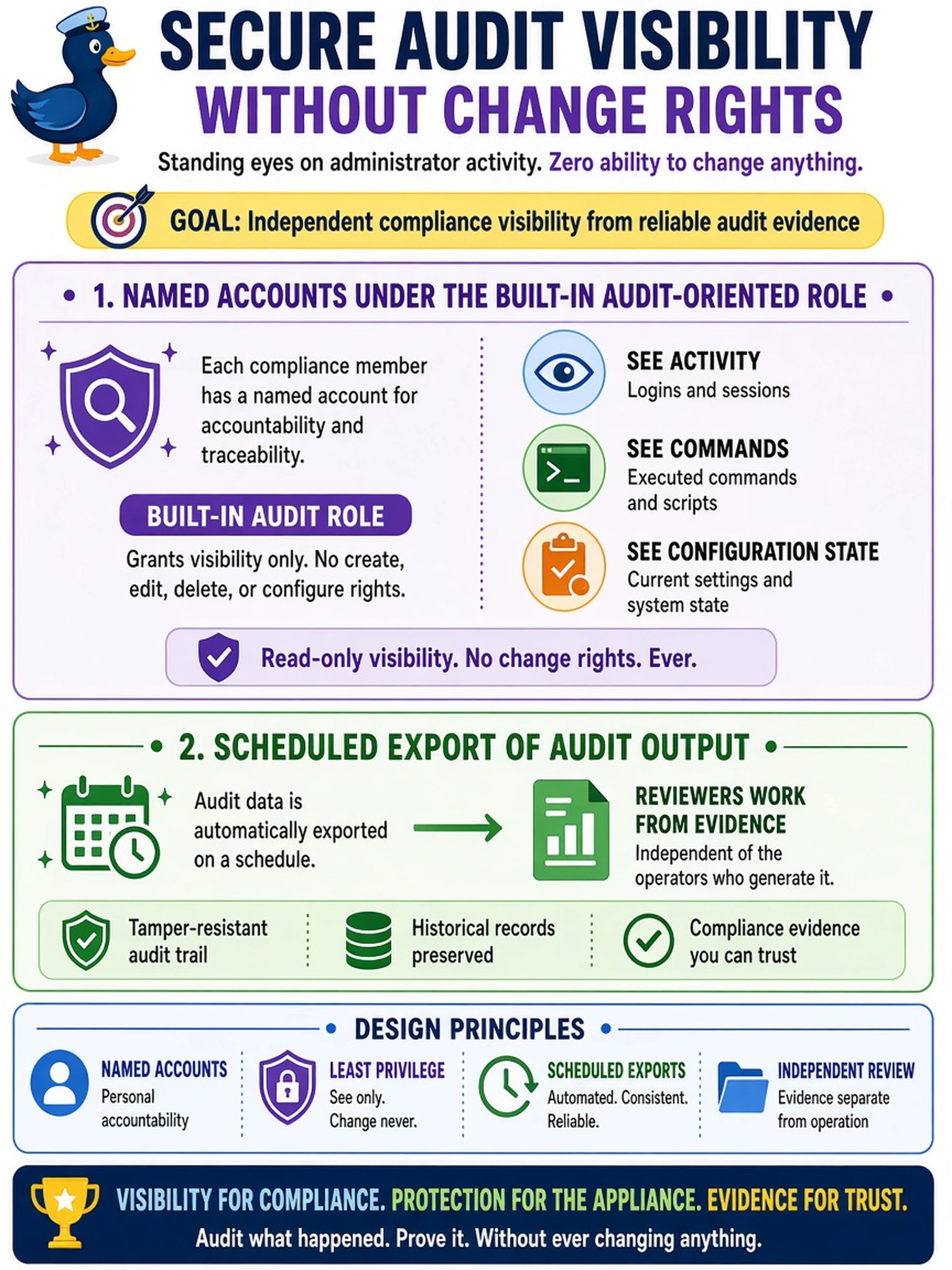
Eyes with no hands - that isn't a request you improvise, it's a role you assign. The audit-oriented role gives compliance named accounts and read visibility with no change rights, and exporting the trail keeps the evidence out of the operators' hands. Never let auditors ride on an operator's identity; you'll lose them from the audit too.
Full Explanation
Compliance visibility is a provisioning decision the platform already anticipates: DD OS ships an audit-oriented built-in role granting read visibility into logs and configuration state without change authority, attached to individually named accounts for the compliance members. Named audit identities are the point: reviewers carry their own names while watching operators who hold no power over the reviewer's own access. Because logs stored on the appliance can be affected by the very people under review, the practice pairs with scheduled export of the audit stream so review runs on evidence nobody in operations produces or curates. The custom-role route - administrator minus the scary commands - rebuilds read-only visibility by subtraction and inherits its risks: any command nobody thought to remove remains, and a hand-trimmed administrator set is exactly the false precision built-in roles avoid. Operator-generated summary reports fail by independence rather than content: evidence filtered through the reviewed team is not standing audit input. Riding on shared operator credentials erases the reviewers' own attribution - compliance becomes invisible noise inside the very trail they arrived to watch. Exam caveat: audit-role coverage varies across management interfaces, so verify the specific views the compliance charter names. Operational check: the compliance login reads logs and configuration successfully and is denied the first modification it attempts.