
A CIFS share is configured on a Data Domain; the Windows hosts can see it, but a Linux backup host cannot. During functional testing, what lesson should this situation teach the team?
Select an answer to reveal the explanation.
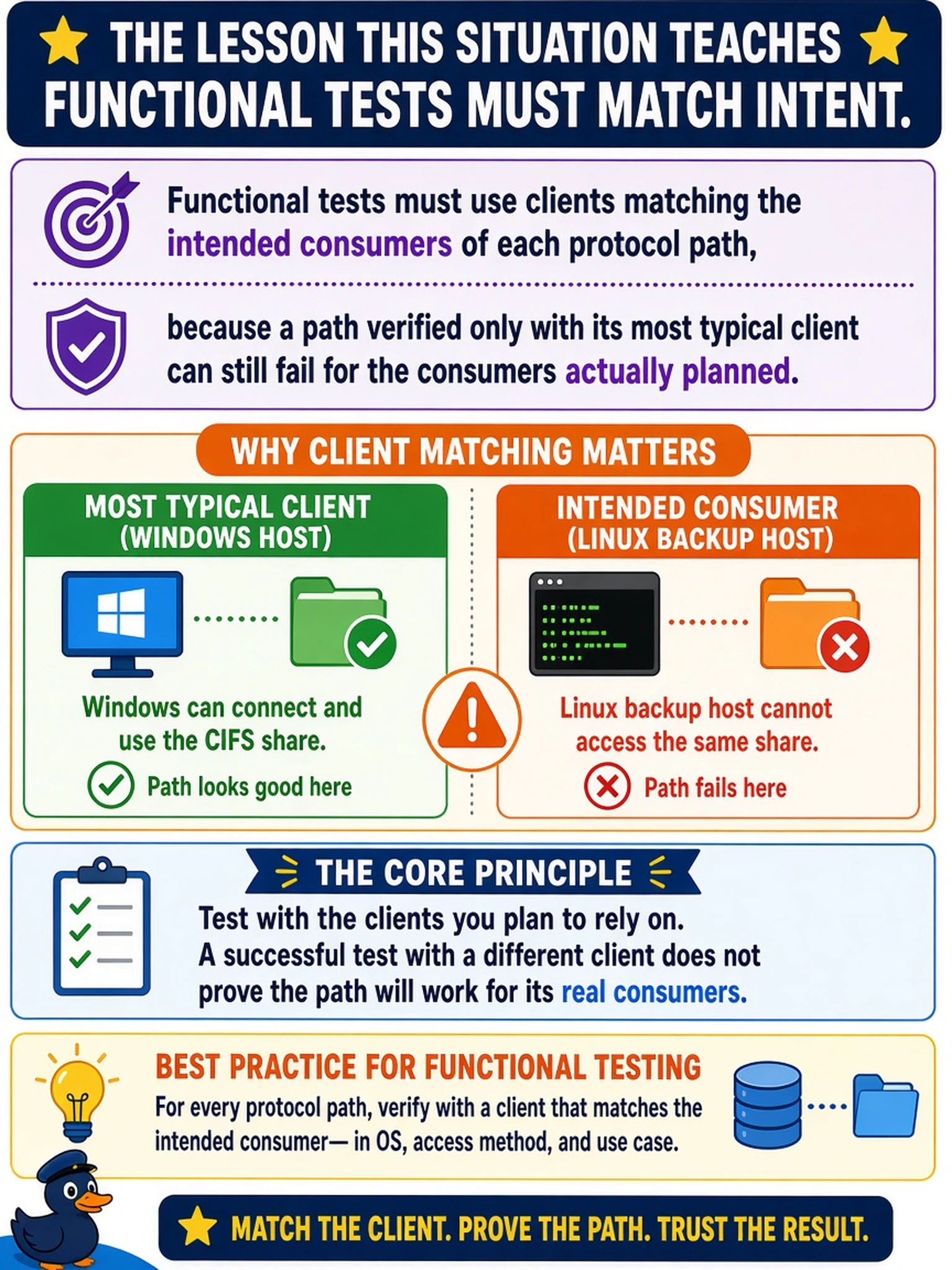
Short Explanation
Your design doc's list of consumers is also your test list. Windows hosts proved the share serves Windows - the full population includes that Linux host, and its attempt is the only one that counts as proof for its seat. Test every path from every seat that will actually use it.
Full Explanation
Protocol visibility is negotiated end to end. On the client side sit the SMB dialect the machine offers, its security policy, and its mounting tools; on the appliance side sit the dialect range and security settings the CIFS service accepts. Those halves can agree with one client class and refuse another - a Linux host offering an older dialect against a tightened appliance policy is an ordinary outcome - which is why functional testing has to be performed from representatives of every consumer class named in the design, not from whichever client is closest to hand. Redesigning the Linux host onto NFS may turn out to be the right final answer, but it is a design decision that should follow verified facts about the planned path, not replace the test that would reveal what is actually broken. Blaming the client version as the sole possibility overstates: appliance-side dialect and security configuration are equally candidates, which is exactly why a tested mismatch must be localized rather than presumed. Reinstalling the client package blindly asserts a cause before evidence, burns time, and would leave a genuine appliance-side policy mismatch waiting behind the reinstall. Exam caveat: check the supported SMB dialects on both sides before changing anything - the fix is often a documented compatibility setting, not an architecture change. Operational check: every planned consumer class exercises its intended protocol path, or the design is amended in writing and retested.