
A content-archive platform needs to place objects on the new Data Domain using S3-style PUT operations against buckets. One engineer proposes carving out a CIFS share instead and having the platform's gateway drop files onto it, calling that close enough to object storage. What does the scenario actually require on the appliance side?
Select an answer to reveal the explanation.
Short Explanation
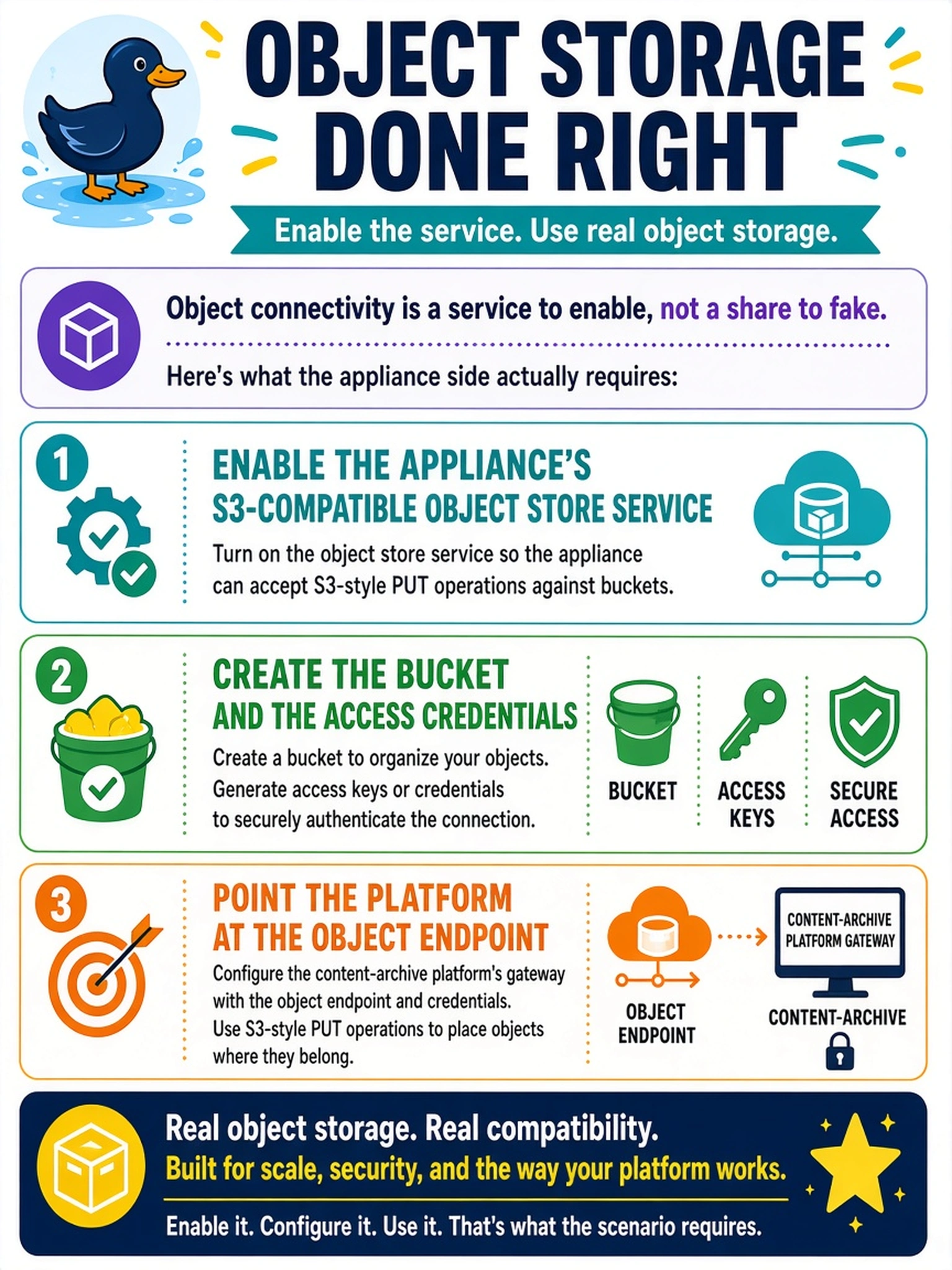
When an application wants to speak S3, don't make it pretend to be a filing cabinet. Turn on the object store, create the bucket and the credentials, and hand the platform its endpoint, because that's a first-class service, not a side door. Faking buckets as file shares is how you ship an archive that only half-works on day one.
Full Explanation
Applications that archive by object use request semantics: bucket addressing, key-based namespaces, access-key authentication, metadata, and multipart uploads, all carried over HTTPS. A Data Domain can serve this directly, since the deployment work is to enable the S3-compatible object store feature, configure the object endpoint and domain, create the requested bucket, and generate the access credentials, after which the archive platform PUTs objects to the appliance natively. Faking buckets as directories on a CIFS share fails by concept because the translation layer loses exactly the semantics the platform relies on, and its own client library has no mount to write through. The external-gateway claim is simply false for this platform, as the object capability is delivered by the appliance's operating system rather than mandated through third-party translation. An iSCSI LUN hands over raw blocks, a layer even further from the HTTP object calls the platform can make, leaving the platform still without the API it speaks. Exam caveat: confirm the specific S3 API features and bucket behaviors your archive platform needs against the appliance's documented support. Operational check: after configuration, run test put, get, and delete operations with an S3 client against the new bucket, then watch bucket consumption during the platform's first real ingest.