
The first-access setup on a fresh system walks through license, hostname, DNS, NTP, and email before letting real work proceed. Why do these items belong to this phase?
Select an answer to reveal the explanation.
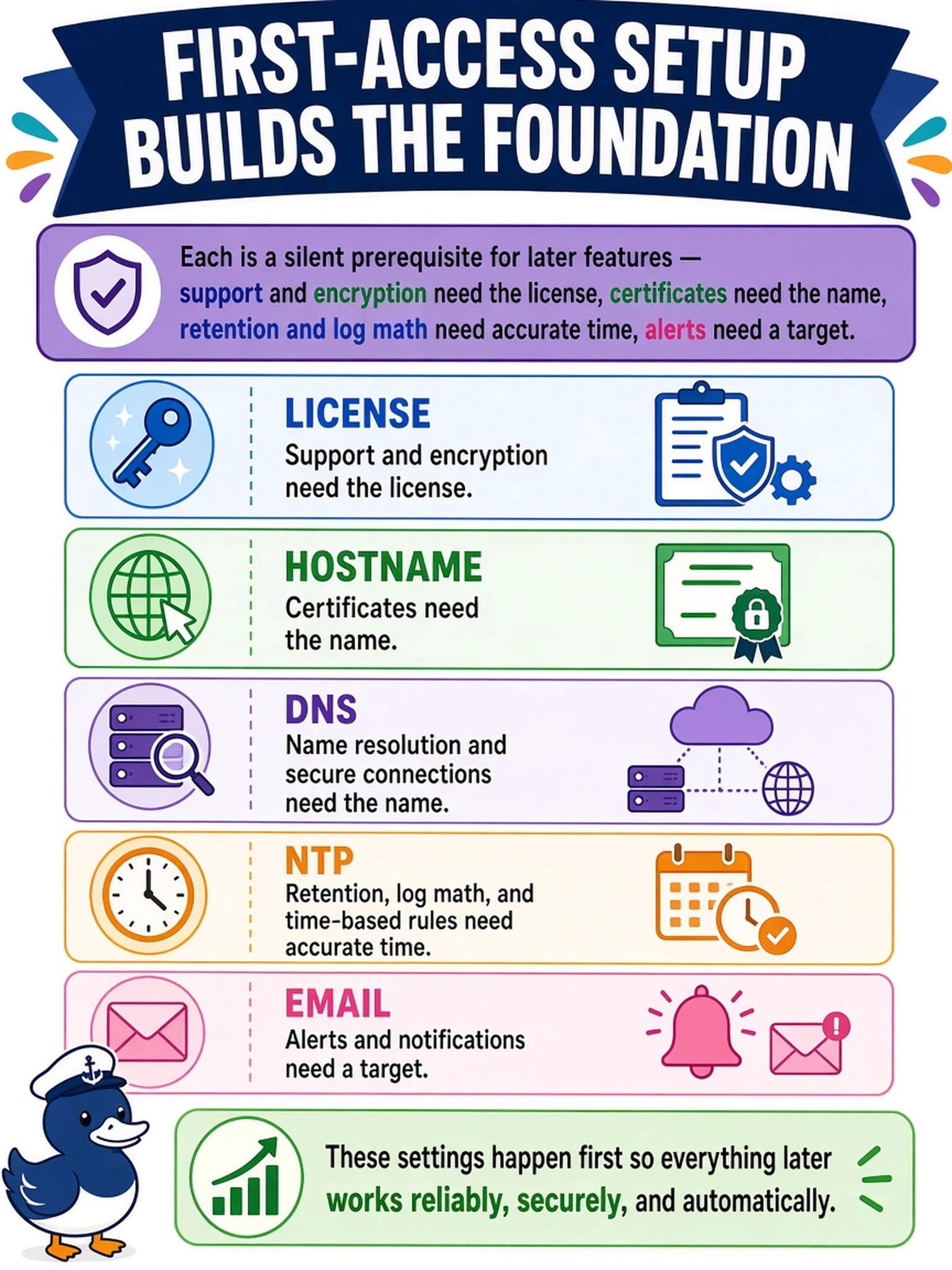
Short Explanation
License, hostname, DNS, NTP, email — that's not busywork, that's the foundation everything else stands on. Certificates need a name, log and retention math need an honest clock, and an alert with nowhere to go is just a whisper. Set those first and you've handed every later feature a working baseline.
Full Explanation
The first-access setup collects the dependencies that later features silently assume. The license gates full feature enablement and the support posture of the system; the hostname anchors certificates, log identity, and how other systems address the appliance; DNS lets the platform resolve support and notification endpoints by name; NTP keeps time accurate so log correlation, certificate validity, and the age calculations underlying retention behave correctly; and an email or notification target gives faults a way to announce themselves. These items come first because everything configured later assumes they already work. Dismissing them as deferrable formalities fails by the dependency list itself — a system without time sync or name resolution silently degrades log trust, certificate use, and support handling from day one. Restricting their relevance to the eventual backup-application connection fails because the platform itself consumes DNS and NTP for certificates, logging, and support regardless of any application. Alphabetical-ordering explanations fail by attributing engineering decisions to coincidence in the installer. Exam caveat: these are setup prerequisites in the access task, not optional courtesies of a wizard. Operational check: after setup, resolve the head by hostname, check NTP status and offset, and send a test notification to prove the alerting path.