
At the rack, the team debates whether replication should ride the shared backup LAN or get dedicated ports. Once the decision is made, what does it change about the physical installation?
Select an answer to reveal the explanation.
Short Explanation
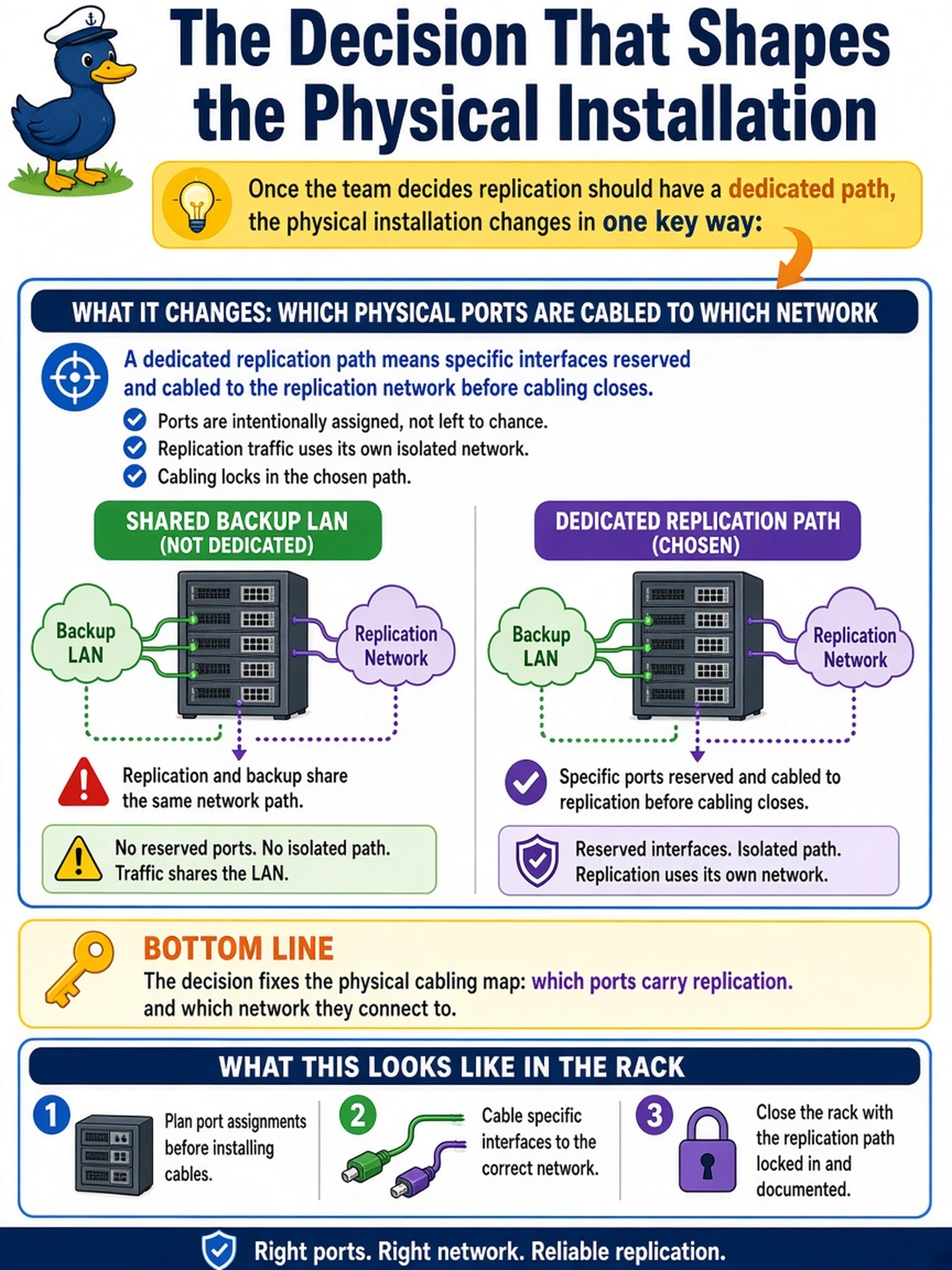
Where replication lives is a network decision that turns into copper. Choose a dedicated path and suddenly two of your ports belong to the DR network — they need cables and a home in the rack, not a spot in the box. Settle the debate with a cable plan, not just a whiteboard.
Full Explanation
Where replication traffic lives is a design decision that becomes copper. DD replication is IP traffic between appliances, so a design that dedicates a path for DR traffic is implemented by cabling specific physical interfaces to the replication network — reserved interfaces, separate switch ports and VLAN — before cabling closes, while a design that shares the LAN carries replication on the shared ports under whatever traffic policy applies. Either way the debate is not finished until the cable plan reflects it, because an interface that was never cabled cannot participate in the design that reserved it. Automatic multiplexing across whatever exists fails by concept: interface roles are configured per design, and a plan that isolates DR traffic requires physically present, cabled links to isolate it onto — absence is not handled by cleverness inside the box. Licensed dedicated replication fails as an invented gate: the networking of the replication path is a deployment choice about ports and networks, not a license check deciding what gets cabled. SAS interconnect class failing by domain confusion: the SAS chain connects shelves to the head and plays no part in LAN replication traffic, so the LAN decision cannot ripple into it. Exam caveat: the interface plan — management, data, replication — is what drives the port-to-network mapping. Operational check: replication-reserved interfaces are cabled to the replication network and every link's role is recorded in the as-built.