
To correct a rail alignment, an installed expansion shelf is shifted in-rack; afterward nobody touches its cabling, because the chain 'has always been fine.' What must happen before the chain is trusted again?
Select an answer to reveal the explanation.
Short Explanation
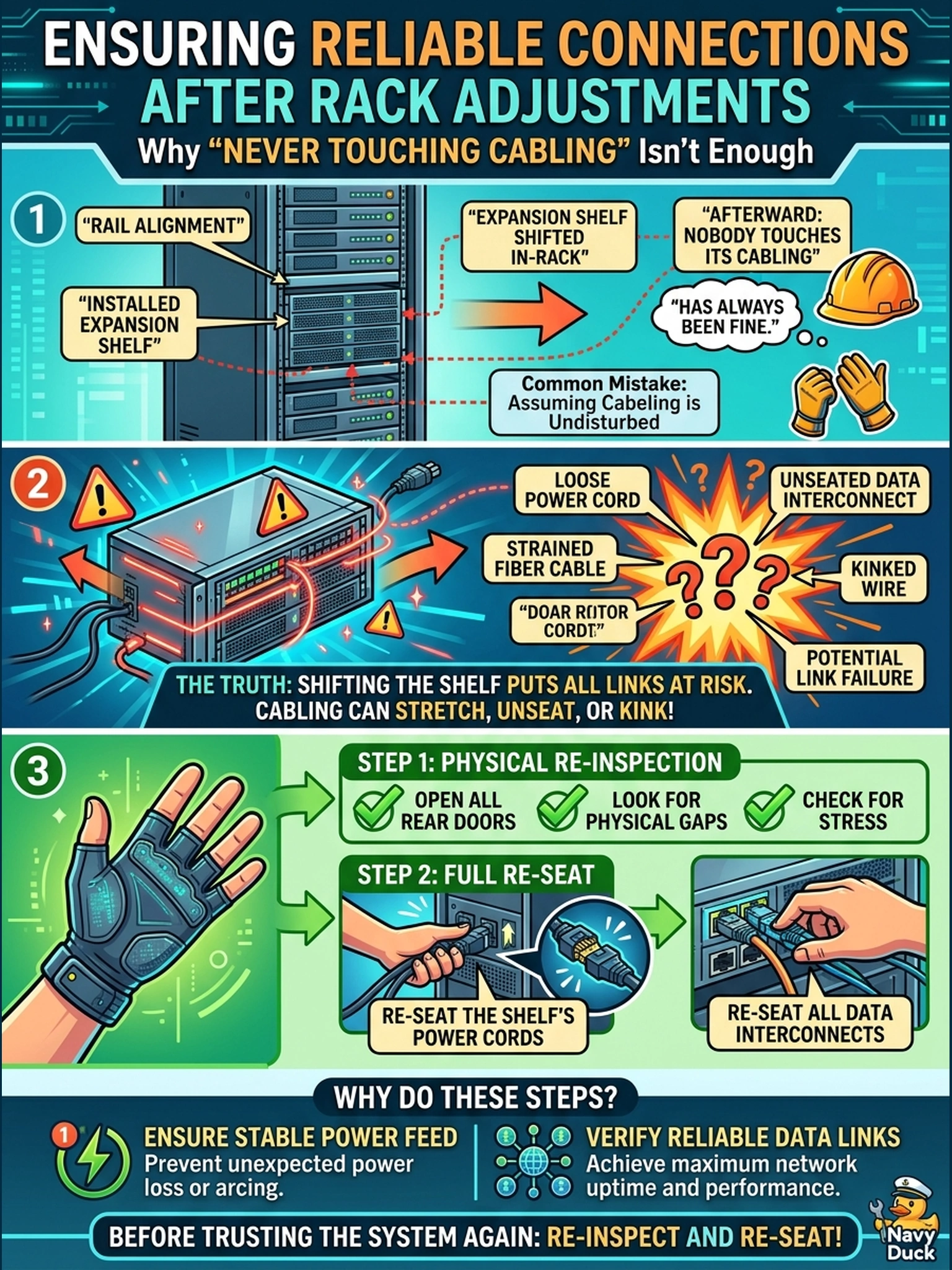
The shelf moved, and its cables felt it whether you watched or not. A shift of a few centimeters can put pull on an interconnect or rock a power cord half loose, and a link that's unhappy now will fail later. When hardware moves in your rack, go look at the copper — reseat it, then trust it.
Full Explanation
Any physical relocation of a shelf changes the geometry of every attached cable. An interconnect can end up partially withdrawn from its port, a power cord can rock loose in its inlet, and slack that was dressed can become tension across the connector interface. The accepted practice after moving equipment in a rack is to inspect and reseat both ends of the shelf's interconnects and power cords, then re-verify that both of the shelf's paths report healthy, before the chain carries service again. Relearning bays in the configuration database fails by concept: the shelf's identity and its documented position did not change when the rails did, and if enumeration now fails the cause is physical, not bookkeeping. Self-healing links fail as a dangerous comfort: an auto-recovered link after a transient cannot be distinguished from one now under steady tension that will drop on the next failover, which is precisely the case the re-inspection exists to catch. A firmware resync treats an invented cause — rail work does not desynchronize enclosure services — and replaces looking at the copper with a guess. Exam caveat: every physical change to layout reopens the cabling verification step. Operational check: visually inspect and reseat both ends of the moved shelf's links and cords, confirm both paths healthy, and note the move in the install log.