
The physical installation is complete and the system is reachable. The project manager asks what closes out the installation-checklist paperwork for this engagement. What completes the task?
Select an answer to reveal the explanation.
Short Explanation
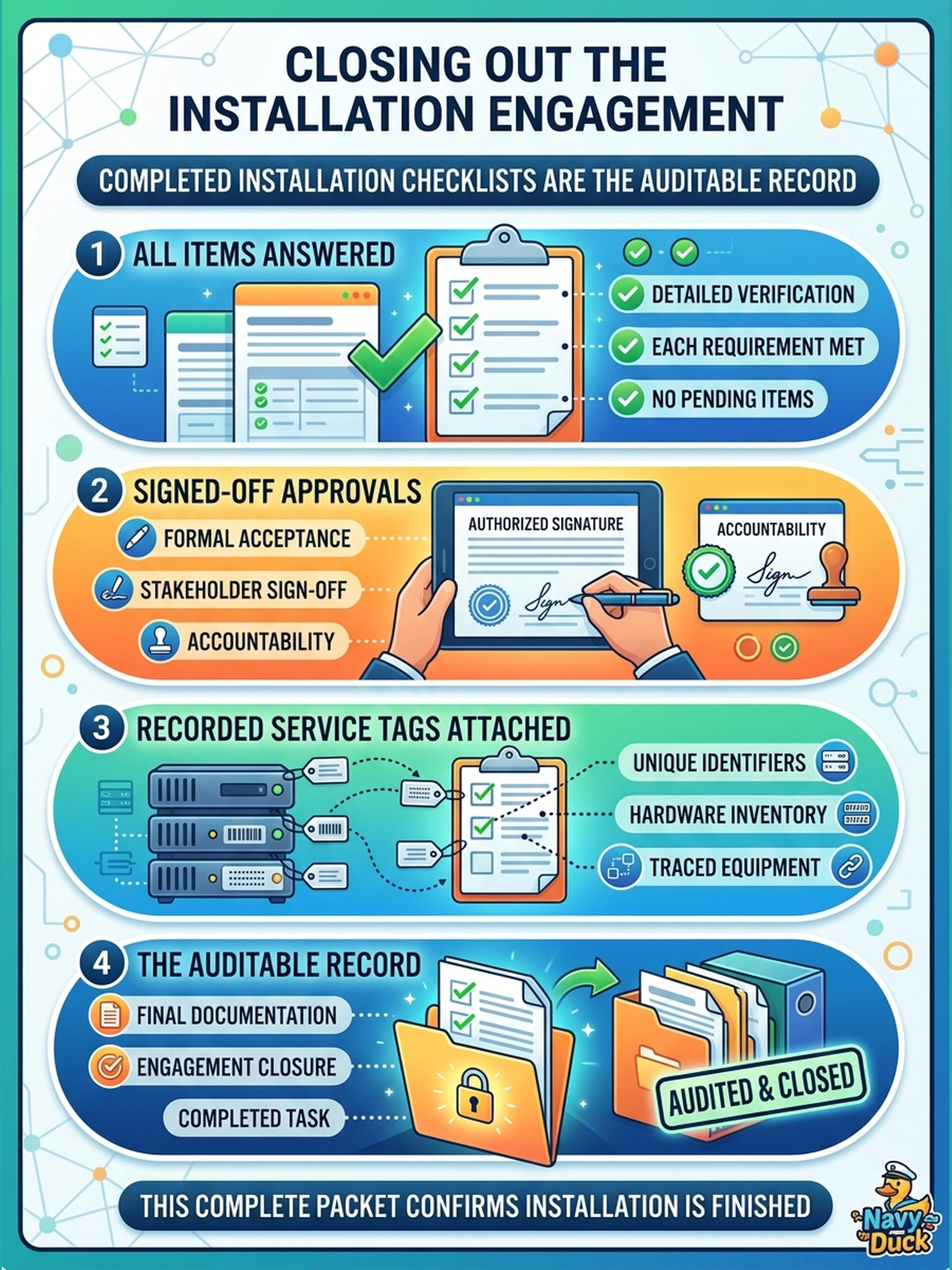
If it isn't written down and signed, it didn't happen—that's the rule for deployment paperwork. The completed checklist with your service tags attached is the artifact that proves every verification actually took place, so don't let good work evaporate into a meeting recap.
Full Explanation
The installation checklist is a process control: each verification it carries—receiving inspection, version comparison, entitlement confirmation, mechanical checks, contact confirmation—is only as good as the record that it happened, so closing means returning the checklist with every item answered, discrepancies dispositioned, signatures applied, and the tag inventory attached. That artifact feeds support, handover and audit, and it is what a future engineer trusts when the system misbehaves. Verbal confirmation fails by concept: recollection in a meeting cannot carry item-level evidence, and a checklist treated as private scratch paper means the process itself was skipped, not merely undocumented. Deleting the working copy because 'the photos are in the binder' fails because photographs lack the confirm-or-flag decisions and dispositions that turn evidence into a completed verification—both artifacts belong together in the record. Reconstructing a clean copy after the fact fails: the checklist's value is contemporaneous answers, and rewriting from memory is precisely when errors enter the record. Exam caveat: some engagements require the customer's countersignature on receiving items—attach those too. Operational check: before submitting, scan every line for an answer, verify the tag inventory matches the binder photographs, and record where the submitted checklist is filed.