
Cutover day arrives, the only person the installer knows at the customer site is on vacation, and nobody else holds badge access to the server room. The installation checklist's contact block had been left blank. What is that checklist item actually for?
Select an answer to reveal the explanation.
Short Explanation
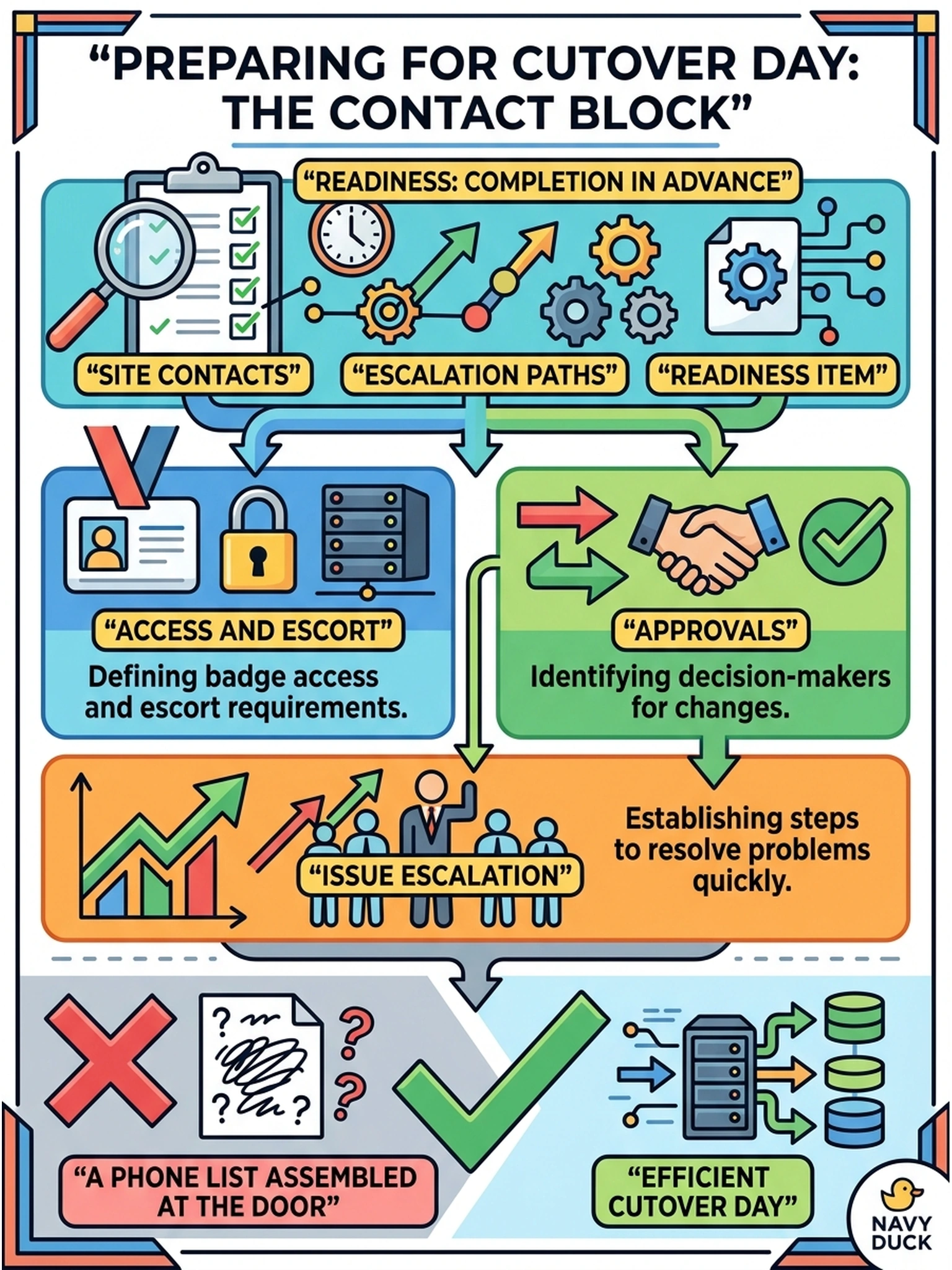
You can have every cable ready and still fail to deploy because nobody can open the door. The checklist's contact block is your key, your escort and your lifeline when something goes sideways—fill it in before you drive out, and confirm the humans actually answer.
Full Explanation
Install day depends on customer-side actions no installer can perform alone: badge access, escort through secure areas, approvals for power or network work, and fast decisions when the site contradicts the survey. The checklist's contact section exists to name and confirm those people before arrival—primary and backup contacts with their roles and the escalation path—because those capabilities are promised by specific humans, not by the calendar. Treating the field as marketing bookkeeping fails by concept: it is an operational-readiness item; leaving it blank transfers logistical risk onto the installer's schedule. Claiming contacts only matter for remotely monitored work fails for the opposite reason—onsite work is precisely where access and escort dominate the day, since every door belongs to the customer. 'On-schedule arrival implies access' fails because a calendar entry grants no permissions; escort and access rights are separate commitments verified with the people who control them. The vacation scenario is the lesson in miniature: one named contact is a single point of failure. Exam caveat: the backup contact with equivalent authority matters as much as the primary. Operational check: confirm both named contacts within two business days before the visit, verify each can actually open the room in question, and test that both answer before install morning.